Seven years of promises, plans, and quiet mornings together ended with one sentence.
Three weeks before our wedding, my fiancé looked at me across the kitchen table and said, “You deserve someone who’s not afraid to live small. I’m meant for bigger things.”
No shouting. No fight. Just calm certainty that made our entire shared life feel like a phase he’d outgrown. I stood frozen, wedding dress still waiting at the tailor, invitations already in mailboxes, while he packed a single suitcase and left.
I didn’t beg. I didn’t follow. I simply folded inward, the way grief sometimes arrives without noise.
Six months later, the call came: car accident. He survived—barely. Spinal damage. He would never walk again. The career he’d chased, the “bigger things,” disappeared overnight.
His family relocated abroad. Friends visited for a few weeks, then faded. His world narrowed to a hospital bed, then a small apartment, the rhythm of machines, and long hours of silence.
I still don’t know exactly what pulled me back. Maybe it was the same stubborn loyalty that had kept me beside him for seven years. Maybe it was pity. Maybe it was unfinished love refusing to die quietly.
One winter evening, I drove to his building. No script. No expectations. Just an ache that wouldn’t let me turn away.
When he opened the door in his wheelchair, his face drained of color. He looked at me like I was a memory he’d tried to bury.
“I’m not here for apologies or explanations,” I said. “I’m here because no one should go through this alone.”
And without fanfare, I stepped inside.
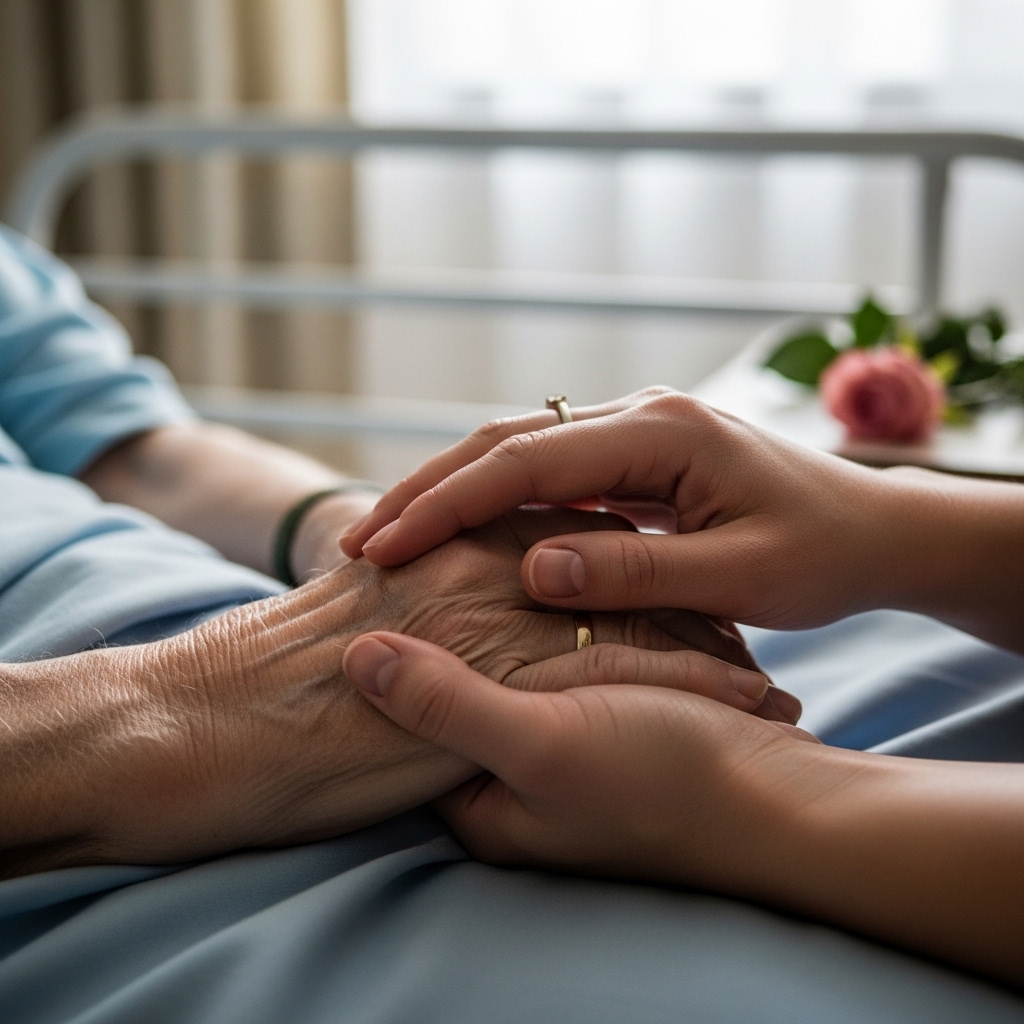
For the next eleven months, I became his caregiver. I drove him to physical therapy. I managed medications and feeding tubes. I gave sponge baths, changed sheets, sat through nights when pain kept him awake and regret kept him silent.
He never said “I’m sorry.” Not once.
But in the dark hours when he thought I was asleep on the couch, I heard him. My name, broken and small, whispered like something sacred he no longer had the right to claim.
I never acknowledged it. Some truths are too fragile for daylight.
Then, almost a year after I returned, he was gone. Sudden complications from his injuries. One breath, then nothing.
The silence that followed felt louder than any sound we’d ever made together.
At the sparsely attended funeral, a woman approached me. My stomach dropped when I recognized her: the one he’d left me for.
She held a small envelope, fingers shaking.
“He asked me to give you this if anything happened to him,” she said quietly.
I opened it with unsteady hands. His familiar handwriting—those uneven loops, the rushed curves I used to tease him about on grocery lists and late-night notes.
The letter was short.
“I thought I was chasing something bigger than us. I was only running from the best thing I ever had. You were my home, and I traded you for echoes. Thank you for coming back when I had nothing left to offer. I loved you every day I couldn’t say it. I’m sorry I only learned how much too late.”
I read it twice, knees threatening to give way.
The woman swallowed hard.
“He talked about you constantly after the accident,” she whispered. “He said you were the only person who ever stayed. Really stayed.”
Something inside me fractured—not rage, not bitterness, but a deep, complicated grief. Honored that he finally saw me. Haunted that it took losing everything for him to say it. Loved, yet abandoned twice.
I stood there holding the letter, surrounded by people who barely knew the man we were burying, and realized something painful and true:
Love doesn’t always end when the relationship ends. Sometimes it lingers—quiet, stubborn, unfinished—waiting for the moment truth finally catches up.
And the most heartbreaking part? Even when love shatters, pieces of it stay alive inside us long after the story should have closed.
I folded the letter, slipped it into my pocket, and walked out into the cold air.
I didn’t forgive him that day. I don’t know if I ever will. But I carried him—his regrets, his gratitude, his last honest words—with me.
And somehow, that felt like enough.