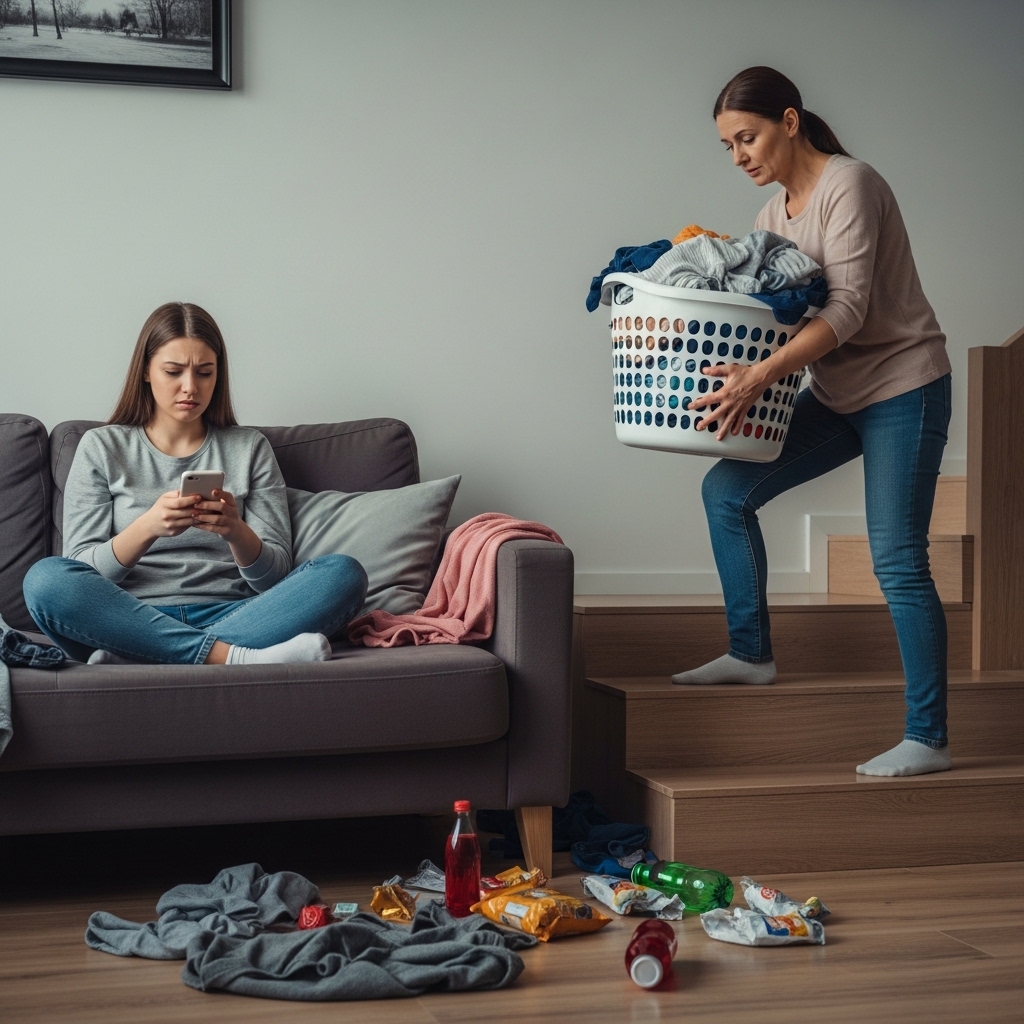
Being a single parent means carrying the weight of everything alone—bills, meals, laundry, school runs, bedtime stories, and the endless emotional labor of raising kids who don’t yet understand how heavy the load really is.
I’ve been doing it for five years since the divorce. Carl and I stayed civil for the children’s sake. He pays child support—decent, but never enough to cover the full gap. I work two jobs, come home bone-tired, and still manage to keep the house running and two kids fed, clothed, and loved.
My son, 11, helps when I ask. My daughter, 15, does not.
She slams doors, leaves dishes in the sink until they grow mold, scrolls on her phone while I vacuum around her feet, and rolls her eyes when I mention homework or chores. She won’t even watch her little brother for twenty minutes so I can shower without worrying he’ll burn the house down.
I tried gentle reminders. I tried guilt. I tried explaining that family means everyone pitches in, especially when one person is drowning. Nothing stuck.
One night, after scrubbing the kitchen at 10 p.m. while she lounged on the couch watching videos, I snapped.
I sat her down and said calmly:
“You’re fifteen. Old enough to understand that this house doesn’t clean itself and I’m not your personal maid. If you’re not willing to help with basic responsibilities—your laundry, your dishes, helping with your brother, anything—then you’ll start paying rent like any other adult who wants to live here for free.”
Her jaw dropped. She stormed to her room, slammed the door, and I heard her furiously texting.
I knew exactly who she was texting.
The next afternoon, the front door flew open. In walked my daughter—arms crossed, smirk on her face—and right behind her, Carl.
He looked at me with exaggerated outrage.
“How dare you tell my daughter she has to pay rent? She’s a child!”
My daughter’s eyes gleamed. She thought she’d won. She thought this was about to become a full-blown parental showdown where Dad would rescue her from “mean Mom.”
What she didn’t know was that I’d called Carl the night before.
I’d explained everything—how exhausted I was, how her attitude was wearing me down, how I needed his help to teach her a real lesson instead of letting her play us against each other. To my surprise, he didn’t hesitate.
“Whatever it takes,” he said. “She needs to learn.”
So we put on the performance of our lives.
We argued—loudly, convincingly—right in front of her. Voices raised, accusations flying.
“You’re spoiling her!” I shouted.
“You’re being ridiculous—she’s just a teenager!” he fired back.
Then, mid-argument, I clutched my chest, gasped dramatically, and collapsed onto the couch, eyes closed, breathing shallow.
Silence.
I couldn’t see her face, but Carl later told me everything.
Her smirk vanished. Her eyes went wide with panic. She dropped to her knees beside me, shaking my shoulder.
“Mom? Mom! Wake up!”
She started crying—real, frightened sobs.
Carl knelt too, voice steady but serious.
“Sweetheart, your mom’s been running herself into the ground for years. She’s exhausted. If this keeps up, something like this could really happen.”
He paused, letting it sink in.
“I’m taking you and your brother to live with me starting tonight. But at my place, things will be different. You’ll have chores. You’ll help with dinner. You’ll watch your brother when I need you to. No phone until your responsibilities are done. Because if your mom can’t count on you, then we have to step up and teach you how.”
That was when it broke her.
She threw herself across me, hugging tight, tears soaking my shirt.
“I’m sorry, Mom. I’m so sorry. Please don’t be sick. I’ll do anything. I’ll help. I promise.”
I “came to” slowly, letting her cling to me while Carl and I exchanged a quiet look over her head.
Once the theatrics ended, we sat her down—no yelling, no lectures, just honest talk.
We explained how much I juggled every single day. How her refusal to help wasn’t just laziness—it was adding to a burden that was already crushing me. We told her she was old enough to understand sacrifice, gratitude, and teamwork. We told her we loved her too much to let her grow up thinking the world would always clean up after her.
She listened. Really listened. For the first time in a long time, she didn’t interrupt or roll her eyes.
She apologized—genuinely. To me. To her brother. Even to her dad for putting him in the middle.
And then she kept her word.
The change was almost immediate.
She started loading the dishwasher without being asked. She folded her own laundry. She helped her brother with homework. She even offered to make simple dinners on nights I worked late.
Carl and I still co-parent closely, but now our daughter sees us as a united front instead of opposing teams.
She still has teenage moments—who doesn’t?—but the entitlement is gone. Replaced with awareness. Respect. Partnership.
Looking back, the fake faint was dramatic, maybe even risky. But it worked because it came from love, not anger. It showed her—in a way words never could—what it might feel like to lose the safety net she’d taken for granted.
Sometimes kids need more than a lecture. Sometimes they need to feel the weight of what they’ve been ignoring.
And sometimes, the best lessons come wrapped in a little theater, a lot of heart, and two parents who refuse to let their child grow up spoiled.
If you’re raising kids who don’t yet see the full picture, know this: open communication, consistency, and the occasional creative wake-up call can move mountains.
Our daughter isn’t perfect now—but she’s trying. She’s helping. She’s grateful.
And that’s more than I could have asked for.