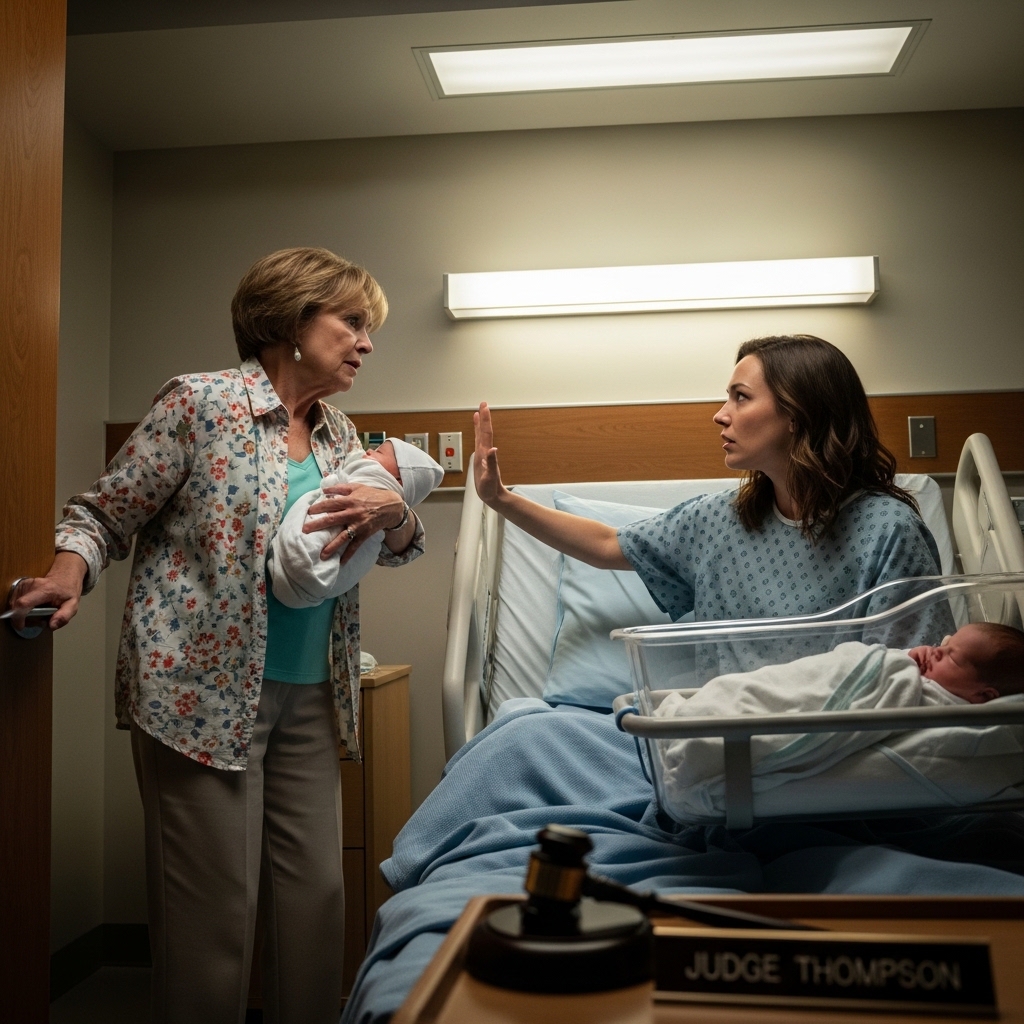
The first time my mother-in-law looked at me, she smiled politely.
But behind that smile, I could see the calculation in her eyes.
To her, I was the mistake her son had made.
I never corrected her.
Not when she hinted that I should “find a job.”
Not when she told relatives I was “still figuring out my life.”
Not even when she joked that I must enjoy “living comfortably on her son’s salary.”
The truth was simple.
I had never told her what I did for a living.
My husband, Daniel, respected that decision. My work required privacy, and honestly, I didn’t feel the need to prove myself to someone who had already decided who I was.
So in her version of the story, I was unemployed.
Just a quiet woman living in a nice house because her son worked hard.
And I let her believe it.
Years earlier, Daniel and I met in law school.
Most people assumed I married into success.
What they didn’t know was that I graduated at the top of my class, clerked for two federal judges, and after years of exhausting work and scrutiny, I was appointed as a federal judge myself.
It was the proudest moment of my life.
But I kept my professional life completely separate from Daniel’s family.
Partly for security reasons.
Partly because peace was easier than endless arguments.
Daniel’s mother, Carol, had strong opinions about everything.
And especially about me.
When I Became Pregnant
When I became pregnant with twins, Carol suddenly took a great interest in my life.
But not in a warm way.
She constantly reminded me how difficult motherhood would be.
“Two babies at once?” she said during one dinner. “That’s overwhelming even for capable mothers.”
Then she looked directly at me.
“I just hope Daniel understands what he’s getting into.”
Daniel shut that conversation down quickly.
But Carol never really stopped.
The Day the Twins Arrived
The twins arrived three weeks early.
After a long labor, the doctors decided on a C-section.
When I woke afterward, exhausted and groggy, the first thing I saw were two tiny bassinets beside the bed.
Two perfect babies.
Healthy.
Beautiful.
Daniel sat beside me holding both of them with the kind of awe only new fathers have.
“I can’t believe we did this,” he whispered.
I laughed softly.
“We?”
Because of Daniel’s connections through work—and because the hospital knew about my professional position—they placed us in a private VIP recovery suite.
It wasn’t something I had requested.
But it made recovery easier.
Quiet.
Secure.
Comfortable.
Daniel stepped out briefly to grab coffee.
That’s when the door suddenly opened.
No knock.
Carol walked in.
Her eyes went straight to the bassinets.
“Twins,” she said slowly.
Then she looked around the room.
Her expression changed.
“Why are you in this room?”
I blinked.
“What?”
“This is a VIP suite,” she said sharply. “These rooms are expensive.”
I was still groggy from medication.
“The hospital assigned it.”
Her lips tightened.
“I know my son works hard,” she said coldly, “but wasting money like this is ridiculous.”
Before I could respond, she placed a folder on the small table beside my bed.
A thick folder.
Filled with legal papers.
My stomach dropped.
“What is that?”
She opened the folder and turned it toward me.
Adoption documents.
Already prepared.
Signed in several places.
“My daughter has been trying to have a baby for eight years,” Carol said calmly.
Her daughter, Melissa, had struggled with infertility for a long time.
I felt sympathy for her.
But what Carol said next made my chest tighten.
“You can’t possibly raise two babies,” she continued. “It would be selfish to even try.”
“Carol…”
She tapped the papers.
“Give one to Melissa.”
I stared at her, certain I had misunderstood.
“You don’t deserve a VIP hospital room,” she continued, voice full of contempt. “You don’t even have a job. My son supports everything.”
Her finger slid across the signature line.
“Sign. One baby will change Melissa’s life.”
My hands began to shake.
“These are my children.”
“And you’ll still have one,” she said flatly.
The Moment Everything Changed
That’s when I reached over and pressed the emergency call button beside my bed.
A soft alarm sounded down the hallway.
Carol frowned.
“What are you doing?”
“I’m asking you to leave.”
She scoffed.
“Don’t be dramatic.”
Within seconds, two nurses and a hospital security guard rushed into the room.
“Ma’am, is everything okay?” one nurse asked.
I pointed to the folder.
“She brought adoption papers and is trying to take my child.”
Carol exploded immediately.
“This woman is unemployed and living off my son! She has no right to this room or those babies!”
The hallway grew quiet.
The security guard looked confused.
One nurse glanced at my chart.
Her eyes widened slightly.
Then she turned back to Carol.
“Ma’am,” she said calmly, “you need to lower your voice.”
Carol kept shouting.
“She trapped my son! She can’t raise two babies!”
At that exact moment, the door opened again.
Daniel walked in holding two coffees.
He froze.
“What’s going on?”
Carol pointed at me dramatically.
“Your wife is being selfish! Melissa deserves one of those babies!”
The room went silent.
Daniel slowly placed the coffees on the table.
“Mom,” he said quietly, “you need to leave.”
She shook her head.
“I’m trying to fix your mistake!”
The head nurse stepped forward.
“Ma’am,” she said carefully, “this patient is under special hospital protocol.”
Carol laughed.
“Oh really? Why? Because she married a successful man?”
The nurse hesitated only a moment.
Then she said it.
“No. Because she is a federal judge.”
The room fell completely silent.
Carol blinked.
“What?”
Daniel rubbed his face.
“Mom… we never told you because it wasn’t your business.”
Carol stared at me as if she had never seen me before.
“You’re… a judge?”
I nodded.
“Yes.”
Her mouth opened slightly.
“You mean… you work for the courts?”
I met her eyes calmly.
“I am the court.”
Security escorted her out soon after.
As she left, she kept repeating the same sentence.
“I didn’t know.”
“I didn’t know.”
What Happened Later
For several months, she didn’t speak to us.
Not even after the twins came home.
Eventually a letter arrived.
An apology.
It wasn’t perfect.
But it was sincere.
She admitted something surprising.
She hadn’t hated me because she thought I was unemployed.
She hated me because she believed I wasn’t good enough for her son.
Learning the truth forced her to confront how wrong she had been.
Two years later, she finally met the twins again.
This time she didn’t bring paperwork.
She brought stuffed animals.
And humility.
The strange part?
My career was never what mattered.
What mattered was something much simpler.
The moment someone believes they have the right to decide who deserves their own children—
they’ve already forgotten what family truly means.