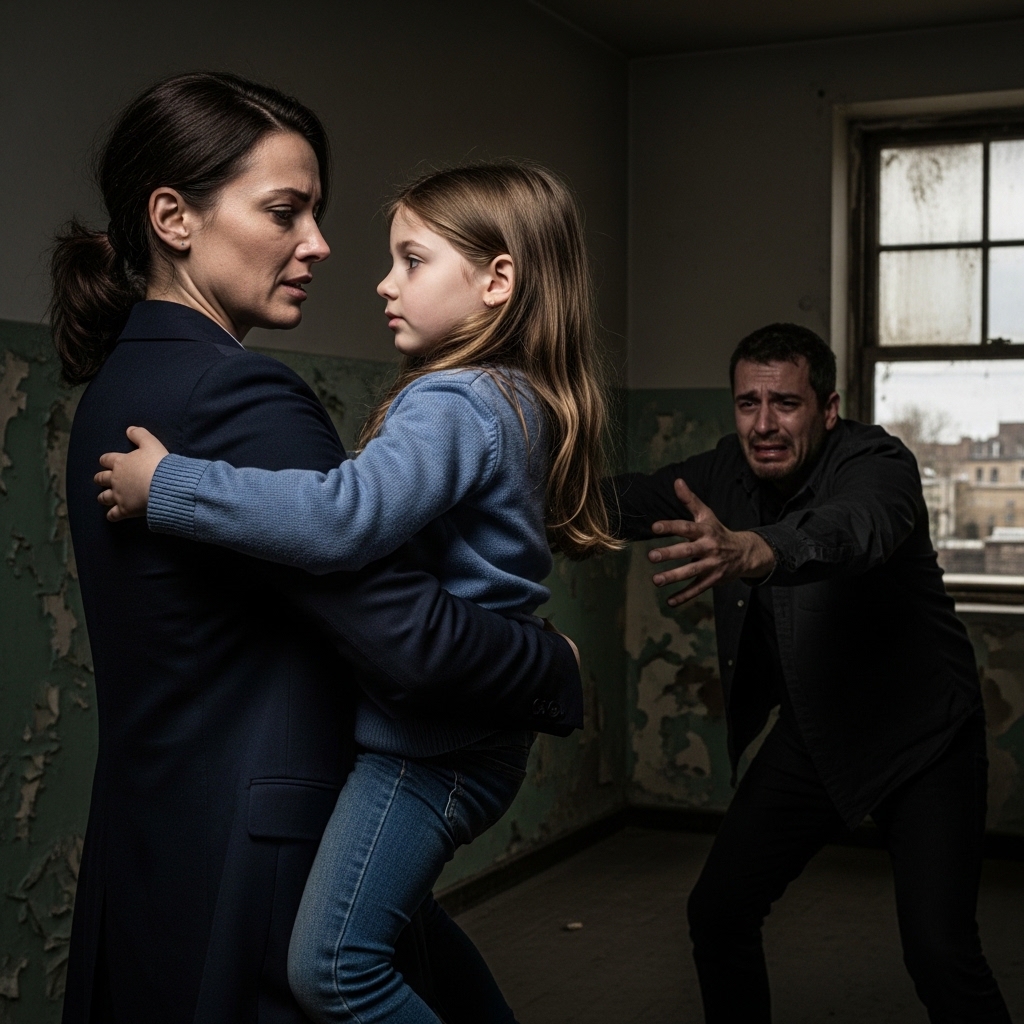
My stomach tightened the moment I heard her name.
Chloe.
I hadn’t seen her since the divorce. She was eleven then—quiet, watchful, always lingering in doorways while the grown-ups tore each other apart.
“What kind of hard time?” I asked, keeping my voice even.
Mark exhaled, stripped of his usual armor. No defensiveness. No superiority. Just exhaustion.
“She found out about the affair,” he said. “How it really started. Everything.”
Silence stretched between us like frost.
“She thought we got together after the divorce,” he went on. “Cara told her that version. But Chloe found old messages. Dates. She did the math.”
Sixteen-year-olds become investigators when betrayal is the crime.
“She won’t speak to us,” he said. “She says our whole marriage is built on a lie. That she doesn’t know who we are anymore.”
I leaned against my kitchen counter, eyes on the soft glow of pendant lights above the marble island—the life I rebuilt, piece by careful piece, after he dismantled mine.
“And what does any of this have to do with me?” I asked.
He hesitated. This was the part he hated saying.
“She asked about you.”
The words hit harder than I expected.
“She remembers you being kind,” he said, voice cracking just enough to notice. “Stable. Safe. She asked if she could talk to you.”
For a second, I couldn’t breathe.
Mark—the man who once called me “too sensitive,” “too dramatic,” “impossible to please”—was now begging me to be the safe harbor his daughter needed.
The irony burned.
“When?” I asked quietly.
“Christmas Eve. She’s free then.”
My heart stuttered.
Of course. The one night I hold sacred.
“You want me to give up my Christmas Eve dinner,” I said, flat.
“She just needs one steady adult in her life right now,” he pleaded. “Please.”
I almost laughed.
For seven years I begged him to be that adult for me.
But Chloe wasn’t him.
She was a child caught in the fallout of grown-up choices.
“Fine,” I said slowly. “But on my terms.”
Christmas Eve came, and I didn’t cancel the dinner. I simply added one more place setting.
Gold-rimmed china. Crystal glass. A small handwritten card: Chloe.
When she arrived, she looked smaller than memory—thinner, more guarded. Cara stayed in the car, engine running. Mark didn’t show at all.
Smart move.
Chloe stepped inside, eyes sweeping the candlelight, the soft jazz, the scent of rosemary-roasted duck and garlic.
“It’s beautiful,” she whispered.
“You’re safe here,” I told her gently.
She swallowed hard.
Dinner unfolded the way it always does—laughter, clinking glasses, real conversation—but I caught Chloe watching. Absorbing. Seeing what steady looks like.
After dessert, we carried blankets and hot chocolate to the terrace.
“That’s how it really started, wasn’t it?” she asked suddenly.
I didn’t soften the truth.
“Yes.”
Her eyes filled—not dramatic sobs, just silent, heavy tears.
“They keep saying it was complicated.”
“It wasn’t,” I said softly. “It was selfish.”
She nodded, slow and small.
“I feel stupid,” she whispered. “I defended them.”
“You’re not stupid,” I said firmly. “You were loyal. That’s a beautiful quality. Just make sure you give it to people who earn it.”
She looked at me—really looked.
“Did you ever hate me?” she asked.
My heart cracked open.
“Never. You were a child. None of this was your fault.”
She leaned into me then—tentative at first, then fully—and I wrapped my arms around her.
Not for Mark.
Not for revenge or closure.
For her.
Later, after the last guest left and the candles burned to stubs, David came up behind me in the kitchen and pressed a kiss to my temple.
“You okay?” he asked.
I nodded.
“Funny thing,” I said quietly. “Mark thought he was asking me for a favor.”
David smiled, already understanding.
“But?”
“But Chloe gave me one.”
Five years ago I walked away from that marriage feeling erased, diminished, invisible.
Tonight I understood something deeper:
The woman he tried to break became the one his daughter trusted most.
And that?
That is the quietest, most powerful kind of healing.