My mom raised me alone. When I was little it just meant she was always moving—always one more shift, one more thing to do. She worked long hours at a diner on the edge of town. Most nights she’d come home, kick off her shoes, and groan, “Lord, my feet are suing me.” I’d laugh because I was six and thought that was the funniest sentence ever spoken.
We didn’t have much, but she made our life feel steadier than it was. Then came that brutal winter. The wind found every crack in the old house. Heating bills climbed. I was old enough to notice how she stared at envelopes before opening them.
One night I walked into the kitchen and found her surrounded by piles of old clothes. “What are you doing?” She held up a square cut from a red sweatshirt. “Making us a quilt.” “Out of old clothes?” She grinned. “That’s what makes it good. Every piece already knows us.”
She worked on it for weeks. When she finished, warmth returned. That winter we lived under that quilt—wrapped together on the couch watching old movies when the house got too cold. For years it meant safety: all the bits of our lives stitched together. It meant home. It meant her.
Life eventually eased. Mom got better hours, then a promotion. I made it through college, landed a decent job, built a solid-looking life. Then Colin proposed—halfway through a chocolate tart in a little downtown restaurant. “Oh my God,” I said. “I haven’t even asked yet,” he laughed, “and that’s not a yes.” “Keep going.” He did. I said yes.
I called Mom the second I got home. She screamed so loud I pulled the phone away. “Oh, honey. I’m so happy for you.” “I want you next to me the whole day.” “I wouldn’t miss it for the world.”
Then came the diagnosis. Cancer. At first everyone said the same words: treatable, manageable, early enough to fight. Doctors sounded steady. Friends hopeful. Colin kept repeating, “We’re going to get through this.” I believed them all.
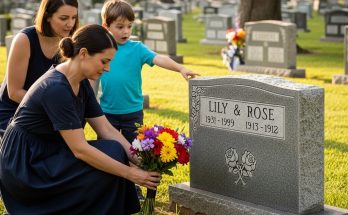
But things moved faster than anyone expected. Wedding invitations were already out. Mom had picked her dress. Winter ended, and she was gone.
The weeks after blurred into casseroles, paperwork, and kind words that didn’t reach the ache. Colin held me through it—gave me space to fall apart without trying to fix everything.
A few weeks later I went to Mom’s house to start packing. Every drawer felt like a decision I wasn’t ready for. I opened something, stared, closed it—like that counted as progress. Eventually I wandered into the living room. The quilt was folded on the shelf behind the couch. I pulled it down, held it to my chest. Closed my eyes. It felt like if I turned around, she’d be there saying, “What are you doing snooping through my things?”
That was when I knew. I told Colin, bracing for him to think it strange. “I want to turn it into my wedding skirt,” I said. “Not the whole dress. I know it sounds—” “Beautiful,” he finished. “Really?” “Yes. Your mom made it to keep you warm. Wearing it on your wedding day makes perfect sense.”
A seamstress helped design it. The finished skirt was stunning in an unexpected way. The first time I tried it on, I looked in the mirror and felt Mom standing just behind my shoulder.
Then Linda—Colin’s mother—saw it. She’d always been polished in a way that made me feel slightly underdressed. She dropped by during a fitting. “You’re planning to wear that to the wedding?” she asked. “Do you realize how many of my business associates will be there?” I blinked. “What does that have to do with anything?” She gave a short laugh, gestured at the skirt. “It looks like a pile of rags.”
Colin stepped forward. “Mom.” I looked straight at her. “It’s my mother’s quilt. She made it. It’s special to me. I’m wearing it to honor her.” Linda didn’t back down. “And now it’s something that will embarrass this family.” Colin, sharper: “Enough.” I lifted a hand. “I’m wearing it, Linda. Colin and I both agree.”
Her mouth tightened. She said nothing more, but the look she gave me lingered. I told myself she’d eventually understand. I was so wrong.
The morning of the wedding was the usual chaos—people rushing, planner barking into a headset like she was running a military op. My skirt hung in the bridal suite closet. I’d checked on it twice already; seeing it steadied me.
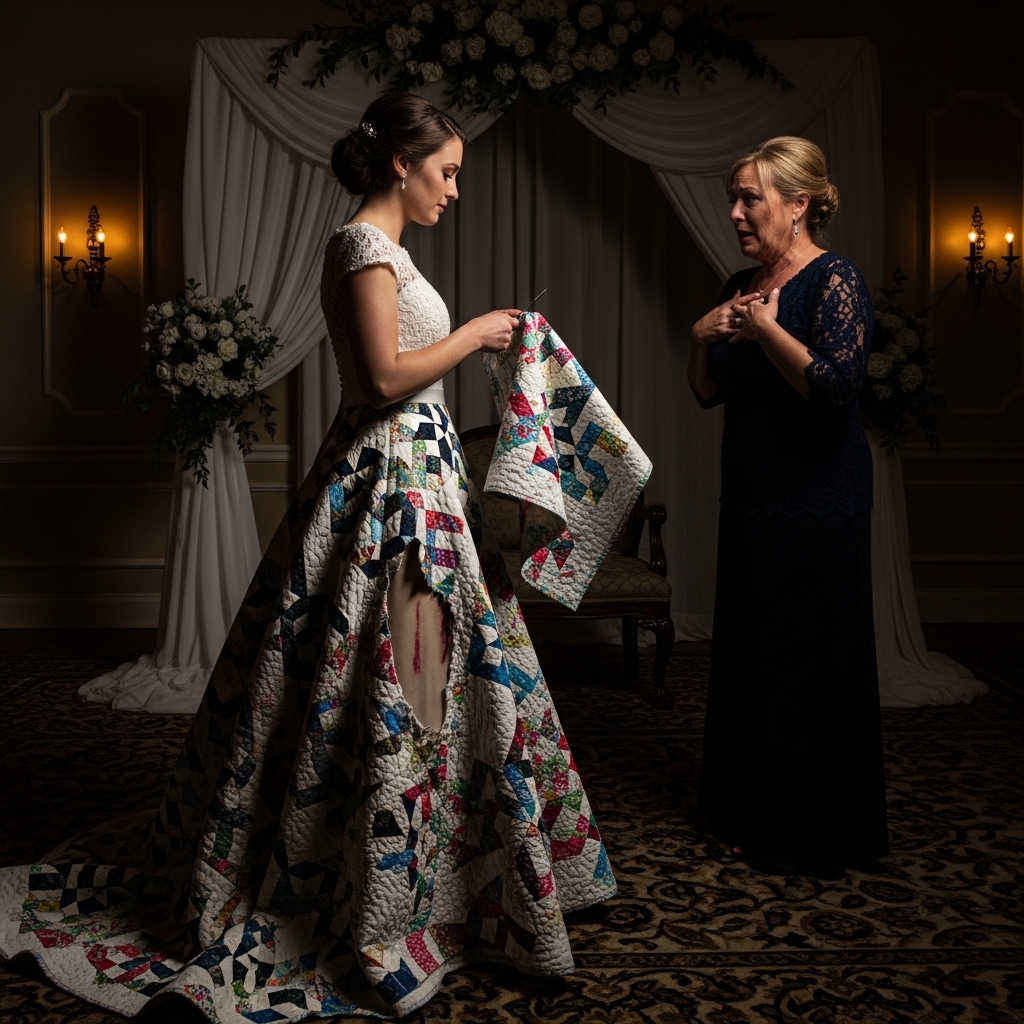
Two hours before the ceremony I went upstairs to dress. I opened the closet door. At first my brain refused to process it. The fabric hung crooked, torn in long ugly gashes. Dark stains spread across the patchwork. One seam ripped so hard squares dangled loose, barely attached.
I sank to the floor. “No, no, no.” The door clicked softly behind me. “Oh, dear.”
I looked up. Linda stood in the doorway, smiling. “Is something wrong with your skirt?” “You did this.” She gave the tiniest shrug. “I saved you from embarrassing yourself.”
I thought I’d scream or throw something. Instead everything went still. I wiped my face. “You know, you might be right. Maybe it wasn’t appropriate.” Her smile widened. “I’m glad you’re finally being sensible.”
I gathered the ruined skirt carefully in my arms and stood. “We should make a few changes.” I walked past her.
The planner looked up when I set the skirt on her table. “What happened?” I leaned in. “I need your help.” When I told her the plan, she asked one question. “Are you sure?” “Yes,” I said. “Absolutely.”
When the church doors opened, a hush fell before I even stepped forward. I wore a simple ivory dress from the planner’s emergency rack. In my arms I carried the ruined quilt skirt—patchwork pieces hanging loose, stains visible under the lights. Whispers rippled as I walked the aisle.
At the altar Colin’s smile faded to confusion. “What happened?” he whispered when I reached him. “You’ll understand in a minute.”
I laid the damaged skirt across the small table beside us. Nodded toward the sound booth. Music faded. A soft piano track began. The screen behind the altar flickered on.
First image: Mom in our kitchen, holding up a half-finished quilt, laughing. A murmur moved through the guests. My recorded voice filled the church: “When I was growing up, it was just my mom and me.”
Image after image played. “There were winters we couldn’t afford heat very often. So my mom made us a quilt from old clothes. It kept us warm. It made us feel safe.”
Final photo: me in the finished skirt at the fitting, hand over my mouth, crying. “When I got engaged, I turned that quilt into my wedding skirt. It wasn’t fancy, but it meant everything to me.”
The screen went black. I stepped forward, took the microphone. “That video was supposed to play at the reception. That was the skirt I planned to wear today.” I lifted the torn fabric. Gasps scattered through the church. “I found it like this a few hours ago.”
I turned toward the front row—toward Linda. “She told me herself she destroyed it. Said she was saving this wedding from embarrassment.”
Linda pressed her lips into a hard line, eyes narrowing. I looked back at the guests. “My mother worked two jobs to raise me. Nothing she ever made for me could embarrass me.”
Then I turned to Colin. The confusion was gone—replaced by something harder. “Colin, I love you. But before we do this, I need to know: if I marry you, am I expected to tolerate this kind of cruelty from your family?”
Linda shot to her feet. “This is absurd.” My eyes stayed on Colin. “I cannot start a marriage where my mother’s memory is treated like trash. So I need to know—will you stand with me, or with your mother?”
Colin turned toward Linda. She let out a brittle laugh. “Oh, don’t be ridiculous. That thing looked like rags.” “Mom,” he said quietly, “did you destroy it?” “I was protecting this family’s reputation.”
A low sound of shock and disgust moved through the guests. Colin’s voice stayed steady. “No. You were protecting your ego.” Her mouth opened. “You’re choosing her over your own mother?” “I’m choosing decency.”
He looked toward the ushers. “Please escort my mother out.” Linda glanced around like someone would intervene. No one did. As the ushers took her arms she snapped, “You will regret this.” The doors shut behind her.
Colin turned to me, then to the skirt on the table. He touched the torn fabric with the gentlest expression I’d ever seen on his face. “I’m so sorry.” He faced the guests. “My future wife’s mother raised her with love and sacrifice. That deserves respect. What happened today was cruel, and it will not be tolerated.”
Tears ran down my face. He took my hand. “If you’re still willing, I’d really like to marry you today.” I smiled through the blur. “I think my mom would like that.”
The officiant cleared his throat. “Then perhaps we begin again.” So we did.
And when I stood there saying my vows, the torn quilt rested across the altar between us. It stayed there like proof: Proof that love stitched by tired hands in a cold house could survive years. Proof that grief could be carried without shame. Proof that the people who truly loved me understood exactly what mattered.