I have no memory of the day my mother gave me away.
I was only a baby then—too young to understand anything. All I know comes from files, social workers, and the quiet explanations people offered me as I grew older. The story was always the same: my mother had been young, scared, and unprepared for a child. So she handed me over and walked away.
That’s how my life in foster care began.
Growing up, I learned to live with pieces of a story instead of the full picture. One house would become my home for a while, then suddenly it wouldn’t. Different families, different rules, different bedrooms that never quite felt like they belonged to me.
Some people were kind. Some tried their best. But nothing lasted long enough to feel permanent.
Eventually, I stopped expecting permanence at all.
By the time I was old enough to understand what abandonment really meant, it had already shaped who I was. I learned to rely on myself, to work hard, and to keep my emotions carefully guarded.
Love, as far as I could tell, didn’t last forever.
At best, it was temporary.
At twenty-two, though, curiosity finally pushed past my fear. I had spent my entire life wondering about the woman who had given birth to me. What did she look like? Did she ever think about me?
So I decided to find her.
It took months of searching—digging through records, making calls, following small clues. Eventually, I found an address.
The bus ride there felt endless.
I rehearsed what I would say over and over again, whispering the words to myself as the city passed by the window. My hands trembled the entire time.
I wasn’t expecting miracles.
I didn’t want money, or explanations, or even an apology.
I just wanted to see her face.
When I finally knocked on the door, my heart felt like it might burst.
The door opened.
She stood there staring at me.
But the expression on her face wasn’t recognition.
It was confusion.
Like I was a stranger who had shown up at the wrong house.
She looked polished and confident—nothing like the frightened teenage girl I had imagined all my life. Behind her, through the open doorway, I could see framed photos hanging on the wall.
Family photos.
Three children smiled brightly in those pictures.
A life she had built.
A life that didn’t include me.
She asked me a few polite questions, almost like she was making small talk with someone she’d just met.
“What do you do for work?” she asked.
I decided to be honest.
“I’m a waitress,” I told her. “I didn’t go to college. I’m just working and trying to get by.”
The moment the words left my mouth, I saw her expression change.
Her face hardened.
“You’re just a waitress?” she said coldly.
The disappointment in her voice felt like a knife.
Then she added something that hurt even more.
“I don’t want you anywhere near my children.”
Before I could say anything else, she closed the door.
There was no yelling.
No dramatic confrontation.
Just the quiet click of the lock.
But that sound echoed inside me louder than any argument ever could.
I walked away slowly, my chest burning, trying to swallow the pain rising in my throat.
That day I made a promise to myself.
I would never go back.
Whatever part of me had still hoped for a mother—whatever fragile hope I had carried for twenty-two years—needed to disappear.
And I would make sure it did.
Forty days later, my phone rang.
I almost ignored it.
But something made me answer.
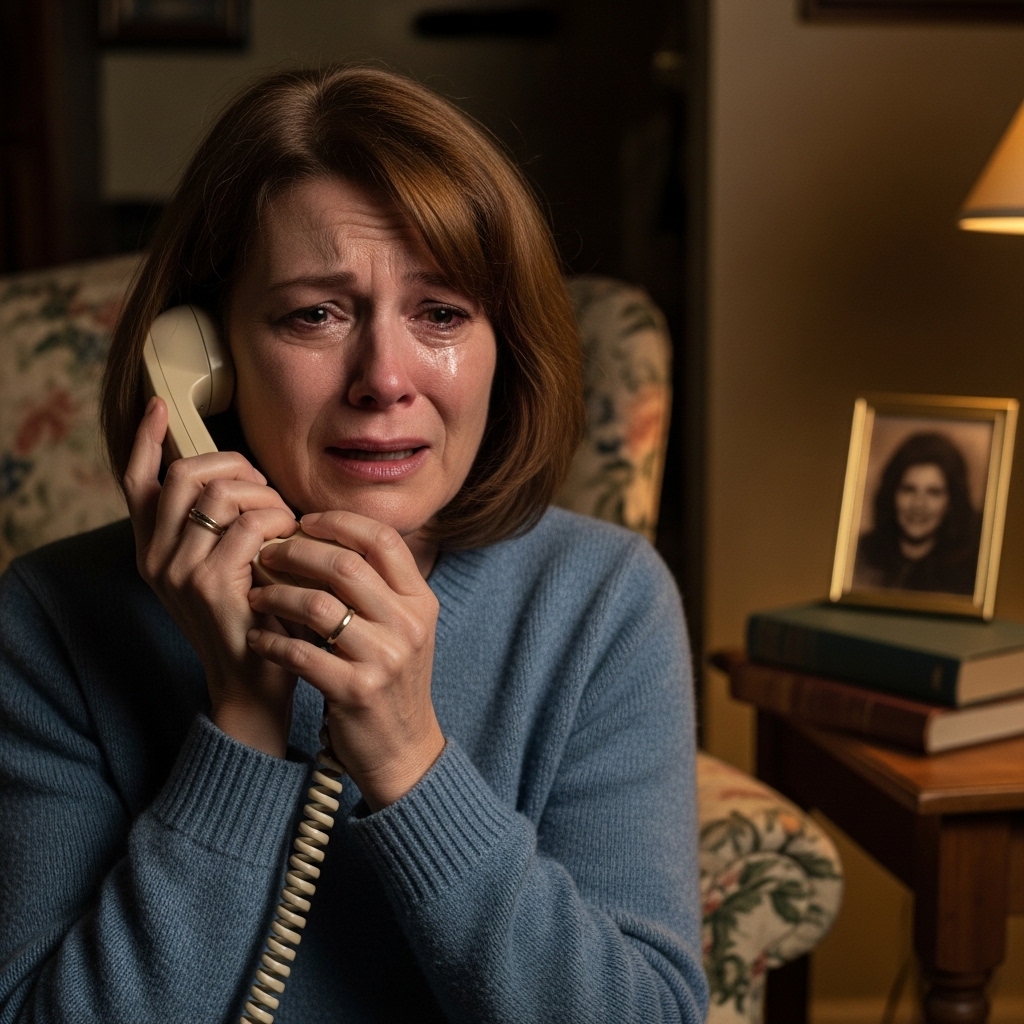
The voice on the other end barely sounded human.
It was shaky, panicked, completely broken.
It took me a moment to realize it was her.
She said my name like she was pleading with the universe itself.
Then she explained why she was calling.
Her oldest daughter—my sister—had been diagnosed with a severe autoimmune disease. Her body was attacking itself, destroying her immune system.
Doctors said she needed a bone marrow transplant.
Without it, she wouldn’t survive.
The younger children were too young to be tested. My mother and her husband had already been checked, but neither of them were matches.
Other relatives had tried.
None of them worked.
Then she said the sentence that froze everything inside me.
“You’re her last chance.”
I didn’t respond right away.
Memories flooded my mind—the door slamming shut, the way she had looked at me like I was something embarrassing she needed to hide.
I had every reason to say no.
Every right.
But the only thing I could think about was a girl I had never met… fighting for her life.
So I agreed to get tested.
When the doctor called with the results, his voice sounded almost surprised.
I was a match.
A perfect one.
In that moment, something strange washed over me. It felt as if life had circled back around and placed a choice in front of me.
Not about my past.
But about the kind of person I wanted to be.
The donation process wasn’t easy. It was painful, exhausting, and emotionally overwhelming.
But through all of it, I never once regretted saying yes.
After the procedure, I stepped into the hospital hallway and saw my mother waiting there.
The moment she saw me, she collapsed to her knees.
She sobbed openly, begging for forgiveness, her voice echoing down the corridor.
People stopped walking. Nurses paused their work.
For a moment, everything seemed to stand still.
I helped her back to her feet.
“I didn’t do this for you,” I told her quietly.
“I did it for my sister.”
Then I added something that surprised even me.
“Blood doesn’t turn into water.”
That moment changed something between us.
It didn’t erase the past.
But it opened a door that had been closed for a very long time.
Slowly—carefully—we began rebuilding something that had never truly existed before.
For the first time in my life, I wasn’t treated like a secret or a mistake.
I was invited to family dinners.
My siblings welcomed me with open arms, hugging me like they had known me their entire lives.
We talked for hours, sharing stories, laughing, arguing over small things the way families do.
Memories began forming where there had once been nothing.
And somehow, love grew faster than I ever thought possible.
Today, my bond with my three siblings is unbreakable.
We support each other fiercely.
And my mother—flawed, remorseful, still learning—knows exactly what she almost lost and what she was lucky enough to gain back.
Looking back now, I’m grateful I didn’t answer cruelty with more cruelty.
Compassion gave me something I once believed I would never have.
Healing.
A second chance.
And a real family I can love with my whole heart.