The Light That Annoyed Me
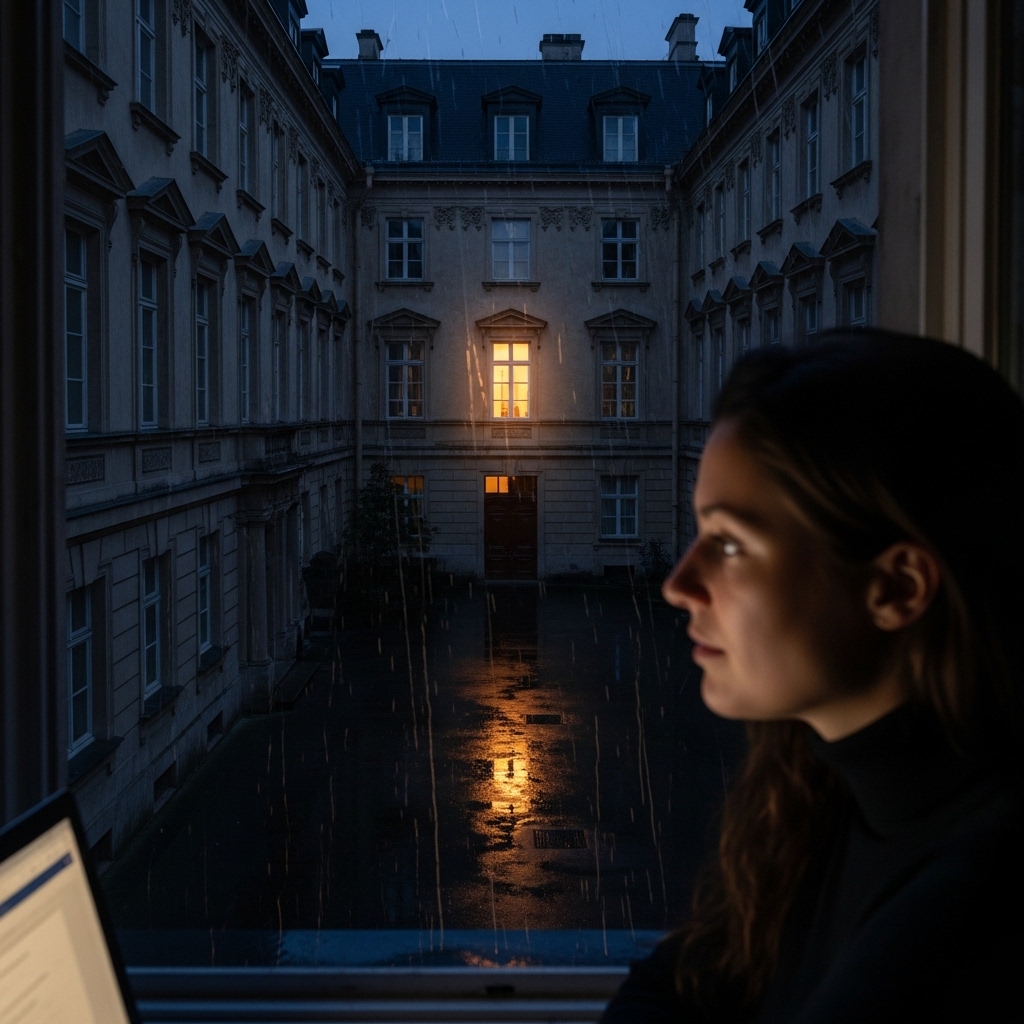
Every night, like clockwork, my neighbor left his lights on.
Not just one lamp.
All of them.
The kitchen. The living room. The hallway. Even the small lamp by the window that faced directly into my bedroom.
It felt excessive. Wasteful. Careless.
I complained more than once—politely at first, then with sharper words. Electricity wasn’t free. Darkness was normal. Why did he need his apartment glowing until morning?
He never argued.
He never explained.
He simply nodded and continued leaving the lights on.
I convinced myself he was stubborn.
I was wrong.
The Blackout
One evening, the entire building suddenly went dark.
No warning.
No flicker.
Just a heavy wave of darkness swallowing the courtyard.
I walked to the stairwell window, half curious and half irritated, expecting to see my neighbor pacing in frustration without his beloved lights.
Instead, I saw something that made my chest tighten.
His apartment wasn’t dark.
It glowed softly.
Flickering golden light spread across the walls.
Candles.
Dozens of them.
What I Saw Through the Window
He sat alone at his kitchen table.
No television.
No phone.
No restless movement.
In front of him sat a small mechanical clock. He turned it slowly, carefully winding it with both hands, as if afraid of damaging something delicate.
Then he placed it beside a framed photograph.
He didn’t touch the frame.
He only looked at it.
The candlelight reflected in the glass, making it impossible for me to see the face inside.
The building was silent.
In my mind, all I could hear was the quiet ticking of that clock.
It didn’t feel like someone afraid of darkness.
It felt like ritual.
It felt like memory.
The Story I Didn’t Know
The next morning, I mentioned the blackout to Mrs. Alvarez downstairs.
She paused for a moment.
Then she sighed gently.
“You know his wife passed away last year, right?”
I didn’t.
“She was very sick for a long time,” she explained. “Toward the end, she became afraid of the dark. He kept every light on so she could move around the apartment without fear. He promised she’d never feel alone at night.”
The words settled heavier than I expected.
“After she died,” Mrs. Alvarez added quietly, “he never turned them off. He says the light makes the silence easier.”
And during blackouts?
“He uses candles,” she said softly. “He keeps his promise—even when the electricity fails.”
The Things We Misjudge
I walked back upstairs slowly.
I thought about every irritated glance through my curtains. Every complaint. Every assumption I had made.
I had reduced his light to an inconvenience.
I had mistaken devotion for wastefulness.
That evening, when darkness returned and his apartment began glowing again—steady, warm, unwavering—I didn’t close my blinds.
I left them open.
Across the courtyard, the light didn’t bother me anymore.
It looked different now.
It looked like love that refused to fade.
What Remains
Sometimes what irritates us is simply grief wearing a shape we don’t recognize.
Sometimes the habits we call stubborn are promises someone refuses to break.
And sometimes, a light left on all night isn’t carelessness at all—
It’s someone keeping watch long after the world has moved on.