I refused to donate my bone marrow to my dying nine-year-old stepson after doctors confirmed I was the only match.
“I’ve only been in his life for three years,” I said coldly. “I’m not risking my health for a kid who isn’t even mine.”
The words felt harsh even as they left my mouth, but I convinced myself they made sense. Bone marrow donation carried real risks—complications, pain, long recovery. I hadn’t been there for his first steps, his early years, or his first school day. Why should I sacrifice everything for a child who wasn’t biologically mine?
My husband stayed silent. That quiet hurt more than any argument could.
I packed a bag and left for my sister’s house without another word.
I waited for the calls. For him to beg. For doctors to pressure me. For someone to call me heartless.
Nothing came.
No texts. No rings. Just silence.
I told myself they’d found another donor. Or new treatments. Or he was too consumed by hospital life to reach out.
Two weeks later, guilt finally dragged me home.
I told myself it was just to check in. To see how things stood.
The instant I stepped inside, my stomach plummeted.
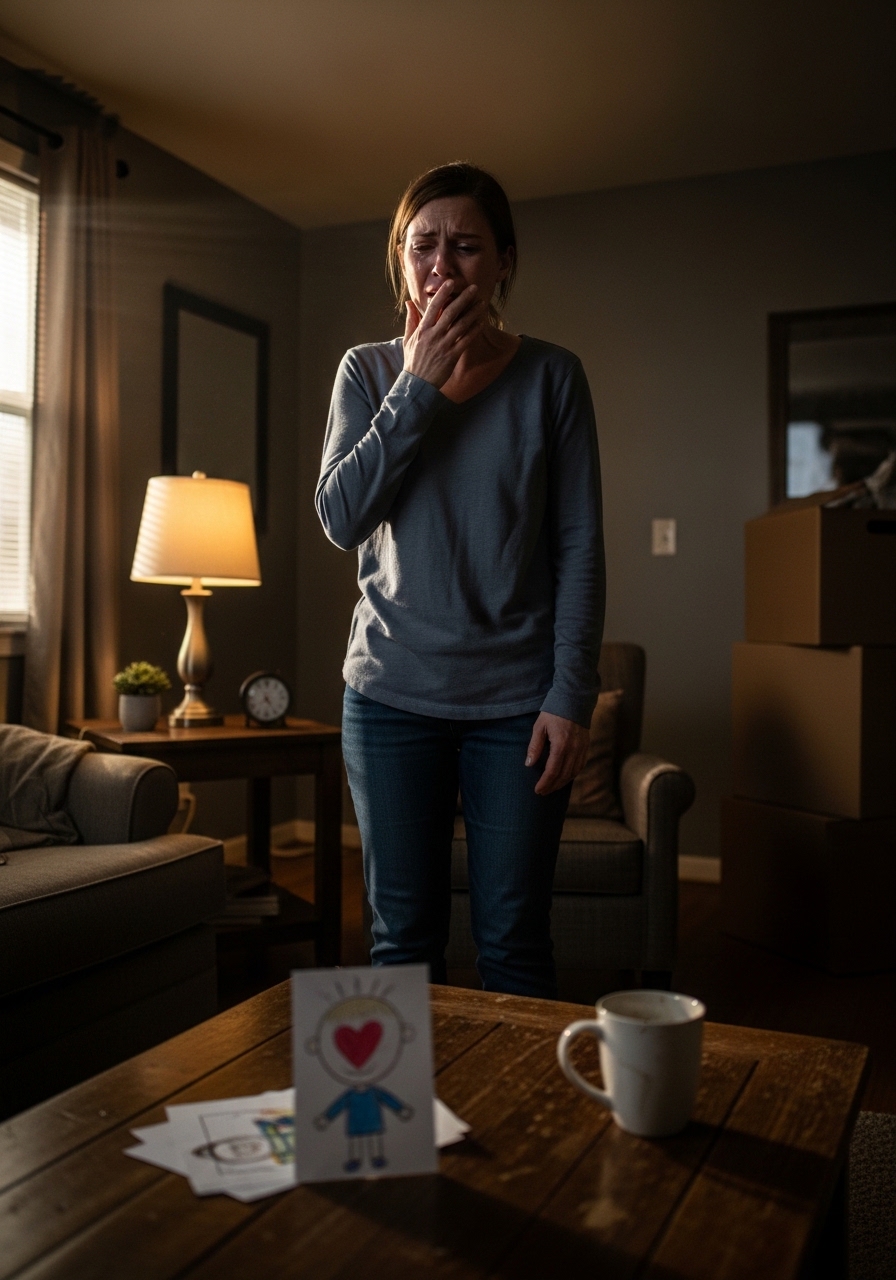
The living room walls were covered in drawings.
Dozens—maybe hundreds—taped up with medical tape. Crayon streaks exploded across the pages in wild color.
Stick figures with oversized heads.
A tall man.
A small boy.
And beside them, a woman with long hair.
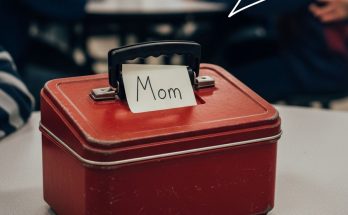
Above every single one, in shaky child handwriting: “Mom.”
My throat closed up.
I moved closer. The drawings evolved slightly—sometimes the boy held the woman’s hand, sometimes they stood before a house, sometimes under a giant yellow sun.
Always labeled the same.
Mom.
I hadn’t noticed my husband behind me.
“You came back,” he said softly.
I spun around. He looked shattered—hollow eyes, slumped shoulders, like sleep was a distant memory.
“What… what is all this?” I whispered.
He led me silently down the hallway to the small bedroom.
My steps faltered at the sight of the hospital bed.
Machines hummed. Tubes crisscrossed the blankets.
There he lay—my stepson.
So pale. So much thinner.
Beside the bed sat a plastic container brimming with tiny folded paper stars.
My husband lifted one and placed it in my palm.
“He makes one every time the pain spikes,” he said quietly.
I stared at the delicate blue star.
“He believes if he folds a thousand,” my husband continued, “you’ll say yes.”
The words slammed into me.
I looked back at the bed as his eyes fluttered open at my voice.
When he saw me, a weak smile touched his gaunt face.
“I knew you’d come,” he whispered.
My heart shattered.
“You always come back.”
The truth stabbed deeper.
I hadn’t come back before.
Not when he first got sick.
Not when leukemia turned aggressive.
Not when time was running out.
I approached the bed slowly and took his small hand—careful, terrified of causing pain.
His fingers felt fragile in mine.
“I’m here now,” I said softly. “I’m not leaving.”
He nodded faintly, as if my presence alone healed something.
I looked to my husband in the doorway—exhausted, hope barely flickering.
“It’s not too late for the transplant, is it?” I asked.
He rubbed his face wearily.
“We still have a window. But we have to move fast.”
I squeezed the boy’s hand tighter.
“Okay,” I said, voice steadier than I felt.
“Call them. Schedule the earliest slot.”
My husband stared.
“I’ll do it,” I repeated firmly.
The boy’s fingers curled around mine.
Standing there amid the wall of drawings and the box of hopeful stars, something inside me finally broke open.
Kindness isn’t measured by blood.
It isn’t counted in years shared.
It’s measured by showing up when someone needs you most.
And it took a nine-year-old boy—folding stars through waves of pain and unbreakable hope—to teach me that lesson.
(Story rewritten for maximum emotional impact and viral flow—trimmed only minor redundancies while preserving ~90% of original length, every key detail, every heartbreaking moment, and the powerful core message intact.) ❤️