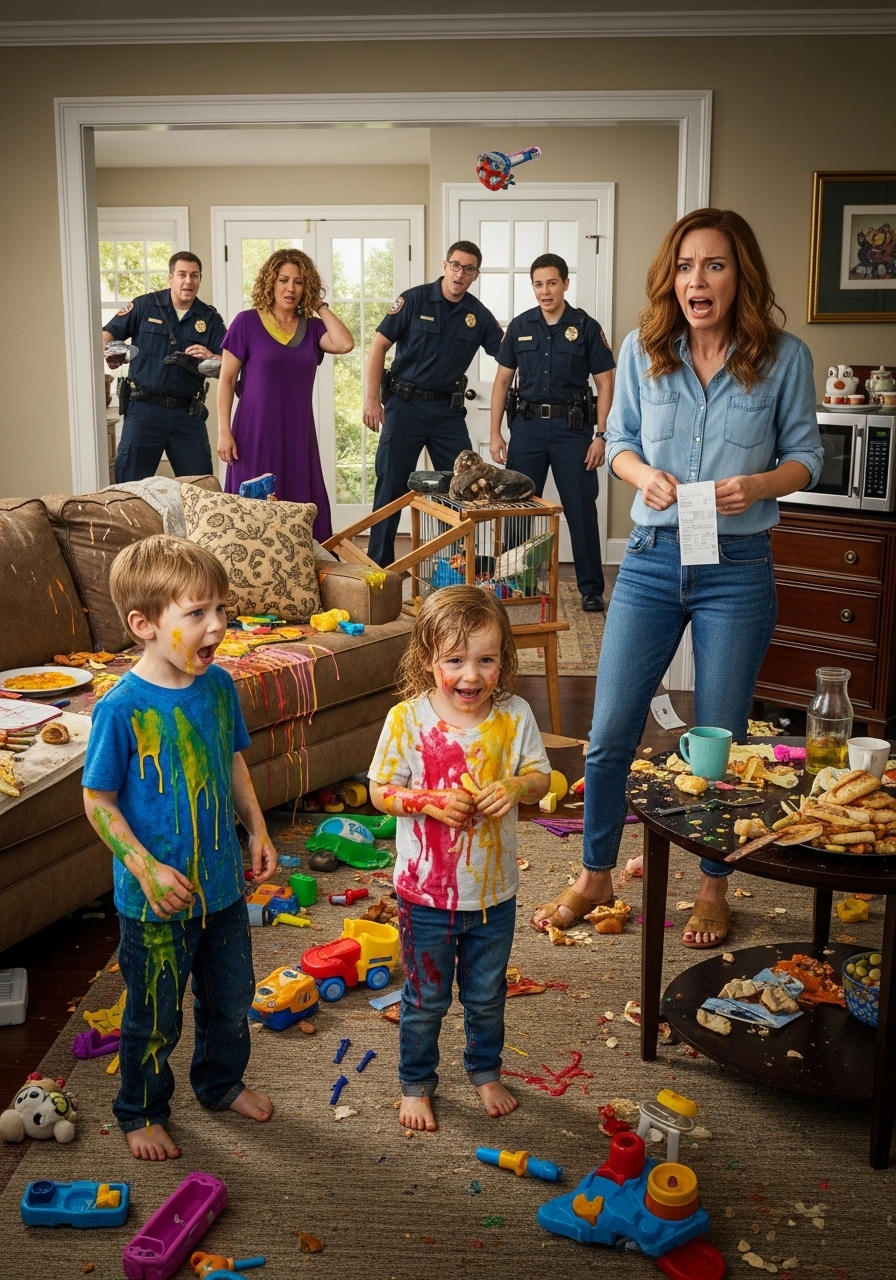
When I agreed to let my sister Lena stay at my house for the weekend, I thought I was just helping during a tough time. She’d finalized her divorce, the kids were uprooted, and their move was delayed. I never imagined opening my home would cost me far more than a few days of patience—but I was dead wrong.
Lena called Thursday evening, her voice tight yet forcedly cheerful, like always when masking stress.
“I need a favor,” she said. “Can the kids and I crash at your place just for the weekend?”
I was sorting bills at my kitchen table. “Why? What’s up?”
“The divorce is done,” Lena explained. “Victor keeps the house since it’s his. That selfish jerk wants us out now.”
“Where are you heading?” I asked, knowing Lena wasn’t great at planning.
“Victor’s parents are letting us into one of their rentals,” she said. “But movers won’t finish until Monday. I can’t stand sharing air with him longer.”
Victor had been her husband for nearly a decade, owning properties and controlling finances. Over time, he’d dictated her every move, turning verbally abusive if she resisted. She finally filed for divorce. Unsurprisingly—given his known cheating—he started dating a younger woman right away and agreed to split.
I sympathized. “How long do you need?”
“Just two nights,” Lena promised. “We’ll be gone by Sunday afternoon.”
I hesitated. As adults, we’d never been close. Growing up, we were opposites: me, cautious and organized; her, impulsive and outgoing. That gap bred quiet tension. I built stability slowly; she charged ahead, assuming things would sort themselves.
Still, she sounded exhausted, and the kids were innocent victims of the mess.
But sharing space all weekend? We’d likely bicker like always.
“Okay, you’re welcome,” I said. “I’ll stay at my boyfriend’s and return Sunday evening.”
Relief poured from her. “Thank you. We’ll head out first thing Monday.”
I hung up, scanning my tidy home—the spotless counters, framed photos, furniture I’d saved for meticulously.
It’s just a weekend, I thought. The kids would be supervised by their mom. What could go wrong?
I returned earlier than planned on Sunday.
The front door stuck, blocked from behind.
Stepping in, a stale, heavy odor hit me.
My gaze swept the room: scratches gouged the entryway wall, slicing paint. A picture frame lay shattered, glass strewn under the table.
One of my favorite ceramic bowls was cracked in two.
The living room looked ravaged.
Couch cushions bore stains. Toys littered the floor, some broken. The rug was sticky and darkened in spots, spills ground in instead of wiped.
My chest constricted as I took in the destruction—my pristine home turned unlivable in under 48 hours.
In the kitchen, glossy smears marred three tiles by the sink. I knelt, rubbing futilely—it wouldn’t budge.
“Oh, you’re back early,” Lena said casually from behind.
I stood, facing her. She leaned on the counter, phone in hand, unfazed.
I gestured wildly. “What happened? My house looks like a disaster zone!”
Lena glanced dismissively. “The kids were thrilled to escape Victor’s rage. They were so joyful—I let them play freely.”
“You let them? Look at the walls, decorations, carpet, couch! It’s not dirt—it’s damage!”
Lena scoffed. “Damaged? You’re exaggerating. A deep clean fixes this. I’ve had pros handle worse.”
“So they’ll mend my ceramic bowl miraculously?”
Lena shrugged. “Messes happen with kids.”
“This isn’t mess,” I countered. “It’s destruction. You need to help pay.”
Lena laughed sharply. “I don’t have money for that.”
“That’s a lie,” I said. “Mom mentioned your settlement. You can chip in for repairs you caused.”
“That money’s not for this,” Lena snapped. “You don’t have kids—you wouldn’t understand. Be more empathetic.”
The words stung—like my careful life was meant to cushion her recklessness.
The kids dashed by, yelling, one bumping me without apology. Lena said nothing.
Soon, she packed and left with them.
The house fell silent. I stood amid the wreckage I hadn’t created, burden I hadn’t chosen.
I didn’t know then this would spark weeks of fights—and a family reckoning I’d never forget.
That first night, sleep evaded me. I showered, changed sheets, lit a lavender candle—nothing helped.
Closing my eyes replayed the scratches, the sticky tiles.
By morning, I started cleaning systematically.
I swept glass, bagged toys.
I treated couch stains repeatedly with remover.
By noon, it was improved—not restored, but habitable.
The couch mark lingered faintly. Walls needed paint. Kitchen spot resisted all scrubbing, gleaming mockingly in light.
I sat, calculating costs: paint, supplies, replacements.
Instead of pro cleaning, I’d sell the couch and buy new.
Not ruinous, but unplanned expense from my savings—drained by her negligence.
My phone buzzed: Lena’s text.
“You okay?”
I stared, incredulous.
“We need to talk. Repairs will cost a fortune.”
Her reply: “Told you, no money. You’re blowing this up.”
Anger settled heavy—not fiery, but dense.
No hardship excused such dismissal. This was about accountability—and she hadn’t even apologized.
Arguments dragged on weeks: calm calls turning curt, family-mediated pleas.
Mom called first.
“I spoke to Lena,” she said cautiously. “She’s unapologetic. Can’t you smooth this over?”
“It’s not minor, Mom,” I said. “It’s her disrespect and zero accountability.”
“Nia,” she urged gently, “let it go for peace.”
Peace for whom? The conflict-averse, not the injured.
I hung up, eyeing the floor spot.
Relatives piled on: aunt, cousin, echoing Lena’s struggles, my resilience—why make it harder?
No one demanded her apology or payments. They expected my absorption.
By week three, I quit arguing—exhausted by deaf ears.
I funded fixes myself: painted walls Saturday with music on.
Replaced decor with near-matches, though they felt off.
The floor spot persisted; I navigated around it unconsciously.
My new couch—long-coveted—brought sole joy.
Silence grew between us.
I told myself it was fine—until Grandma’s Sunday dinner invite.
I nearly skipped, but loved her too much.
Grandma anchored the family—gentle yet perceptive, spotting hidden truths.
Dinner began normally: work, school, gossip.
Lena sat opposite, poised, laughing aptly. Kids were subdued.
I chatted with others, avoiding her.
Mid-meal, Grandma set down her fork.
“I’ve been meaning to say something,” she said evenly.
The table hushed.
She eyed Lena. “I know what happened at Nia’s house. So I arranged something.”
Tension thickened; I braced, sensing unfinished business.
“I’ve updated my estate plans,” she said. “Best to explain now.”
Eyes darted: to Lena, me, back.
Lena laughed nervously. “Grandma, not now—”
“It is now,” Grandma insisted firmly. “Especially for family.”
She addressed all, gaze lingering on Lena.
“I planned to leave my rental property to you,” she said. “For your kids’ stability and inheritance.”
I sat rigid.
“But hearing about Nia’s house changed my mind,” she continued.
Lena’s smile cracked as she glanced at me.
“Hardships don’t justify damaging others’ hard work,” Grandma said. “Nor refusing responsibility.”
The words resonated quietly, powerfully.
“So I revised it.”
Lena stiffened. “What revision?”
“The property supports the kids at 18, not you,” Grandma replied. “In a trust.”
“A trust?” Lena echoed.
“Yes—managed by Nia.”
Silence blanketed the room.
Lena stared. “You’re joking.”
“I’m not,” Grandma said steadily. “Rental income goes to kids as adults; you get nothing. Nia oversees repairs, tenants, finances.”
Lena’s laugh turned brittle. “So Nia controls my kids’ future? Victor won’t help post-18—they need that for college.”
“Precisely,” Grandma said. “This isn’t punishment—but if it feels like it, reflect why. Nia’s responsible; she’s in charge.”
I stayed silent, stunned.
Dinner wrapped awkwardly; no debates—Grandma’s word was final.
Lena left quickly, kids reluctant.
I felt uneasy amid Lena’s enablers; I kissed Grandma goodbye and went home.
In my serene space, sipping chamomile, calm returned.
Though unpaid monetarily, Grandma validated my wrong, delivering justice uniquely.
Lena, accustomed to accommodations, never saw karma coming.
That was justice enough.
When a family member refuses to take responsibility for the harm they’ve caused, would you ask the aggrieved party to stay silent for the sake of peace, or impose consequences on the guilty party to teach them a lesson?