My name is Hannah Carter. For most of my life, I told myself our family was just “old-fashioned.” I was the reliable oldest daughter—the low-maintenance one who never asked for much. My younger sister, Madison, was the one everyone shielded, celebrated, and quietly rescued. At first I didn’t resent it. I accepted the roles we were assigned: mine heavy, hers soft. My parents—especially my mom—treated the difference like an unspoken rule you didn’t challenge unless you wanted to be called ungrateful.
When Madison got engaged to Ryan, my mom, Linda, turned the wedding into a full-scale legacy event. She obsessed over “image” and “standards,” as though we were a prominent dynasty with a reputation to uphold. My dad, Tom, simply nodded along to whatever she decided. I handled the quiet labor—DIY centerpieces, emergency supply runs, last-minute errands—because that’s who I am. As a middle school counselor, I spend my days teaching twelve-year-olds to name their feelings instead of exploding. At home, I swallowed mine so Mom wouldn’t accuse me of being dramatic.
Madison’s plans escalated quickly: tastings, floral mockups, a high-end planner with a permanent clipboard. She posted engagement photos constantly; Mom commented under each like a devoted publicist. I delivered boxes, smiled through the exhaustion, and kept going.
A few weeks before the wedding, Mom asked me to join her at the bank. “Quick errand,” she said. But she strode into a private office like she owned it. The banker greeted her warmly, slid papers forward. I glanced down.
$250,000.
The figure didn’t feel like money at first—it felt like decades of my rent payments, student loans, grocery budgets, and every time I said “it’s fine” when it wasn’t. She was writing a cashier’s check to cover Madison’s venue, catering, planner, and a dress that cost more than my entire car.
My voice came out sharper than planned. “You’re giving Maddie two hundred and fifty thousand dollars?”
Mom didn’t look up. “It’s an investment in her future.”
Dad sat beside her, nodding like background scenery. The banker offered a polite smile, but his eyes flicked to me with a fleeting, sympathetic glance he quickly masked. Heat rose in my throat—not jealousy, but recognition.
I tried to steady my breathing. “When I moved out, you gave me five hundred dollars. I paid for my own textbooks.”
It wasn’t only textbooks. It was the second job, ramen nights, cracked windshields I couldn’t afford to fix properly, watching my parents bail Madison out of every minor crisis like it was their holy obligation.
That made her turn. Her smile stayed plastered for the banker’s sake. She leaned close and whispered, as if stating an obvious fact:
“That’s all you deserve.”
The words landed quietly but landed hard—like a final ruling. Something inside me didn’t break; it crystallized. I stood so fast my chair scraped loudly. The banker busied himself with papers. Mom shot me a warning glance: Don’t embarrass me.
I didn’t argue. I didn’t cry. I simply walked out.
Through the lobby, face composed, heart roaring. Outside, the sunlight felt blinding. In my car, I gripped the steering wheel until my knuckles blanched, because letting go might mean finally admitting what I’d spent years denying: they weren’t old-fashioned. They were deliberately unfair.
I drove home, packed a suitcase, left my key on the counter, and texted my fiancé, Ben: I can’t do this anymore.
Ben called instantly. “Hannah, where are you?” His voice wasn’t angry—it was steady, like an anchor in rough water. I told him everything in fractured sentences. He listened without interrupting. When I finished, he said, “Come home. Our home. We’ll figure it out.”
By the time my phone exploded with calls, I was already on the highway, hands shaking. Mom’s first voicemail was her signature “calm” tone—tight, furious beneath the surface. Dad’s pleaded for me to “be reasonable.” Madison’s was tearful, as if I’d victimized her by setting a boundary.
I didn’t answer any of them.
I knew exactly how it would play out if I did: I’d end up apologizing for hurting, back at their kitchen table, being told I’d misunderstood, handed another task to “fix” things.
The wedding went ahead without me. I saw the photos later—Madison radiant in sparkling white, Mom beaming, Dad smiling like nothing had been lost. Comments flooded in: “Perfect family!” “So blessed!” Strangers applauded a cropped version of reality.
Months later, Ben and I married quietly with friends who felt like real family. No grand ballroom, no ice sculptures, no quarter-million check—just honest laughter and food we paid for ourselves.
I returned to school at night for my counseling certification upgrade. Ben’s sister showed me how to invest small amounts consistently. We cut corners, worked hard, saved. For the first time, my money belonged to me—not something Mom could use to measure my value.
Two years after that bank visit, Ben and I bought a house. Nothing extravagant—just a bright, welcoming place with a small backyard and a porch swing. The first thing I planted was flowers, not to prove a point, but because I finally had soil that was truly mine.
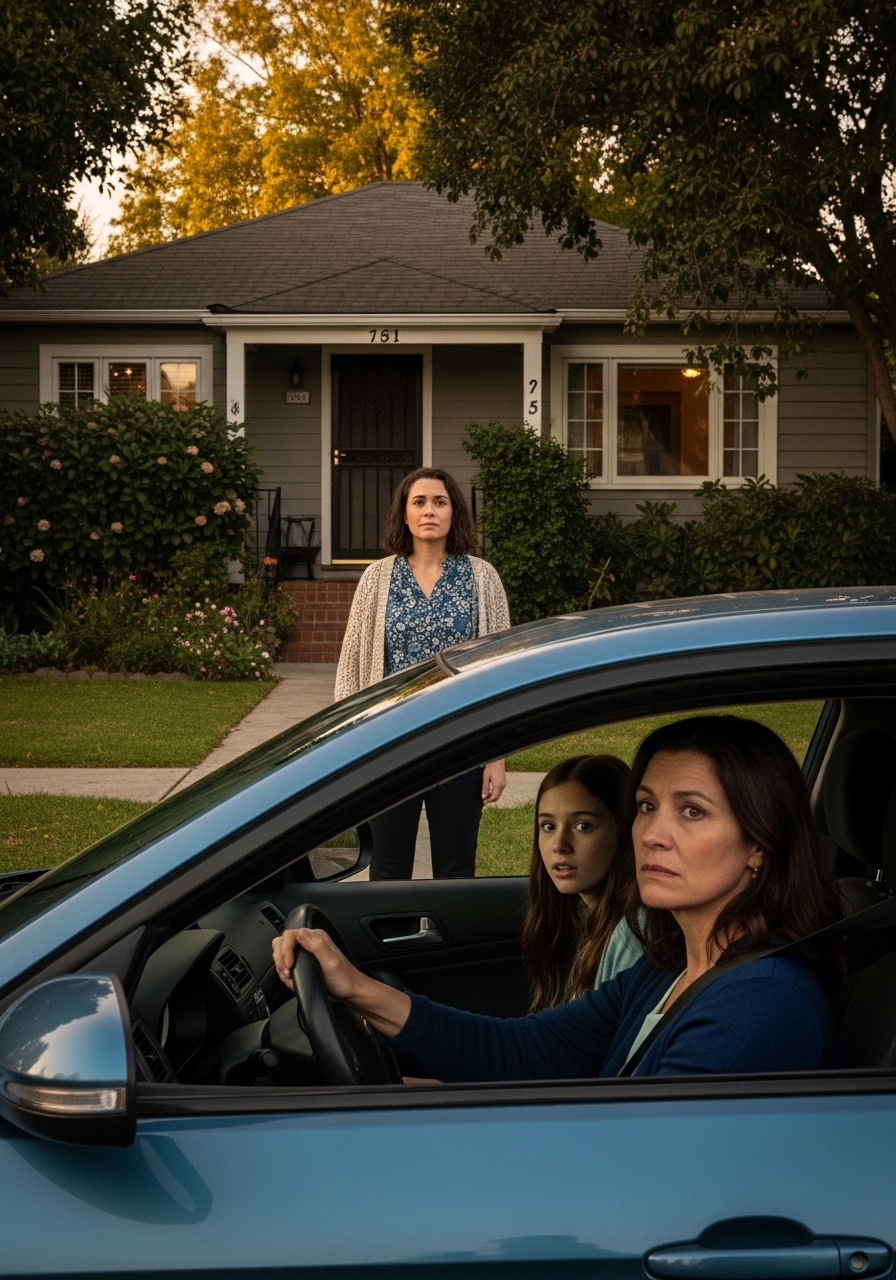
The day Mom and Madison drove past was unplanned. They were in town for a bridal expo—Madison had decided to turn her love of weddings into a “brand.” Ben and I were unloading groceries when I recognized the car slowing at the curb, creeping like it was passing a crime scene.
Mom’s face was rigid behind the windshield—the same controlled expression she wore when she felt observed. Madison leaned forward, scanning the house: my house—the porch, the fresh paint, the flower beds, the quiet peace on my face.
Then Madison’s voice cracked through the open window.
“Mom,” she cried, disbelief raw in her tone, “why don’t I have that?”
It wasn’t about square footage or siding. It was about the certainty she assumed money would always buy—the security she thought the wedding and the check had guaranteed forever. She’d had the spectacle, the praise, the quarter-million “investment”… yet here I stood, rooted in a life I’d built without begging for approval.
Mom’s jaw clenched like a steel trap. She glanced at me and forced a smile through the glass, as if we were still performing for an audience. But her eyes were hard, already rewriting the narrative to keep herself blameless.
I waited for the familiar rush of anger, guilt, or the old script to pull me back in.
Instead, I felt only distance.
I raised my hand—not a wave of welcome or surrender, just simple acknowledgment: Yes, I see you. Yes, you see me now. And no, you don’t get to walk back in like those words were never spoken.
They drove away slowly. Madison was still crying. Mom stared straight ahead, hands white-knuckled on the wheel, as if control could be maintained by grip alone.
Ben stepped beside me, arm around my waist, and whispered, “You okay?”
I watched the car disappear down the street and felt the truth settle deep: fairness isn’t something you plead for from family. It’s something you create the moment you stop auditioning for their love.
That night, sitting on my porch swing in the quiet dark, I didn’t feel triumphant.
I felt free.