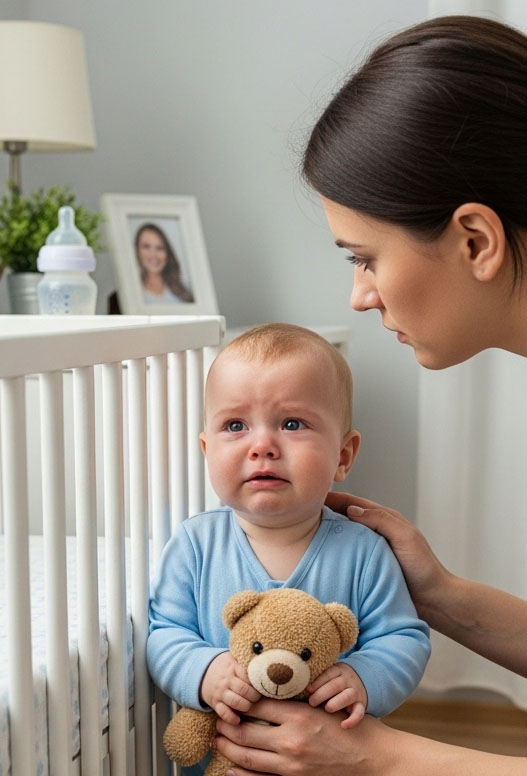
For weeks, the same heartbreaking sound haunted my nights: a baby’s desperate, exhausted wail echoing through the thin walls and hallway of our apartment building. Not gentle fussing that fades quickly—this was raw, relentless crying that pierced straight through to 2 a.m. or longer.
I hadn’t slept properly in ages. Living with a chronic illness means exhaustion hits me twice as hard: body aches intensify, headaches pound, and even simple chores become impossible. Rest isn’t a luxury—it’s survival.
Night after night, the crying started around midnight. Sometimes it eased after an hour; sometimes it dragged on, stopping just long enough for me to doze before restarting. Frustration built like a storm inside me.
Earplugs failed. Headphones failed. Blasting white noise failed. Nothing blocked it out.
After yet another sleepless night, I finally broke. At 2 a.m., I sat at my kitchen table rubbing my temples and opened my laptop. The hallway was quiet for once, but I knew it was temporary.
My fingers hovered, then typed the words:
“Your baby. Your problem. Keep the noise INSIDE.”
Even rereading it, I knew it was harsh—cold. But exhaustion hardens you.
I printed it, grabbed tape, and stepped into the dim hallway. Her door was only two apartments away. The overhead light buzzed as I approached, ready to tape the note—
Then I heard her voice.
At first I thought she was on the phone. But the shaky, broken whisper froze me.
“I’m trying,” she said softly. “I really am trying.”
A tiny whimper answered.
Then: “He said I’m a terrible mother.”
A pause. Her voice cracked.
“He left me with nothing. I don’t know how to do this alone.”
Silence swallowed the hallway.
I stood rooted, the printed note suddenly burning in my hand. Cruel. Unfair.
I pictured her inside—alone, terrified, cradling a crying infant while the person meant to support her had vanished. And here I was, about to pile on more judgment, another voice saying she was failing.
My stomach knotted. The words on the paper looked uglier than ever.
“Your baby. Your problem.”
I tore the note in half. Then quarters. Then smaller scraps until nothing remained.
I hesitated at her door, heart pounding.
Then I knocked—softly.
Seconds later, the door creaked open.
She looked younger than I’d imagined—early twenties maybe. Messy hair in a loose bun, swollen red eyes from crying. In her arms, a tiny baby girl squirmed and fussed.
She blinked at me, wary, bracing for complaint.
“Yes?”
I swallowed. “I’m your neighbor from down the hall.”
Her face tightened instantly.
Before she could apologize, I spoke gently. “I heard the baby crying…and I just wanted to help.”
Confusion flickered across her features. Help clearly wasn’t what she expected.
“I can take her for a bit,” I said. “So you can sleep.”
She stared like I’d spoken a foreign language. “I—what?”
“I’ll hold her. You rest.”
Tears welled in her eyes immediately. “You’d really do that?”
I nodded.
She hesitated, then carefully placed the warm, impossibly small baby in my arms. Tiny fingers curled around my sleeve.
“Three hours,” I told her softly. “Sleep.”
She looked terrified the offer might vanish, then whispered, “Thank you,” and stepped back inside.
Within minutes, her apartment fell silent.
I paced the hallway at first, rocking gently when the baby fussed. Eventually she settled against my shoulder, breathing soft and even.
Three hours later, I knocked again.
When the door opened, she looked transformed—still exhausted, but calmer. Like someone who’d finally exhaled after holding her breath for weeks.
“I slept,” she said quietly, almost disbelieving.
I smiled. “Good.”
That night could have gone so differently.
I could have taped that vicious note and made a struggling, lonely mother feel even more isolated.
Instead, I paused. I listened. I knocked.
Since then, I check in when I can. Sometimes I hold the baby so she can nap. Sometimes I bring soup or groceries. Sometimes we just sit and talk.
I haven’t fixed everything. But I’ve become something she desperately needed: support.
It still stuns me how close I came to making things worse.
All it took was one moment of stillness—one overheard whisper—one gentle knock.
Instead of another judgmental voice, I became the help she’d been praying for.