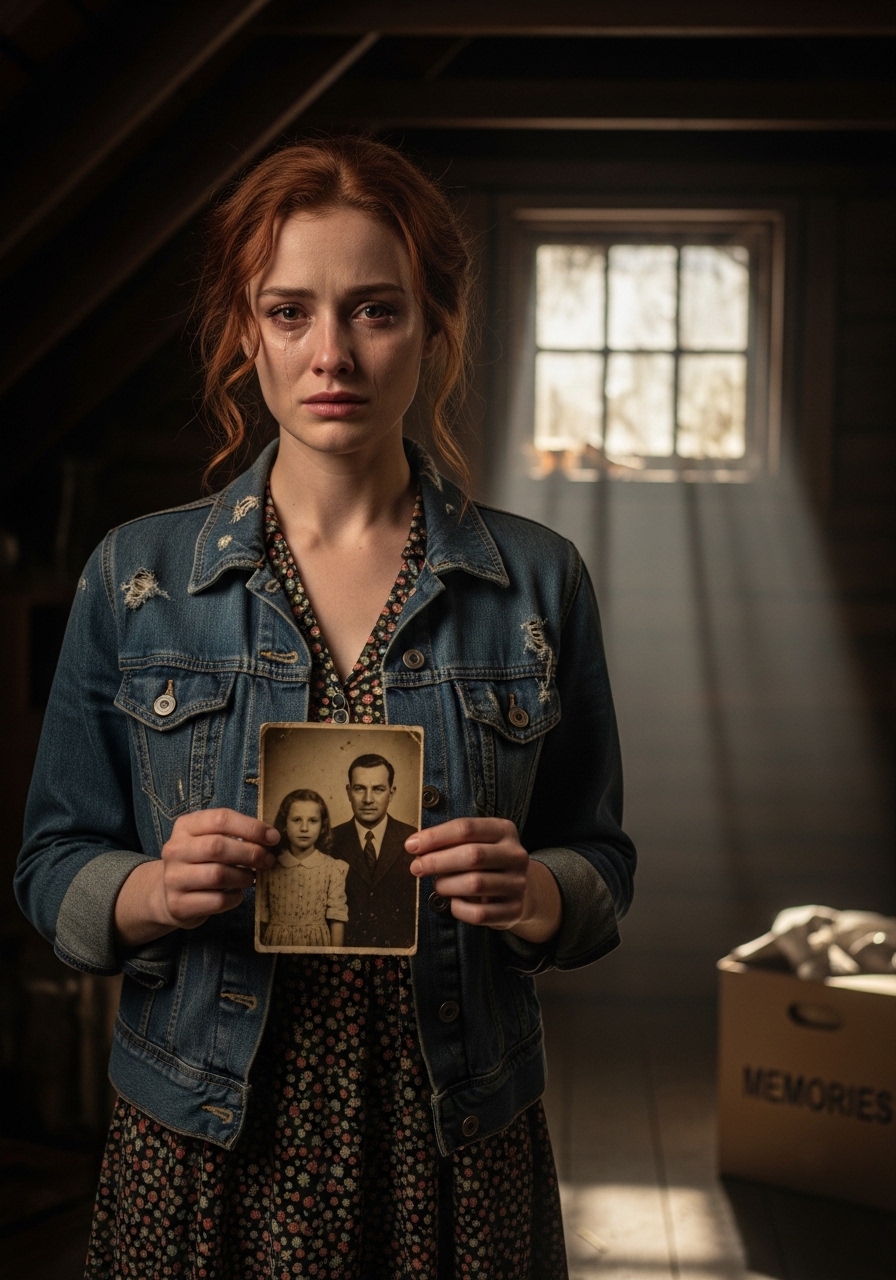
The day my husband Daniel died, it felt like the ground beneath my life vanished.
We had been married for thirteen years. Losing him was devastating. But what came after hurt even more.
Everything Daniel owned—every dollar, every possession—went to Ivy.
Ivy had been just five years old when I first met her. Daniel’s daughter from a previous relationship. Her biological mother, Linda, had barely been involved back then.
I was the one who packed Ivy’s lunches every morning.
I braided her hair before school.
I stayed awake through the nights when fevers kept her crying.
I sat beside her bed whenever nightmares woke her in the dark.
But none of that mattered legally.
Daniel’s will was clear.
Everything belonged to Ivy.
And because she was still a minor, her biological mother stepped in to control it all.
Linda appeared at the house the week after the funeral like a storm.
She walked through every room as if she had owned it for years. She opened cabinets, inspected drawers, and spoke sharply, making it clear I no longer belonged there.
“You’ve stayed long enough,” she said one afternoon.
I looked at Ivy, hoping—praying—she would say something.
Anything.
But Ivy stayed silent, her eyes fixed on the floor.
Linda folded her arms.
“The house belongs to my daughter now,” she said coldly. “You’ll need to leave.”
The words slammed into me like a door closing on my entire life.
That night, I packed my belongings.
I kept hoping Ivy would knock on my door. That she would hug me, whisper that she didn’t agree with what was happening.
But the knock never came.
The next morning I walked out of the house with two suitcases and a heart that felt completely shattered.
Five weeks passed.
Five painfully long weeks.
I tried to convince myself Ivy was still young. Maybe Linda had turned her against me. Maybe she simply didn’t care anymore.
Maybe the thirteen years we shared meant less to her than I believed.
Every day I fought the urge to call her.
Every day I lost that fight.
And still, I didn’t call.
I was afraid of hearing the truth.
Then one afternoon, my phone rang.
When I looked down at the screen, my heart nearly stopped.
Ivy.
I stared at her name for several seconds before answering.
“Ivy?”
Her voice sounded shaky.
“You need to come right now.”
My stomach tightened.
“What’s wrong?”
“Just… please come.”
Then the line went dead.
I grabbed my coat and drove to the house without thinking.
But the moment I pulled into the driveway, something felt wrong.
The curtains were gone.
The garage door stood wide open.
When I stepped inside, I froze.
Boxes were stacked everywhere.
The living room that once held our family photos and Daniel’s favorite armchair was almost completely empty.
I turned slowly, trying to make sense of it.
“Ivy?”
She stepped out of the kitchen.
For the first time in weeks, I saw her face clearly.
And she was smiling.
“I turned eighteen last week,” she said quietly.
I blinked in confusion.
Then she added something that made my mind spin.
“I sold everything.”
“The house. The car. All of it.”
I stared at her, struggling to understand.
“What do you mean you sold everything?”
She walked toward me and handed me an envelope.
My hands trembled as I opened it.
Inside was a check.
A very large one.
I looked up at her, stunned.
“It’s half,” she said gently.
The air left my lungs.
“Half?”
She nodded.
“My mom made me stay silent,” Ivy explained. “Until I turned eighteen, I had no power over anything. Every decision belonged to her.”
Her voice wavered slightly.
“But I remembered everything.”
My throat tightened.
“I remembered who packed my lunches every morning,” she said softly. “Who helped me with homework. Who stayed awake with me after my first heartbreak.”
Tears filled her eyes.
“You were there for every nightmare. Every bad day. Every good day.”
I couldn’t speak.
“I didn’t forget you,” she whispered.
My vision blurred with tears.
“I was just waiting.”
“Waiting for what?” I finally managed to ask.
“For the day I could choose.”
The room fell silent.
“You raised me,” she said. “You showed me what kindness looks like.”
Then she stepped forward and wrapped her arms around me.
The hug was tight and familiar, just like when she was a little girl.
“You’re my real mom,” she whispered against my shoulder. “You always have been.”
I held her tightly, feeling weeks of pain finally begin to melt away.
All that time, I believed she had forgotten me.
But she hadn’t.
She had simply been waiting until she was strong enough to stand up for me.
And in that moment, I realized something no will, no law, and no piece of paper could ever change.
Blood isn’t what makes a family.
Loyalty does.
And the kindness we give to others always finds its way back to us—often when we need it most.