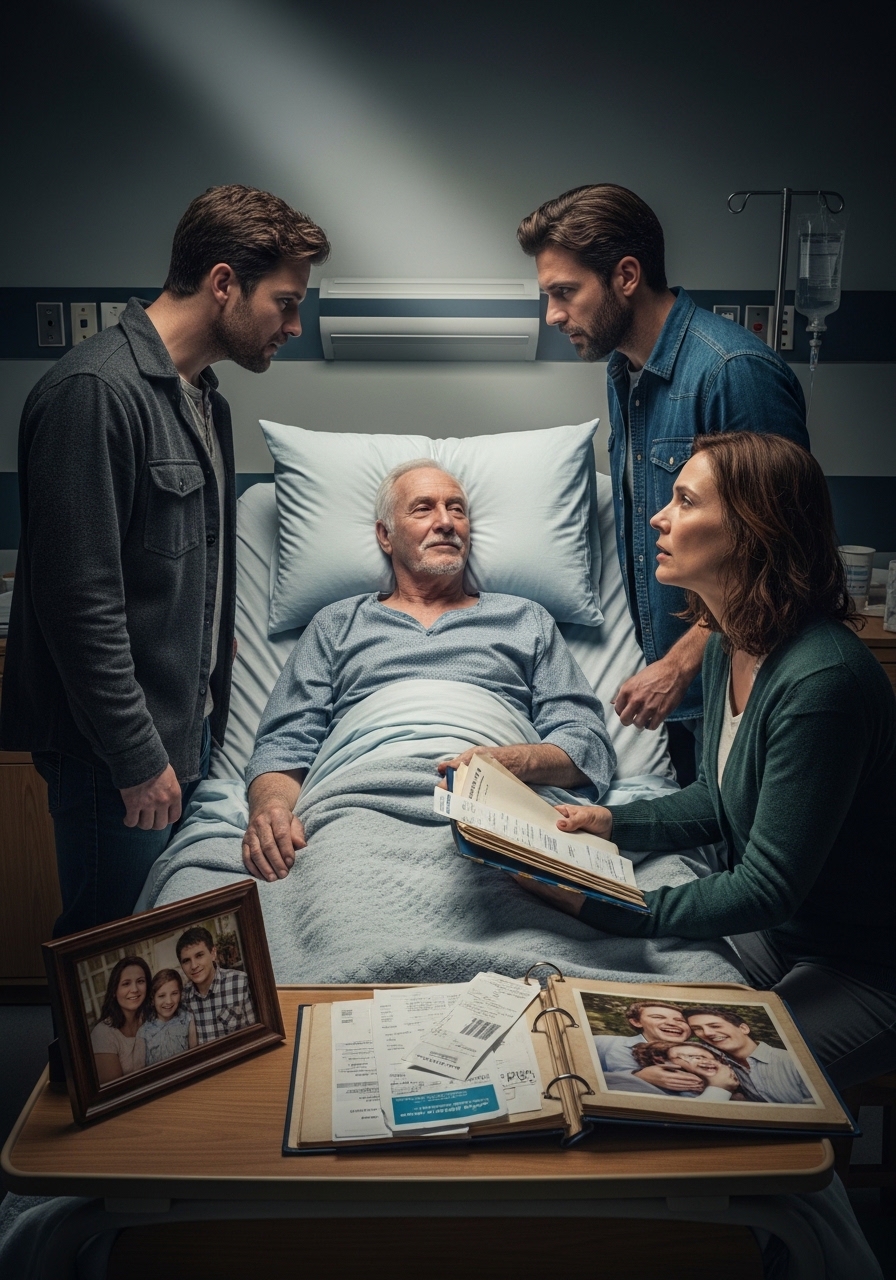
When my father’s dementia started becoming dangerous, I stopped sleeping.
It wasn’t just forgetfulness anymore.
It was the stove left on at three in the morning.
The front door wide open in the middle of winter.
The night I found him halfway down the block in his slippers, confused and trembling, asking where his own house was.
I was terrified.
So I called my brother first.
“Mark, I can’t do this alone,” I told him. “He’s wandering at night. Sometimes he doesn’t recognize the house.”
“You’re overreacting,” he said. “He’s just getting older.”
Then I called my sister, Angela.
“Can you stay a few nights a week? Or help hire a caregiver? Anything?”
She sighed.
“You live five minutes away. It makes more sense for you to handle it.”
Handle it.
Like this was a broken appliance and not the man who once carried us on his shoulders and worked double shifts so we could go to college.
I asked them to split the cost of in-home care.
They hesitated.
I asked if they could sit with him on weekends so I could sleep.
They were “busy.”
I asked them to at least talk about long-term plans.
Silence.
So I made the decision alone.
I toured care facilities.
I cried in parking lots.
I asked endless questions.
And finally, after Dad nearly set the kitchen on fire trying to boil water, I signed the papers and moved him into a nursing home.
The backlash came instantly.
Angela called first.
“How could you?” she demanded. “You put him in a home? He’s not an invalid!”
“He’s not safe,” I said quietly.
“You just didn’t want the responsibility.”
Then Mark texted me.
Unbelievable. You abandoned Dad.
Abandoned.
That word cut deep.
For days I replayed everything in my mind.
The way Dad looked when we unpacked his sweaters.
The way he asked softly, “Am I staying here?”
And the way I forced myself to smile.
What if they were right?
What if I had failed him?
A week later, my phone rang.
The nursing home’s number flashed on the screen.
My stomach dropped.
I stepped outside before answering.
“Hello?”
A cheerful voice answered.
“Hi, this is Karen from Maple Grove. I’m calling about your father.”
My heart raced.
“Is he okay?”
“Oh, he’s more than okay,” she said warmly. “Honestly, we don’t often see this kind of turnaround so quickly.”
I blinked.
“Turnaround?”
“He’s eating full meals, sleeping through the night. Yesterday he joined the morning exercise group and told everyone he used to ‘outrun the mailman.’ He’s joking with the other residents. He seems… lighter.”
I couldn’t speak.
“Routine helps people with dementia tremendously,” she continued. “And he feels safe here.”
Safe.
The word cracked something open inside me.
That evening I visited during bingo hour.
Dad sat at a table with three other residents, arguing cheerfully about whether B-12 had already been called.
When he saw me, his face lit up.
“There’s my girl!” he said.
My girl.
Not confusion. Not fear.
Recognition.
I cried on the drive home—but this time, it wasn’t guilt.
For a while, my siblings were quiet.
Then suddenly, they weren’t.
Angela called again, her tone different.
“So… how’s Dad doing?”
“He’s adjusting really well.”
“Oh. Good. That’s… good.” She paused. “What’s the name of the place again?”
“Maple Grove.”
“And the address?”
Later that night, Mark texted me.
We should visit him soon. Send the details.
I sent them the address.
Two days later, I understood their sudden interest.
The facility had posted photos online from their “Active Seniors Spotlight.”
There was Dad, smiling broadly, holding a paintbrush beside a colorful landscape painting.
The caption read:
“Mr. Thomas rediscovered his love of art this week. We’re proud of his progress!”
The comments were filled with heart emojis.
Angela shared the post almost immediately.
So proud of our dad ❤️ Family means everything.
Family.
Mark commented underneath:
That’s my old man!
I stared at my phone for a long moment.
They hadn’t wanted the responsibility.
But they wanted the appearance.
That weekend they both came to visit.
They brought balloons.
Angela took selfies.
Mark asked the staff questions as if he’d been involved from the start.
Dad seemed happy to see them.
That was all that mattered.
At one point Angela pulled me aside.
“You should have told us he’d improve like this.”
I looked at her calmly.
“I tried to tell you he wasn’t safe.”
She didn’t respond.
For the first time in months, I didn’t feel defensive.
I didn’t feel guilty.
I felt steady.
Because I knew the truth.
I hadn’t abandoned my father.
I had protected him.
I had made the hard decision when no one else would.
And every time I walk into Maple Grove and see him laughing at a terrible joke or finishing his dinner without fear, I know I made the right choice.
Sometimes love doesn’t mean keeping someone at home.
Sometimes love means letting them be safe—even if you have to stand alone to do it.