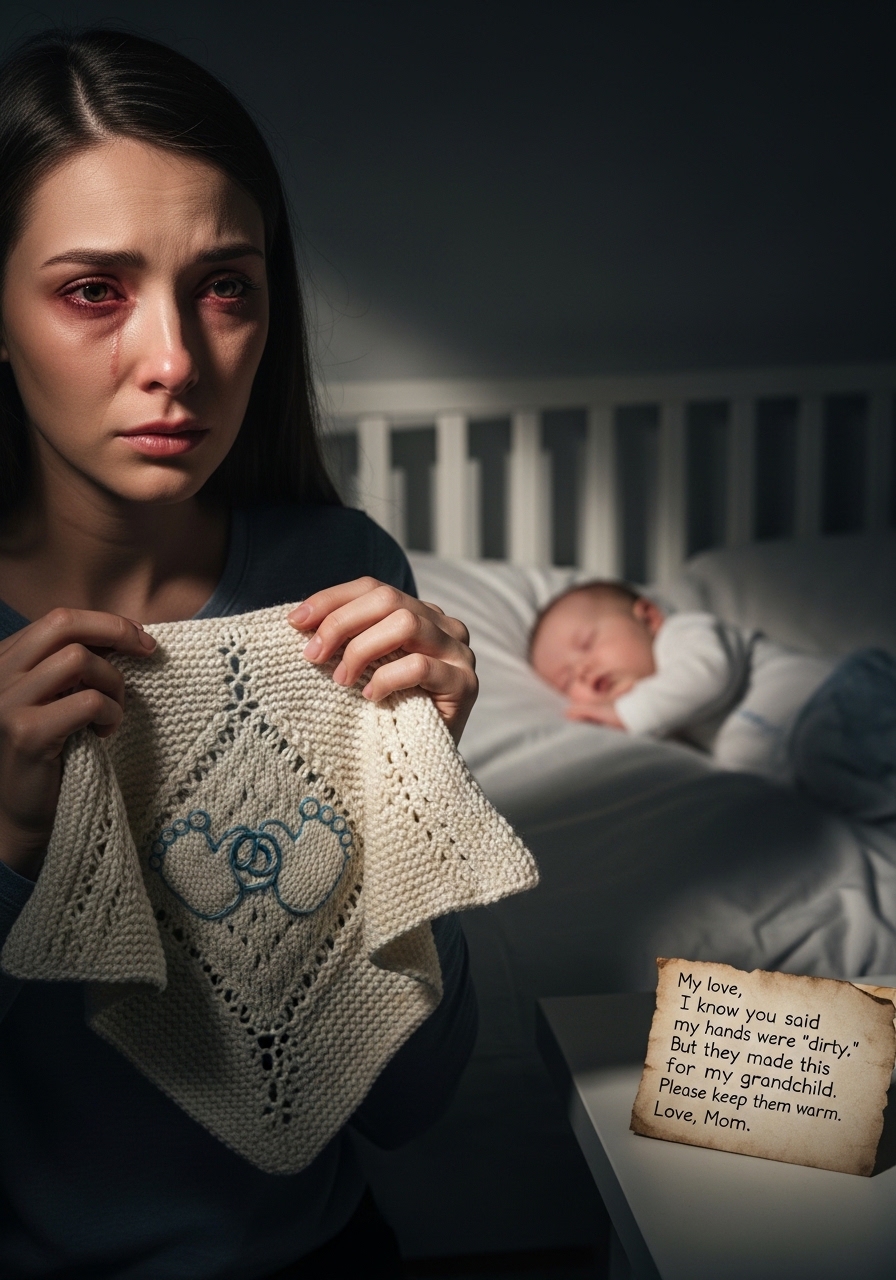
I can still hear the exact sound of my own voice in that hospital room—the sharpness of it, the cruelty I didn’t even try to soften.
“Get your dirty hands off my child!”
The words rang loud enough that a nurse looked over. My mother froze where she stood, her hands hovering inches above my newborn daughter’s blanket. Those hands—cracked, calloused, carrying the faint smell of disinfectant no matter how often she washed them—slowly fell to her sides.
She didn’t argue.
She didn’t cry.
She simply nodded once and whispered, “I’m sorry.”
Then she turned and quietly walked out.
At the time, I felt justified. I was exhausted, overwhelmed, and ashamed in ways I didn’t want to admit. My mother cleaned toilets for a living—office buildings, train stations, anywhere that needed someone invisible to scrub away other people’s messes.
For years I told myself it didn’t bother me.
But in that spotless hospital room, holding my perfect newborn, every bit of buried resentment burst out in a single unforgivable sentence.
After that day, she never called.
Four months passed without a single message. No questions about the baby. No visits. Not even a short text.
I convinced myself she didn’t care.
Maybe she was angry. Maybe stubborn. Maybe dramatic.
I told myself I didn’t need her anyway. I was a mother now. I was busy. I was doing fine.
But the silence kept gnawing at me.
One afternoon, without planning to, I found myself driving through her neighborhood. Her small house sat at the end of the block just as I remembered. I used the spare key she once insisted I keep “just in case.”
Inside, the air felt strangely hollow.
The couch was gone.
The kitchen table where she drank her evening tea—gone.
Her framed photos, her worn slippers by the door, even the crocheted doilies she loved were missing. The closets stood empty except for a few hangers swaying gently, like they were waiting for someone who would never return.
My first thought was my aunt.
Maybe Mom had gone to stay with her. Maybe she still needed space.
I locked the door, slid the key back under the mat, and told myself to give her time.
She deserved that much.
A week later, my phone rang.
Her name flashed on the screen, and my chest tightened—not with fear, but with expectation. I thought she was finally ready to apologize. To smooth things over. To admit she’d overreacted.
But the voice on the other end wasn’t hers.
“This is the hospital,” a woman said gently. “I’m a nurse caring for your mother.”
The rest came in pieces—seriously ill… several weeks… critical condition.
Then the nurse hesitated before adding quietly, “Your mother actually asked us not to call you. She said you had a newborn and she didn’t want to be a burden.”
I don’t even remember hanging up.
I drove to the hospital like the ground might vanish beneath my tires.
When I reached her room, I stopped in the doorway.
She looked smaller than I remembered. Pale. Fragile. Her body nearly disappeared beneath the white hospital sheets. Tubes ran from her arms, and machines beeped softly beside the bed.
I stepped forward and took her hand.
It felt thinner, colder—but it was still hers.
“I’m sorry,” I whispered, tears falling onto the blanket. “I was wrong. Please forgive me.”
Her eyes slowly opened.
A faint smile touched her lips.
“A mother can never hate her child,” she said softly. “Now that you’re a mother, you’ll understand.”
I stayed with her after that.
I fed her ice chips. I brushed her hair. I told her about my baby—how she smiled in her sleep, how she wrapped her tiny fingers around mine.
My mother listened quietly, peaceful, as if she were storing every word somewhere safe.
Four days later, she was gone.
Afterward, a nurse approached me with a small box.
“Your mother asked us to give this to you.”
Inside were tiny knitted clothes—booties, hats, sweaters—each one carefully stitched with patience and love.
My baby’s name was written on a folded note in my mother’s careful handwriting.
I pressed the soft yarn against my face and finally understood.
Those “dirty hands” had been working quietly the whole time… loving us the only way they knew how—until they couldn’t anymore.