When my parents divorced, I chose to live with my wealthy father.
His house was large, polished, and filled with expensive furniture. From the outside, everything looked perfect. But inside, the house often felt strangely empty. My mother moved out with almost nothing, while I stayed behind, believing comfort mattered more than closeness.
At fifteen, I thought I had made the better choice.
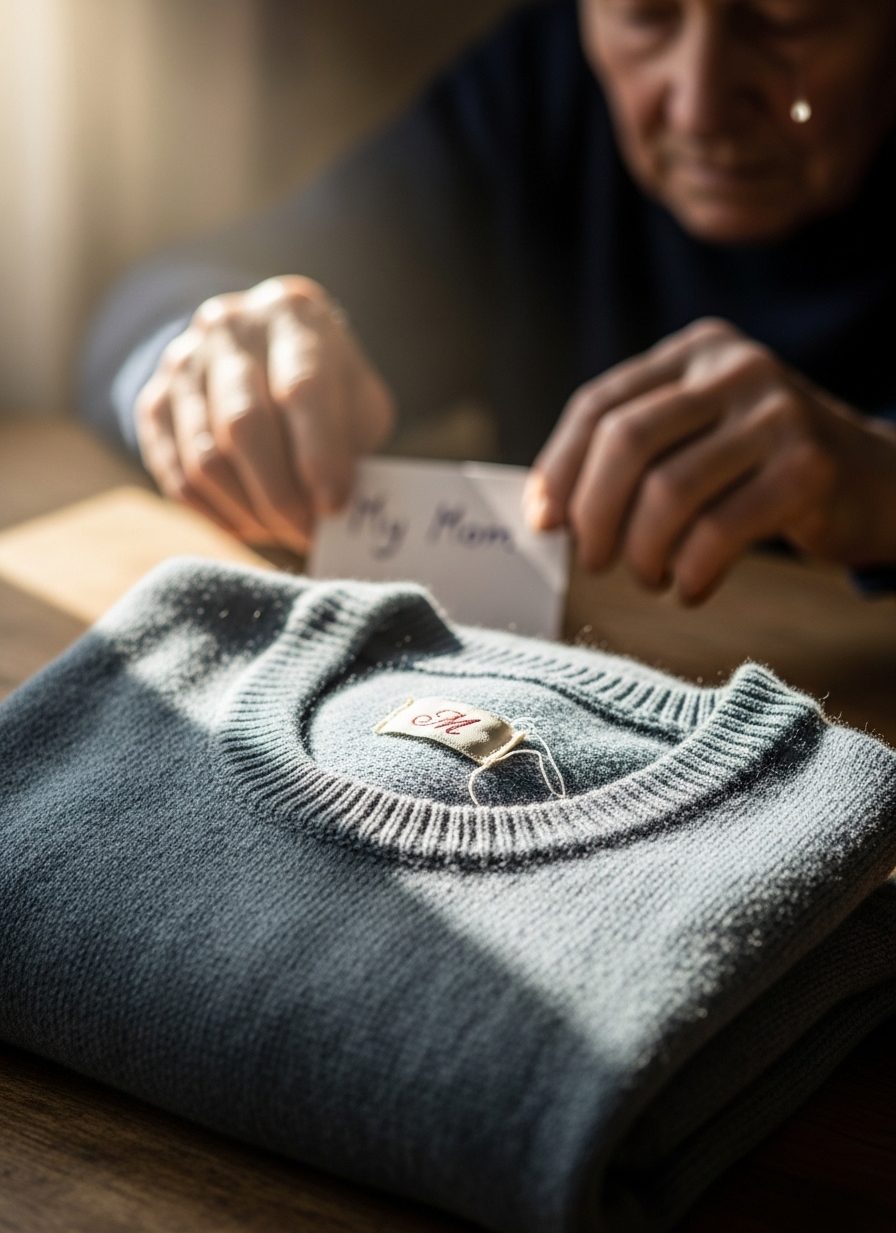
For my 15th birthday, my mom handed me a crocheted sweater she had made herself.
It wasn’t fashionable. It wasn’t something you’d see in a store window. The yarn was soft but simple, and the stitching was slightly uneven, like parts had been redone more than once. I thanked her politely, gave a quick smile, and placed it in my dresser.
I never wore it.
At that age, I was embarrassed by anything that looked ordinary. My dad bought me brand-name clothes, the kind my friends admired. Compared to those, the sweater felt out of place. So it stayed folded in the back of a drawer—untouched and slowly forgotten.
Years passed.
I grew older, moved out, and started building my own life. My relationship with my mom stayed distant. We weren’t angry with each other, but we weren’t close either. We spoke on holidays, exchanged polite questions, and carefully avoided the deeper conversations that might reopen old wounds.
One afternoon while cleaning out my old dresser, I came across the sweater again.
It smelled faintly of storage and time. I held it for a moment, running my fingers over the yarn. Then I decided I didn’t need it. My neighbor had recently mentioned she was always cold, so I thought she might appreciate it.
I brought it over to her.
She thanked me warmly and took it home.
Less than an hour later, my phone rang.
Her voice sounded shaky.
“Can you come over right now?” she asked. “And bring the sweater.”
Confused, I hurried next door.
She stood in her living room holding the sweater with both hands. Her expression was tense, almost urgent. She pointed toward one of the pockets.
“Hurry,” she said. “Check inside.”
I slipped my hand into the pocket.
My fingers brushed against paper.
Carefully, I pulled out a small folded envelope. Inside was a letter—and beneath it, several bills that had yellowed slightly with age.
The letter was from my mother.
Her handwriting was neat and careful, the kind she used when she wanted every word to matter. She wrote that after the divorce she had very little money. She couldn’t afford expensive presents or savings accounts for me.
But she still wanted to give me something for my future.
So she hid money inside the sweater.
It wasn’t a large amount—nothing life-changing. But it was what she could manage at the time.
In the letter, she wrote that she hoped one day I would find it. That when I did, I would understand the sweater had never been about fashion. It was about love, patience, and the quiet hope that someday I would see the effort behind it.
The last line shattered me.
“Even when I don’t have much, I will always try to protect you.”
I sat there in silence, unable to speak.
All those years, I had judged the gift by how it looked. I had ignored the hands that made it and the love woven into every stitch.
That night, I called my mom.
For the first time in years, I cried while talking to her. I told her about the envelope, the money, and the letter I had never known existed.
For a moment she said nothing.
Then she laughed softly, the sound mixed with tears.
“I wondered if you’d ever find it,” she said.
I still have that sweater today.
I don’t wear it often. But it no longer sits hidden in a drawer. Now it stays somewhere I can see it.
Because it reminds me that love rarely arrives in shiny packages.
Sometimes it comes quietly—stitched together late at night, waiting patiently for the day you’re finally ready to understand it.
And sometimes, the most valuable gift you’ll ever receive is the one you almost gave away.