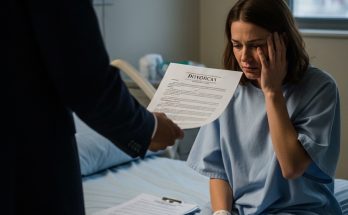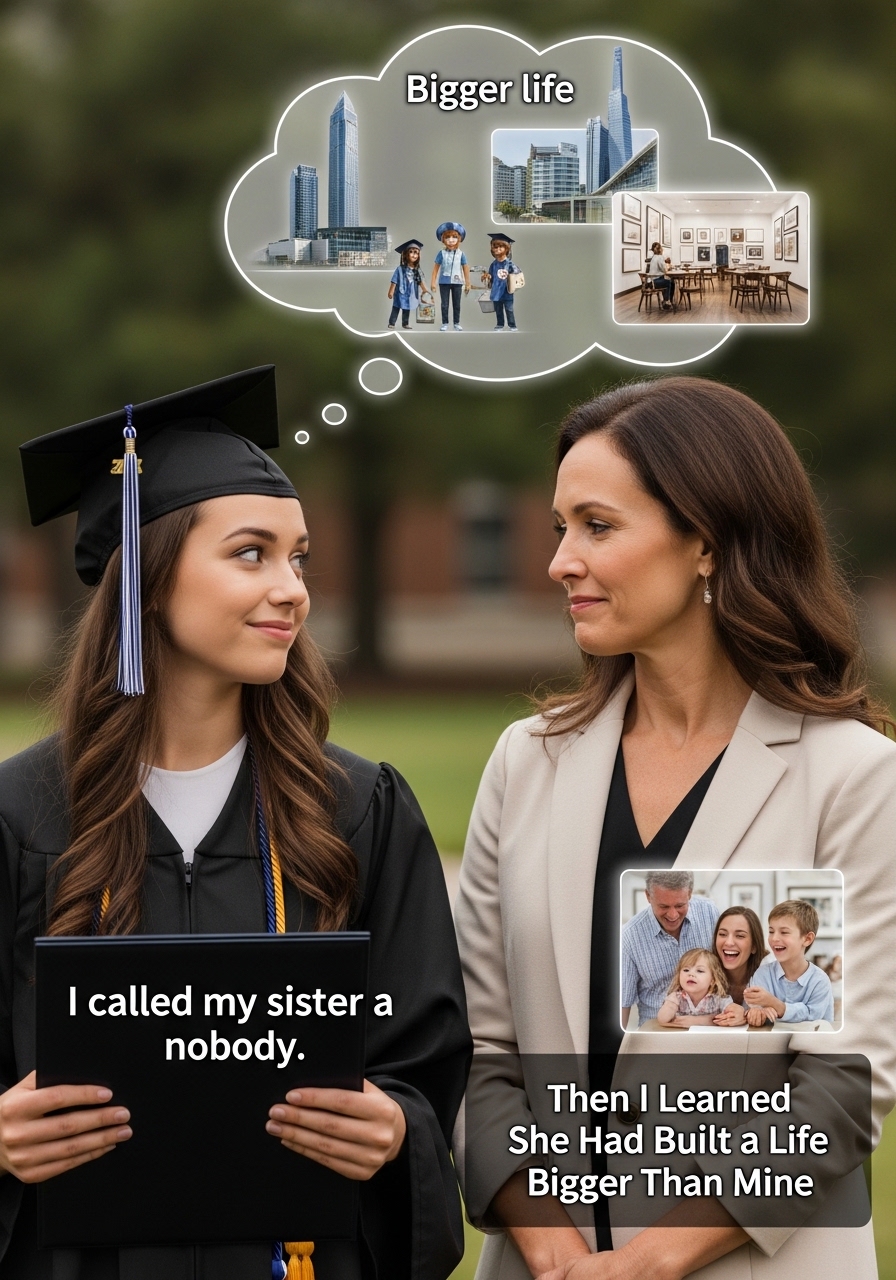
My sister was nineteen when she became my parent.
I was twelve when our mom died.
There was no big family meeting. No plan. No backup. One day we had a mother, and the next day we had each other.
She canceled her college plans without announcing it like some heroic decision. She just… didn’t go. Instead, she picked up double shifts at a diner during the day and cleaned office buildings at night. She figured out how to stretch one paycheck into rent, groceries, electricity, and my school supplies.
She signed my permission slips. Sat through parent-teacher conferences. Learned how to cook actual meals instead of ramen. And when I asked why she never went out with friends anymore, she’d just smile and say she was tired.
I never questioned it.
I never stopped to think about what she had given up.
I just accepted it as normal.
Years passed.
She pushed me harder than anyone else ever did. “You’re going to have choices,” she’d say. “I want you to have choices.”
I studied like my life depended on it — because in some ways, it did.
I got into college.
Then medical school.
She celebrated every acceptance letter like it was her own achievement. She mailed me grocery money she couldn’t afford. She stayed up late on the phone while I vented about exams and impossible professors. She told everyone in town, “My little sister is going to be a doctor.”
At my graduation, I felt unstoppable.
Exhausted. Proud. Applauded.
And full of myself.
When she hugged me afterward, eyes shining, and said, “I’m so proud of you,” something ugly rose up in me. Maybe it was insecurity. Maybe it was ego dressed up as confidence.
I laughed.
And I said, “See? I climbed the ladder. You took the easy road and became a nobody.”
The second the words left my mouth, I saw it.
Not anger.
Not tears.
Just a flicker of something in her eyes — then that same tired, steady smile she’d worn for years.
“I’m glad you made it,” she said softly.
And she left.
No argument.
No scene.
Just gone.
Three months passed. No calls. No texts.
At first, I told myself she needed space. That she’d get over it. I was starting my residency in another city — long shifts, no sleep, barely time to breathe.
But guilt doesn’t stay quiet forever.
Eventually, it crept in during the silent drive home from a night shift. During the rare moments when the hospital halls were empty.
So I drove back to our hometown for the first time in years.
Her car wasn’t in the driveway.
The house looked smaller than I remembered.
I knocked.
A neighbor opened the door instead.
“She’s at the clinic,” he said.
“Clinic?” I asked, confused.
“She’s there most days.”
I didn’t understand until I walked down Main Street and saw the modest brick building with a sign I had never noticed before.
Community Health Initiative.
Inside, the waiting room was full. Kids. Elderly patients. Families flipping through worn magazines.
And then I saw her.
In scrubs.
Not as a nurse.
As the director.
Photos covered the hallway walls — vaccination drives, food pantry events, health screenings at local schools. Volunteers posing with smiling families.
Near the entrance was a plaque:
“Founded by Sarah Miller — Community Health Initiative.”
My sister’s name.
A receptionist looked up and smiled. “You must be her sister. She talks about you all the time. The doctor.”
My stomach dropped.
When she saw me, she paused — just for a second — then smiled gently.
“You made it back,” she said.
I could barely form words.
“I didn’t know,” I whispered.
She shrugged lightly. “You were busy saving lives.”
Later, I learned everything.
She hadn’t taken the “easy road.”
After years of working nonstop, she started volunteering at a free health fair. She saw families like ours — parents choosing between rent and medicine. Kids missing school because they couldn’t see a doctor.
So she decided to do something.
She applied for grants. Organized fundraisers. Knocked on doors. Convinced retired doctors and nurses to volunteer. She spent nights writing proposals and days building partnerships.
It took years.
But she built a free clinic so no one in our town would have to choose between groceries and healthcare.
She never told me.
Because she didn’t want to distract me from medical school.
That night, we sat at the same kitchen table where she once helped me with math homework after sixteen-hour shifts.
“I’m sorry,” I said finally. “I didn’t understand what you gave up.”
She looked at me calmly.
“I didn’t give up anything,” she said. “I chose. I chose you.”
That was the moment everything shifted.
She hadn’t failed to climb a ladder.
She built one.
For me.
I asked her why she never defended herself when I called her a nobody.
She smiled — soft, steady.
“Because I knew one day you’d understand.”
I cried harder than I had in years.
We don’t talk about that graduation day anymore.
But every time I walk into a hospital wearing my white coat, I remember something that no diploma ever taught me:
Titles don’t define impact.
Letters after your name don’t measure sacrifice.
I may have “M.D.” beside mine.
But the strongest, most accomplished person I know is the nineteen-year-old girl who buried her own dreams so I could build mine — and then quietly built something extraordinary anyway.
And if anyone ever calls her a nobody again—
They’ll have to answer to me.