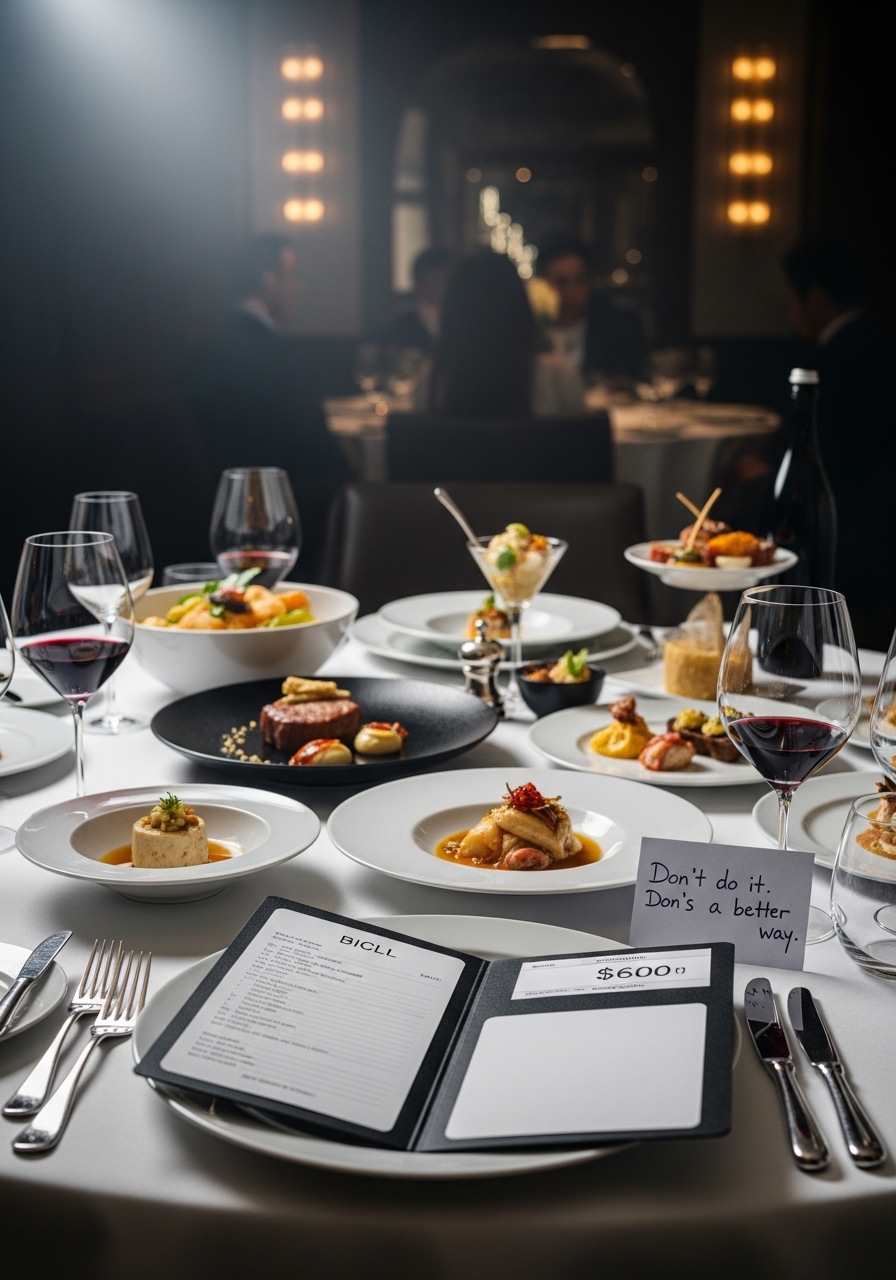
My girlfriend and I had planned a simple dinner.
Nothing fancy. Just a quiet Friday night at a mid-range restaurant downtown. We’d both had long weeks, and I thought it would be a good chance to relax, talk, maybe even discuss where our relationship was headed. We’d been together almost a year. I was starting to think long-term.
The moment I arrived, I knew something was off.
The table wasn’t set for two.
It was set for eight.
My girlfriend stood up, beaming. Sitting around her were her parents, her brother and his wife, an aunt, and two cousins. Everyone already had drinks.
“Surprise!” she said. “They really wanted to meet you properly.”
I forced a smile. I wasn’t angry — just blindsided. A heads-up would’ve been nice, but I didn’t want to cause a scene.
Dinner dragged on.
Appetizers kept coming. Bottles of wine were ordered — expensive ones. Steaks, seafood platters, desserts. Every time the waiter asked if anyone wanted more, her dad waved him on.
“Why not?” he said. “It’s a special night.”
No one mentioned splitting the bill.
Not once.
When the check finally arrived, it didn’t get passed around.
It was placed directly in front of me.
$612.45.
Her father leaned back, smiling. “You’re a good man,” he said. “Taking care of the family.”
My girlfriend squeezed my arm. “You’ve got it, right?”
That’s when it clicked.
This wasn’t a surprise.
It was a test.
And I had never agreed to it.
“I’m happy to pay for our dinner,” I said calmly. “But I didn’t know I was hosting everyone.”
The table went silent.
Her mother frowned. Her aunt exchanged looks. My girlfriend’s smile vanished.
“Are you serious?” she hissed. “Don’t embarrass me.”
“I’m not trying to,” I said. “This just wasn’t discussed.”
Her father’s tone hardened. “In our family, a man provides.”
“And in mine,” I replied quietly, “people communicate.”
I asked the waiter to split the check — ours separate from the rest.
The tension was unbearable.
When the waiter returned with the receipts, he slid mine down — and tucked a small folded note underneath.
It looked accidental.
It wasn’t.
While her family argued about payments, I opened it.
Three words:
“She’s not single.”
My chest tightened.
I looked up. The waiter avoided eye contact but gave the faintest nod before walking away.
“She’s not single.”
I didn’t say anything at the table.
After the awkward dinner ended — with her family reluctantly paying their share — she exploded in the parking lot.
“You humiliated me,” she snapped. “My dad thinks you’re cheap.”
“I think your dad thinks I’m an ATM,” I said.
“You’re overreacting,” she rolled her eyes.
I didn’t mention the note.
Instead, I asked one question.
“Are you seeing anyone else?”
Her face flickered — just for a second.
Then she laughed. “Of course not. Where is this coming from?”
I let it go publicly.
Privately, I needed answers.
The next night, I went back to the restaurant.
The same waiter was there.
“I usually stay out of this,” he said quietly, “but you seemed like a decent guy.”
“What did you mean?” I asked.
“She comes in here,” he said. “With another man. Not often, but enough. They don’t act like coworkers.”
My stomach dropped.
“How long?”
“Months.”
Months.
When I confronted her, she denied it.
Then minimized it.
“It wasn’t serious.”
“It didn’t mean anything.”
“I was going to tell you.”
But she hadn’t.
And suddenly, the $600 dinner made sense.
She wasn’t building a future with me.
She was collecting benefits while keeping options open.
That dinner wasn’t about family.
It was about seeing how much I’d tolerate.
How much I’d pay.
How much I’d swallow.
I ended it that night.
No yelling. No drama. Just a clean goodbye.
A week later, I ran into the waiter again and shook his hand.
“You didn’t just save me $600,” I told him.
He smiled. “Sometimes the most expensive meals are the cheapest lessons.”
He was right.
That dinner cost me money.
But it saved me years of emotional debt.
And that note?
“She’s not single.”
It was the smallest piece of paper — and the clearest truth I’d been handed in a long time.