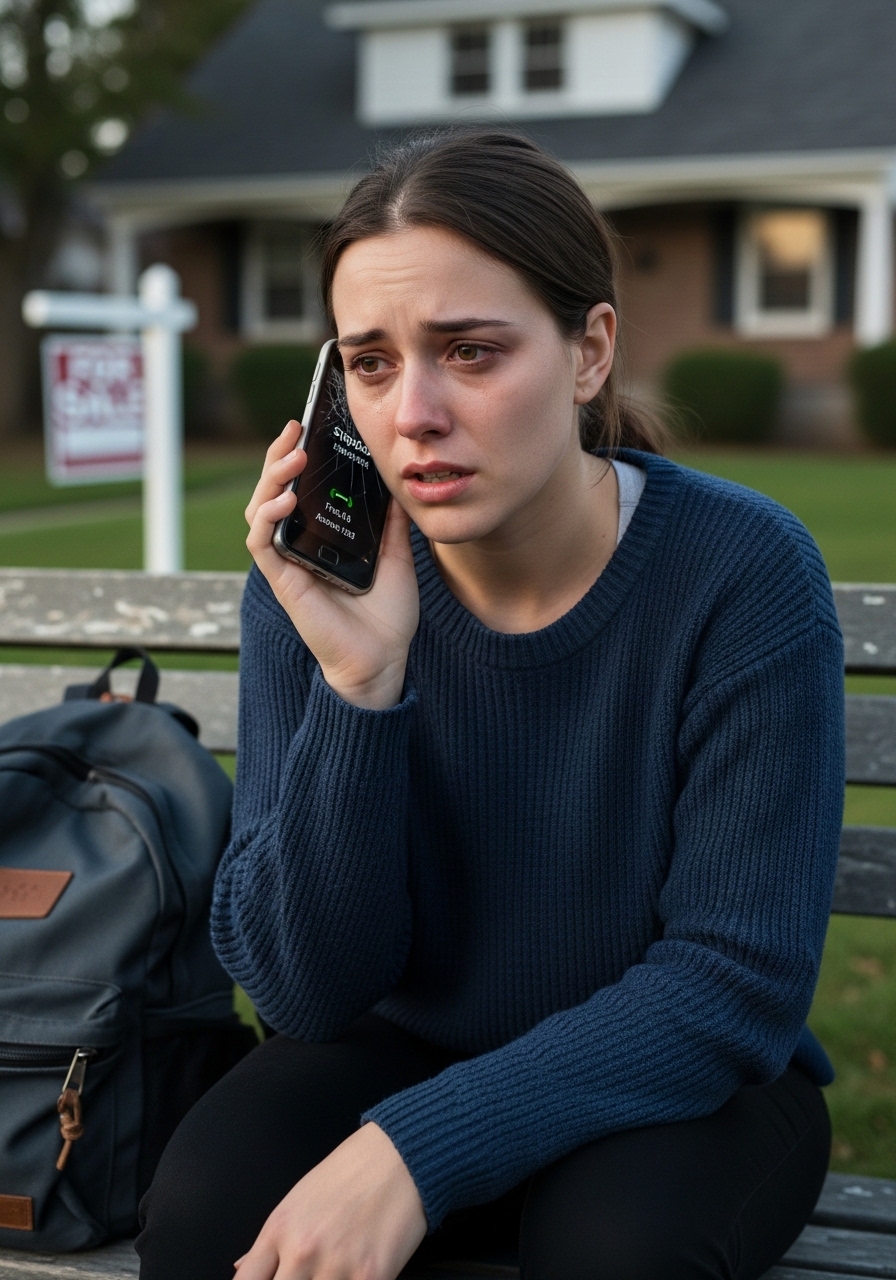
I didn’t understand how heavy grief could be until it stopped being dramatic and started being practical.
People talk about losing a parent like it’s only tears and memories. No one warns you about the paperwork. Or the looks at the funeral. Or how quickly family conversations start sounding like doors quietly locking.
The day we buried my mom, the sky was painfully bright. People hugged me, said she was in a better place, handed me casseroles they barely knew how to cook. I thanked them because that’s what you do when you’re numb—perform politeness while something inside you collapses.
At home—what I still thought of as home—my stepdad moved through the rooms with unsettling calm. He didn’t cry. He didn’t shout. He just looked settled, like the house had already decided it belonged to him.
I told myself it was grief.
Then the will was read.
My mom left me nothing.
The house went to my stepdad. And he told me I needed to leave.
His son laughed and said, “She never loved you or saw you as real family.”
I didn’t argue. I didn’t cry. I packed.
“Left me nothing” didn’t just mean money. It meant I was being erased. Like my place in her life had been a misunderstanding. Like all those birthdays, rides to school, and family photos had been optional.
When my stepdad told me I had to be out by the weekend, he said it the way you remind someone about trash day.
“You’re grown,” he said. “You’ll figure it out.”
I waited for him to soften. For him to say, Of course you can stay. He didn’t. He turned on the TV.
His son leaned against the doorway, arms crossed, enjoying it.
“She never loved you,” he repeated, smiling.
I looked at the floor because I didn’t trust my face. Grief had already drained me. I didn’t have the strength to fight cruelty too.
So I packed quietly.
I folded clothes with shaking hands. Wrapped my childhood photo albums in towels because I didn’t have bubble wrap. Every object felt heavier than it should have—like it carried memories my mom wasn’t there to defend anymore.
By late afternoon, my car was full.
The house looked the same from the outside—the pale paint, the porch steps, the wind chime my mom loved.
But it wasn’t mine.
My stepdad watched from the porch. He didn’t help. He didn’t say goodbye. His son gave a mock wave.
I drove away with my jaw clenched so tight my teeth hurt.
For days, I slept on a friend’s couch. Picked up extra shifts. Looked for cheap rooms. Kept moving because if I stopped, I knew the grief would swallow me whole.
Then, a week later, my phone rang.
My stepdad was crying.
Not quiet crying. Not controlled crying.
Panicked, broken sobs.
“Please,” he gasped. “Please come here fast.”
My stomach dropped. I grabbed my keys.
When I pulled up, the driveway was crowded—cars I didn’t recognize, a service van, neighbors whispering on the lawn. The front door stood open.
Inside, the house smelled wrong—dust, metal, something sharp.
The living room was chaos. Cushions tossed aside. Drawers pulled out. Papers everywhere.
And my stepdad was sitting on the floor.
Not on the couch. On the floor. His face was red and wet, his hands shaking as he clutched something small and black.
A lockbox.
I recognized it instantly. My mom kept it hidden high in her closet, behind winter coats. She used to say it held “important papers” and not to touch it.
“I didn’t know,” he sobbed. “I swear I didn’t know.”
“Know what?” I asked.
He pointed toward the hallway. “Go look.”
My mom’s bedroom closet had been ripped open. A hidden panel torn away. Carpet peeled back. Floorboard pried loose.
Someone had been digging.
On the bed were stacks of documents—and a thick folder with my name written on it.
My knees weakened.
“She didn’t leave you nothing,” my stepdad whispered behind me. “She left you everything that mattered.”
He admitted it then.
My mom had changed the will months before she died. The house. The accounts. The insurance. All of it was supposed to go to me.
He’d filed the old paperwork anyway.
And when he opened the lockbox that morning, he found her letters.
One for me.
One for him.
In mine, she wrote that she loved me. That she saw me. That she knew my stepdad was becoming controlling with money and his son comfortable with cruelty. That she didn’t have the strength for war—but she had the strength to plan.
“You may feel abandoned,” she wrote. “But you are not. If you’re reading this, then I’m not there to correct the story myself. So I’m correcting it here.”
In his letter, she warned him.
If he ever tried to take what wasn’t his, he would ruin himself.
That was why he was crying.
A police officer stood outside. A locksmith’s van sat in the driveway. My stepdad had realized too late that what he’d done wasn’t just cruel—it was fraud.
His son appeared in the hallway, pale and angry. When he started to protest, my stepdad snapped at him in a voice I’d never heard.
“You were wrong,” he said. “About everything.”
He turned to me, broken. “Take what’s yours,” he whispered. “And… forgive me.”
I didn’t answer.
Forgiveness isn’t automatic just because someone finally regrets being caught.
I gathered my mother’s documents carefully.
“I’m not here to comfort you,” I said. “I’m here to honor my mom.”
Then I walked to the front door and opened it wide.
“Hello,” I said to the officer. “I’m the rightful owner. I’m ready to speak.”
Behind me, my stepdad collapsed into silence.
And for the first time since my mom died, I understood.
She didn’t leave me nothing.
She left me the truth—hidden carefully, waiting for the exact moment someone tried to bury it.
Because she knew something important:
Some people only cry when consequences arrive.
And she made sure they would.