When Everything Began to Change
It started so quietly I almost ignored it.
My daughter, Emma, had always been a happy baby—smiling at sunlight, clapping her tiny hands whenever her father walked through the door. But slowly, something shifted.
She stopped smiling.
Nights became unbearable. She woke up screaming, shaking, reaching out as if something unseen terrified her. During the day, she barely ate. She flinched at sudden noises and clung to my hair whenever I tried to put her down.
I told myself it was teething. A phase. Exhaustion.
Every mother does.
But deep inside, a heavy unease settled in my chest.
Something was wrong.
The Pediatrician’s Warning
One Tuesday morning, I took her to the clinic.
The waiting room smelled of disinfectant and crayons. Emma sat on my lap, gripping her stuffed rabbit, eyes dull with exhaustion. When Dr. Lewis examined her, his usual warm smile faded almost instantly.
He checked her breathing. Her reflexes. Her heartbeat.
Then his face tightened.
He leaned closer, lowering his voice.
“Has Emma been spending time alone with anyone lately?”
I hesitated. “Just… my husband. When I’m at work.”
He went silent. Then he met my eyes—serious, careful.
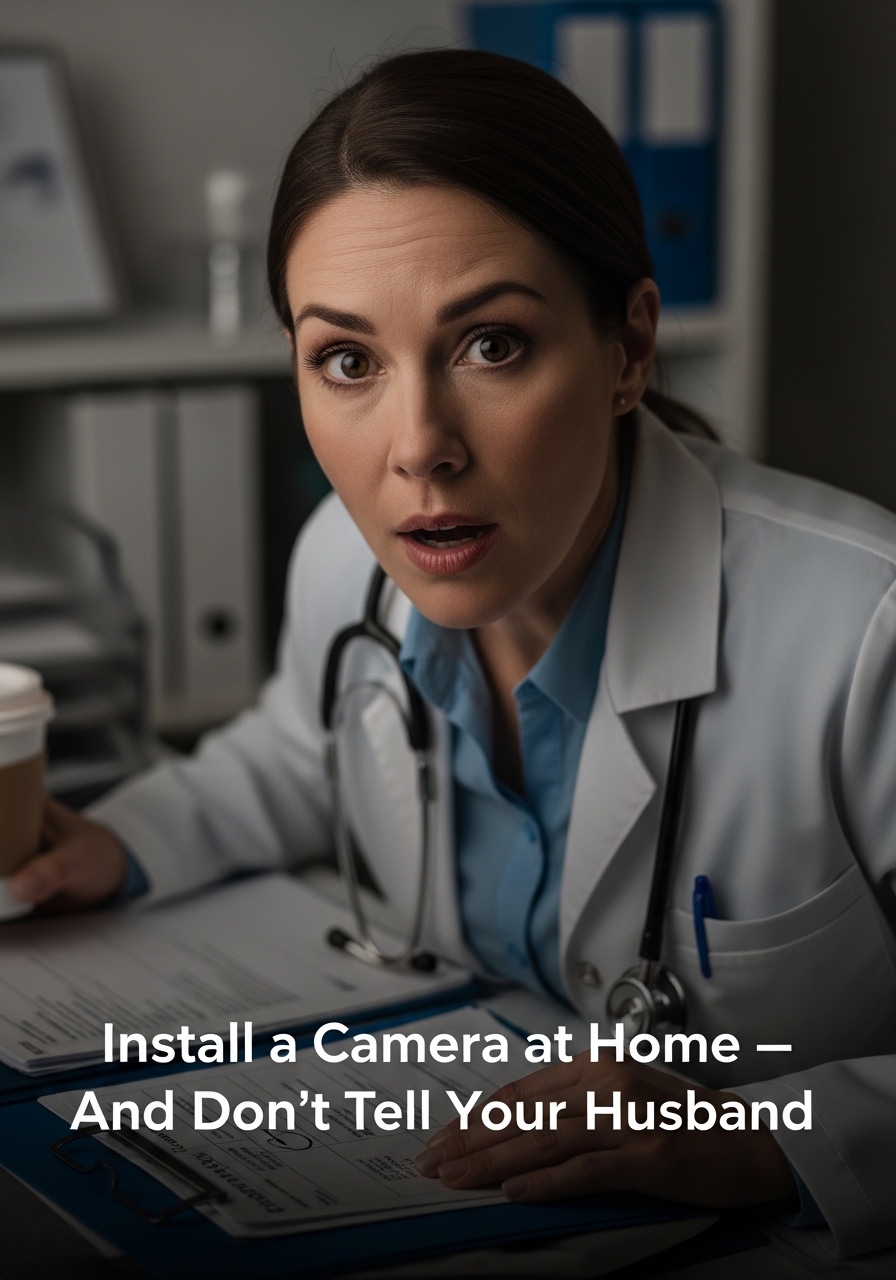
“I don’t want to scare you,” he said softly. “But install a camera in your home. And whatever you do—don’t tell your husband.”
My stomach dropped. “Why would you say that?”
He glanced at Emma, now gripping her rabbit even tighter.
“Please,” he whispered. “You need to know what happens when you’re not there.”
The Longest Night
That night, sleep never came.
My husband watched television in the living room. Emma slept in her crib. And I sat alone, staring at the small box I’d bought that afternoon—a baby monitor with a hidden camera.
It felt wrong. Like betrayal.
But Dr. Lewis’s words echoed in my mind: You need to know.
While my husband showered, I installed the cameras—one in the nursery, one in the living room.
I told myself I’d check once.
I didn’t realize that by the next night, my entire world would collapse.
The Footage
The following evening, I returned home late. Emma was already asleep. My husband greeted me with his usual smile.
Everything looked normal.
Too normal.
After he went to bed, I opened the camera app on my phone. My hands shook as I scrolled through the footage.
At first, it was harmless—cartoons, toys, quiet play.
Then, around 3 p.m., Emma started crying.
The camera showed my husband sitting nearby, scrolling on his phone. He didn’t move. Not at first.
Then he turned toward her.
I couldn’t hear his voice, but I saw his mouth moving. Calm at first—then sharp. His face hardened into something I didn’t recognize.
He snatched her favorite toy and tossed it aside.
Emma sobbed harder, reaching out.
He didn’t touch her—but the coldness, the anger, the silence afterward… it was enough to terrify a child.
Enough to break her.
The Truth I Didn’t Want to See
I paused the video, gasping for air.
That man was my husband. The same man who kissed her goodnight. Who told us he loved us.
But there was no love in that room.
Only fear.
Suddenly, everything made sense—the night terrors, the shaking, the way Emma clung to me as if I were her lifeline.
She had been telling me all along.
I just hadn’t known how to listen.
Choosing My Child
The next morning, I said nothing. I took Emma to my sister’s house and called Dr. Lewis.
“You saw it,” he said quietly.
“Yes,” I whispered.
After a pause, he added, “You’re not the first mother I’ve warned.”
That sentence stayed with me.
I held Emma close and made her a promise—one I would never break.
“No one will ever make you feel unsafe again.”
A Different Kind of Strength
Weeks later, we moved into a small apartment filled with light.
Emma began to smile again.
She still woke up some nights—but now she reached for me, and I was always there.
Watching her laugh one morning, sunlight catching in her curls, I understood something I never had before:
Protection doesn’t always come from strength or confrontation.
Sometimes it comes from listening—to silence, to fear, to the cries a child can’t explain.
Because sometimes, the smallest cry is a warning.
And a mother’s love is the first—and loudest—to hear it.