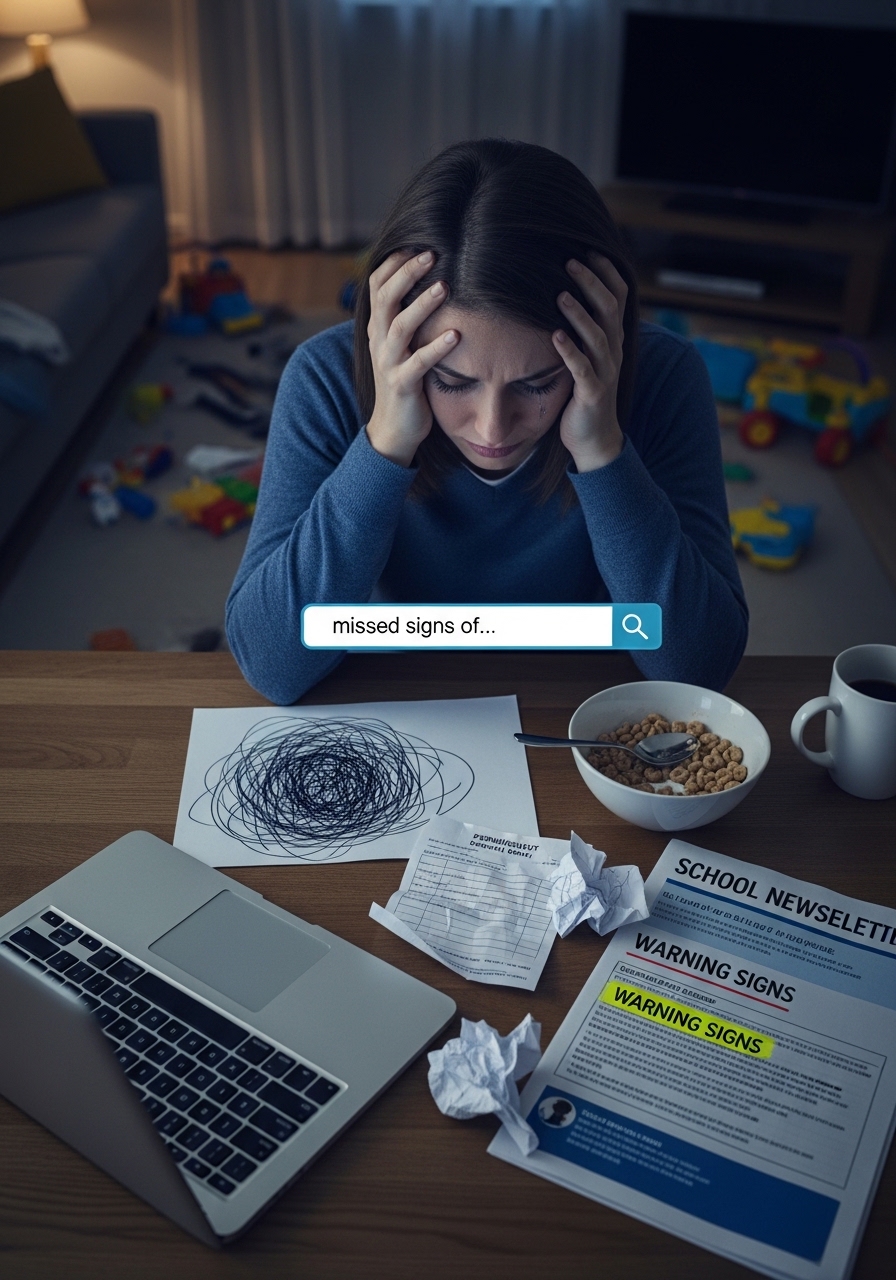
Every parent’s worst fear isn’t danger—it’s discovering you were looking right at your child and still didn’t see them.
When she said Alice was “wasting her potential,” my chest tightened. Then she added that if no one intervened, Alice would be “buried under everyone else’s mediocrity.”
That sentence hit me like a punch.
Let me rewind.
My name is Renee. I’m a single mom raising a wonderfully stubborn, creative, emotionally complex ten-year-old named Alice in a suburb just outside Minneapolis. I work days at a dental office, spend nights juggling chores and bills, and collapse into bed hoping—praying—that my daughter will grow into someone happy and whole. I love her more than anything, but some days I feel like I’m improvising parenthood as I go.
So when Miss Jackson joined Clearview Elementary, I was relieved.
She was young—early thirties maybe—stylish in an earthy way, always smiling like she carried good news around with her. Almost immediately, Alice started talking more about school. She wanted to arrive early. She chatted nonstop about “Miss J” and how she made class “less boring.”
I was thrilled. A good teacher can change everything.
Then came my conversation with Karen.
It was a Tuesday afternoon outside the school. She was in workout leggings and a messy bun. I was still in my scrubs, clutching lukewarm coffee.
I mentioned how kind it was that Miss Jackson stayed late to give Alice extra lessons.
Karen blinked. “Extra lessons?”
“You know… after school sometimes.”
Her expression shifted. “Renee, my son Mark is in that class. None of the kids stay after.”
That was when the worry took hold. That sharp, quiet feeling that something wasn’t lining up.
That night at dinner, I asked Alice casually, “What do you and Miss Jackson work on after school?”
She stared hard at her mashed potatoes. “Just stuff. Reading. Sometimes.”
Then she shut down completely.
That silence scared me more than any excuse. Alice only goes quiet when something feels too big to explain.
The next day, I left work early. Parked down the street. Waited until most parents were gone. Then I walked around to the side of the school where the classroom windows faced the playground. One was cracked open.
I felt ridiculous—like I was sneaking around my own child’s school—but my heart was pounding.
That’s when I heard Miss Jackson say:
“Alice, you’re incredibly bright. But if we don’t get ahead of this, they’ll bury you under everyone else’s mediocrity.”
Alice was staring at her shoes, twisting the strings of her hoodie.
“I don’t want to be weird,” she whispered.
“You’re not weird,” Miss Jackson said gently. “You’re gifted. And the world doesn’t always know what to do with kids like you.”
Then she pulled out a folder.
Inside were Alice’s writings—stories, essays, poems. Every page marked with careful notes: Brilliant phrasing. You’re thinking like a novelist.
Something in my chest loosened… and then tightened again.
Because how had I missed this?
Alice wrote constantly. Journals under her bed. Pages scattered on the floor. I’d skimmed them, smiled, told her they were cute.
I’d never really read them.
Miss Jackson had.
That night, I asked Alice to show me her writing. She was shy at first, but we sat together on her bed and she read me a story about a girl who could talk to trees. It was funny. Sad. Layered in ways I didn’t expect. She watched my face the whole time, bracing for disinterest.
When she finished, I clapped. I cried. I told her, “You’re not weird. You’re incredible.”
The following week, I met with Miss Jackson. She explained that Alice was scoring far above grade level in reading and writing—likely at a middle-school range. But there was no formal gifted program. Kids like Alice often slipped through unnoticed.
“She just needs someone to challenge her,” Miss Jackson said. “And someone to believe in her.”
So I stepped up.
We started a weekend writing club—just the two of us at first. Then a couple classmates joined. The local library offered to host a youth writing showcase this summer. Alice already has her story outlined.
And me? I’m learning how to slow down. How to see the quiet brilliance hiding between homework and cartoons.
One evening last month, Alice left a sticky note on my nightstand.
Thanks for listening, Mom. I’m glad you heard.
I started this story terrified that something was wrong.
Instead, I found something beautiful: a teacher doing invisible work, a daughter full of talent I almost missed, and a second chance to truly see her.
Maybe the world doesn’t always know what to do with kids like Alice.
But now I do.
And I’m not missing another moment.