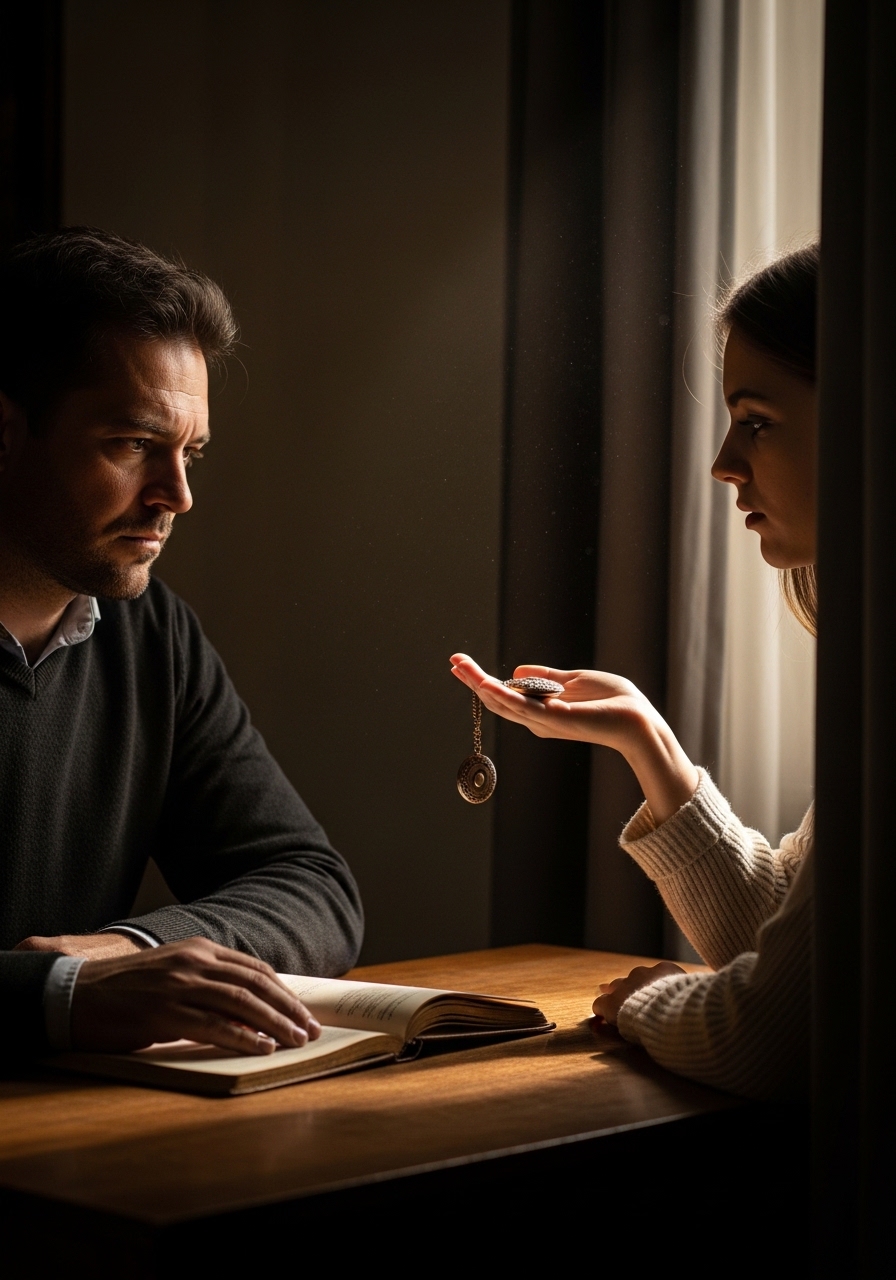
When my wife Anna and I got married, her daughter Shiloh was nine years old. She was quiet, observant, and carried herself like someone who never missed a detail. From the beginning, she treated me like an intruder in her life.
She didn’t lash out. She didn’t scream or rebel. Instead, she built a wall—cold, distant, unmovable. No matter what I did—driving her to school, helping with homework, giving her space—nothing got through.
I always assumed she blamed me for her parents’ divorce. What made it harder was knowing the truth: her biological father had disappeared long before I ever met Anna. But kids don’t measure timelines. They measure pain.
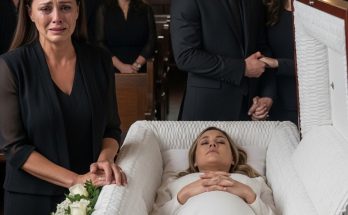
Then last year, cancer took Anna from us.
One day she was laughing in the kitchen. The next, she was struggling to breathe. When she died, it felt like someone had turned the volume of the world all the way down.
Shiloh and I stayed in the same house, but we lived like strangers. She locked herself in her room. I buried myself in work. We grieved separately, quietly, as if acknowledging each other’s pain would shatter what little stability we had left.
Weeks passed like that.
Then, a few weeks ago, everything changed.
I came home from work and noticed Shiloh wasn’t there. Her shoes were gone, but her phone was still charging on the counter. That wasn’t like her. Panic set in.
I went into her room to look for contact information for her friends. I wasn’t snooping—I was scared.
That’s when I froze.
Covering the far wall was a massive portrait.
It was me.
Not just my face, but my expression—my tired eyes, the sadness I tried so hard to hide. The painting was detailed, emotional, far beyond what I expected from a child.
Then I noticed the word written softly in pencil at the bottom corner.
“Dad.”
My legs gave out. I sank onto her bed and cried harder than I had even cried at Anna’s funeral. It wasn’t just grief—it was relief, guilt, and love crashing together all at once.
I had spent years thinking I’d failed her. That I never mattered.
All that time, she had been watching. Seeing me. Choosing me in her own quiet way.
When Shiloh finally came home, she found me there, still overwhelmed, still broken open. She didn’t ask questions. She didn’t explain.
She simply walked over and wrapped her arms around me.
That hug said everything words never had.
Since that day, everything has changed.
We’re no longer two lonely people sharing the same house.
We’re a family.