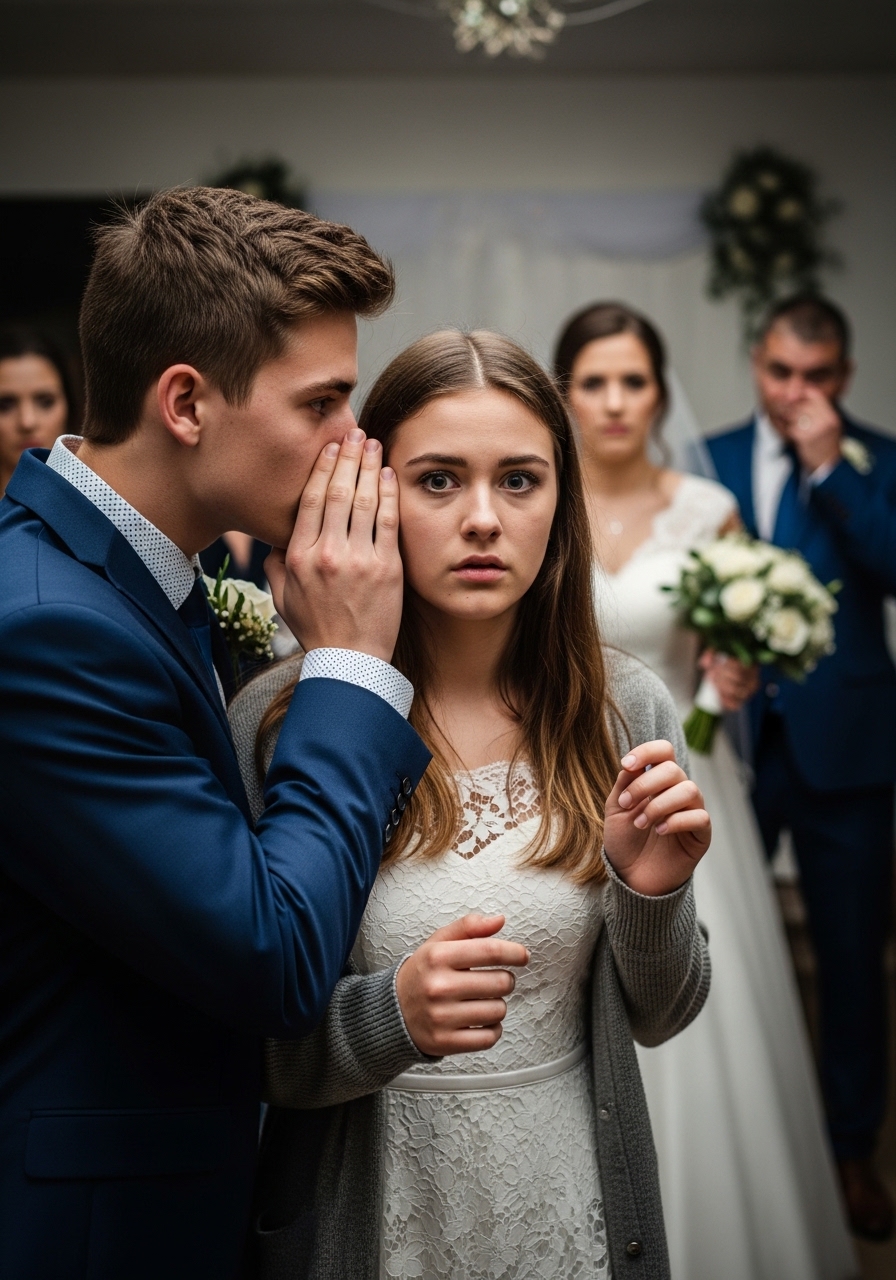
Eight days after my mother died, my father married her sister. While guests raised champagne glasses and smiled for photos, I stood behind the shed hearing a truth that shattered what little stability I had left. It began with a whisper—and ended with a secret they never expected me to uncover.
You think rock bottom is the knock at the door.
The uniformed officer standing in your foyer, hat in hand, asking if your name is Tessa.
The sound your father makes—part human, part animal—like something inside him splitting apart.
You think it’s the moment your knees hit the floor before your mind catches up.
But you’re wrong.
Rock bottom is standing in your backyard eight days later, watching your father wear a boutonniere while holding your aunt’s hand.
I was thirty when my mom, Laura, died in a car accident. One moment she was picking up a prescription. The next, a police officer was standing on our porch, saying words that didn’t make sense.
The days after blurred together—casseroles, wilting flowers, murmured condolences. My aunt Corrine was everywhere, crying the loudest, holding my hands, promising we’d be okay.
“We’ll get through this,” she kept saying.
Apparently, she meant together—with my dad.
Corrine was my mom’s sister. At the funeral, she sobbed dramatically. In the kitchen afterward, she clasped my hands and talked about the future. My eyes kept drifting to her nails—perfectly manicured, glossy pink, untouched by grief.
“I should redo these,” she said casually. “One chipped while hugging everyone.”
I said nothing. I just held my mug and wondered when life had stopped making sense.
Eight days after my mother died, Corrine married my father.
No warning. No explanation. Just a full wedding—white chairs, vows, an enormous cake—in the same backyard where my mom used to kneel every spring to plant tulips.
I watched from the window as Corrine told someone to rip them out.
“They’ll look messy in photos.”
“Those were Mom’s,” I said.
“She made this family hard to live in,” Corrine replied, loud enough for the neighbors to hear. “We’re fixing that.”
I was still wearing black when the chairs were set up.
My father looked… happy. Guests arrived confused but smiling, whispering things like, At least he’s not alone and God works in mysterious ways.
An hour before the ceremony, Corrine cornered me in the kitchen and held out her hand.
“You should be grateful,” she said. “Your dad needs someone.”
“My mom hasn’t been gone two weeks.”
“This is what healing looks like,” she replied sweetly. “Try not to ruin the mood.”
When I asked my father for more time, he shut me down with one sentence:
“Not today, Tessa.”
That’s when I knew—this wasn’t about grief. It was about choosing her.
I left the house shaking and ended up behind the shed, trying not to throw up while champagne glasses clinked in the distance.
That’s when Mason appeared.
Mason was Corrine’s 19-year-old son—quiet, observant, pale with guilt.
“Tessa,” he whispered. “I need to tell you something.”
He pulled me deeper into the shadows.
“That ring she’s wearing? My mom showed it to me last Christmas. She said your dad had already bought it. She even showed me the box.”
Last Christmas.
My mother had still been alive.
Mason told me where it came from—Ridgeway Jewelers—and that he’d taken a photo of the card inside the box.
“For our real beginning.”
I didn’t cry. I didn’t scream.
I drove straight to the jeweler.
The clerk didn’t hesitate. She pulled up the receipt.
December 18.
My father’s name.
I took a photo and went back.
The reception was in full swing. Laughter, food, congratulations. Someone asked me to say a few words.
So I did.
“Eight days ago, I buried my mother,” I said. “Today, her sister is wearing a ring my dad bought while my mom was still alive.”
The yard went silent.
My father tried to stop me. Corrine called me confused. Grief-stricken.
I told them the date. The receipt. The truth.
Then I walked away.
By morning, the whispers had spread. Messages flew. Even people who’d defended them fell quiet.
Two days later, my father confronted me.
“You humiliated us.”
“No,” I said. “I told the truth you tried to bury.”
I packed my mother’s dresses and left.
Before I went, I dug through the discarded flowerbeds and rescued a few tulip bulbs. I planted them at my mom’s grave.
Mason joined me there.
“They thought they won,” I said.
“They didn’t,” he replied.
I didn’t forgive them. I didn’t need closure.
I kept what mattered—my mother’s memory, her kindness, the truth.
The tulips would bloom again.
And I was done pretending.