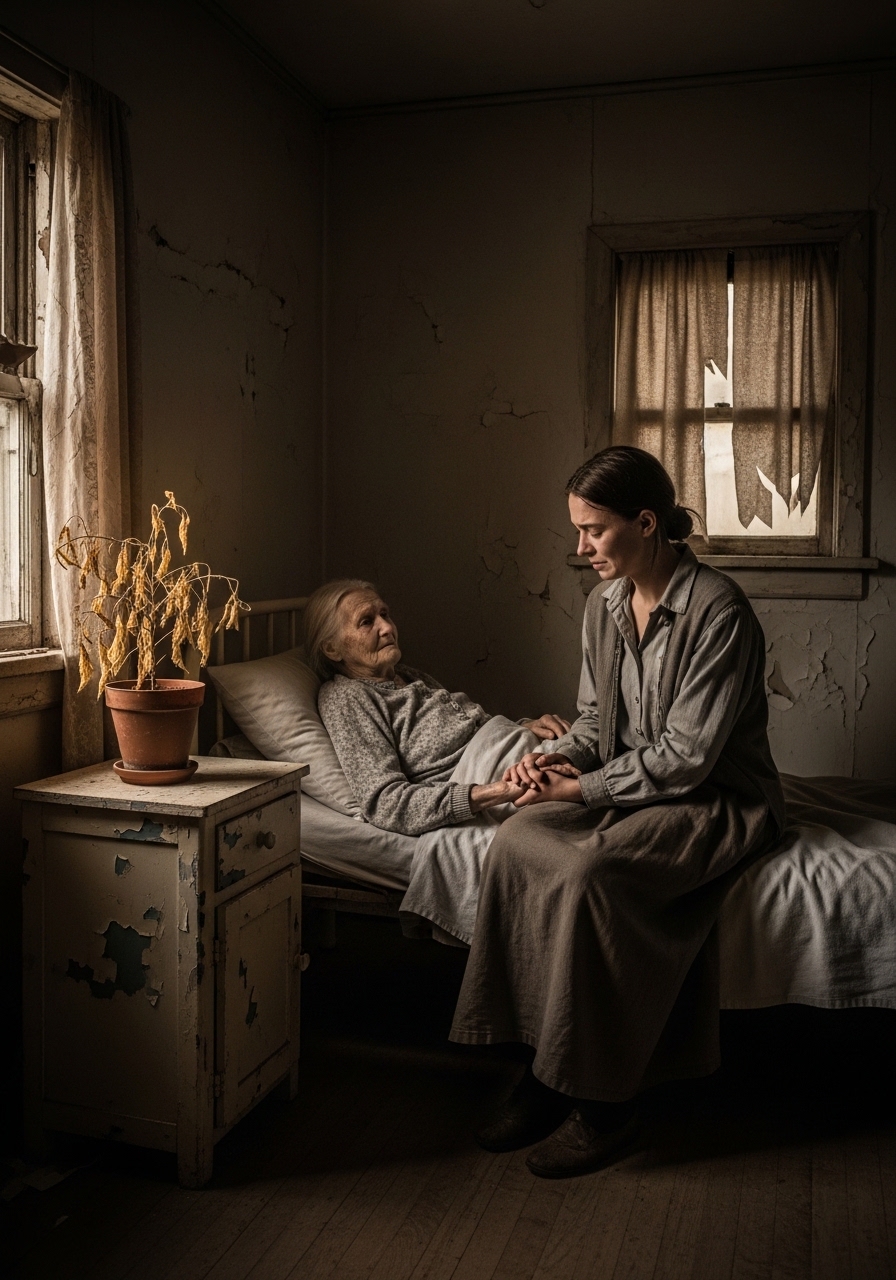
I made my mother leave her home when she was seventy-two years old.
I still remember standing in the doorway, arms crossed, convincing myself I was being practical—not cruel. The house had been left to me by my father. His will was clear. Legally, everything was settled. My three children were growing fast. Toys crowded the hallways, backpacks filled every corner, and the noise never stopped. We needed space. That was the truth I clung to.
My mother listened quietly as I explained it all.
I expected tears. Anger. Resistance.
Instead, she smiled—a small, tired smile—and said, “I will only take my plant with me.”
That should have stopped me.
It didn’t.
I asked where she wanted to go, already uncomfortable, already eager to end the conversation. She looked at me gently and said, “Take me to the least expensive nursing home. I know you don’t earn much, and I don’t want you to spend all your money on your sick mother.”
The word sick made me shift in place. I nodded. I agreed. I felt relieved she wasn’t asking for more—relieved she was making it easy.
The day she left, she walked out slowly, carrying a small, worn bag and the green potted plant she had watered every morning for years. I didn’t help her to the car. I told myself she was strong. I told myself I would visit soon.
I didn’t.
Life filled the space she left behind. The kids spread into new rooms. The house grew louder, fuller—and somehow emptier. Sometimes I noticed the corner where her chair used to be. Sometimes I caught myself listening for the soft clink of her teacup at night. I pushed those thoughts away. Guilt was inconvenient.
It was the nursing home.
They spoke gently, professionally. My mother had passed away in her sleep that morning.
My legs gave out, and I sat on the floor staring at nothing. Forty days. That was all she had after leaving her home. After leaving me.
They told me she’d left her plant for me. And a note.
I picked them up a few days later. The plant looked the same—green, alive, stubbornly thriving. The note was folded neatly, her handwriting careful and familiar.
“Search inside the soil,” it read.
“I am sorry. I wish I could give you more, but this is all I have…”
That night, after the children were asleep, I knelt on the kitchen floor. I spread newspaper under the pot and told myself not to expect anything. Maybe it was nothing—just one last habit, one last gentle request.
I dug slowly.
My fingers hit something hard.
Buried at the bottom were three small plastic bags. Inside each were several gold coin pieces, dulled by time but unmistakably real.
Three bags.
Three children.
I collapsed onto the floor, dirt on my hands, the plant tipped beside me, sobbing so hard I couldn’t breathe. I had never known about the coins. Never knew she had been saving them—hiding them—protecting them.
She could have used that money. She could have made her last days easier. She could have asked for better care, better food, maybe even stayed in her home longer.
But she didn’t.
She chose my children. Their future.
Even after I took her home away. Even after I chose convenience over compassion. Even after I sent her somewhere cheap and distant.
My sick mother was still thinking of us.
That night, I held the plant against my chest like it was the last piece of her I had left. I whispered apologies into the quiet house. I told her I was sorry—for not visiting, for not listening, for not holding her hand when she needed me most.
I wish she were here so I could hold her now.
But all I have are three small bags of coins, a living plant, and a lesson I learned far too late:
A mother’s love doesn’t stop—
even when we fail her.