When my parents divorced, I chose to live with my father—the parent who could offer comfort, stability, and a life that looked good from the outside. His house was large and immaculate, filled with expensive furniture and quiet hallways. Everything was polished. Everything was orderly.
What it wasn’t… was warm.
My mother moved out with very little. I stayed behind, telling myself that comfort mattered more than closeness. At fifteen, that choice felt practical. I didn’t yet understand what it would cost me.
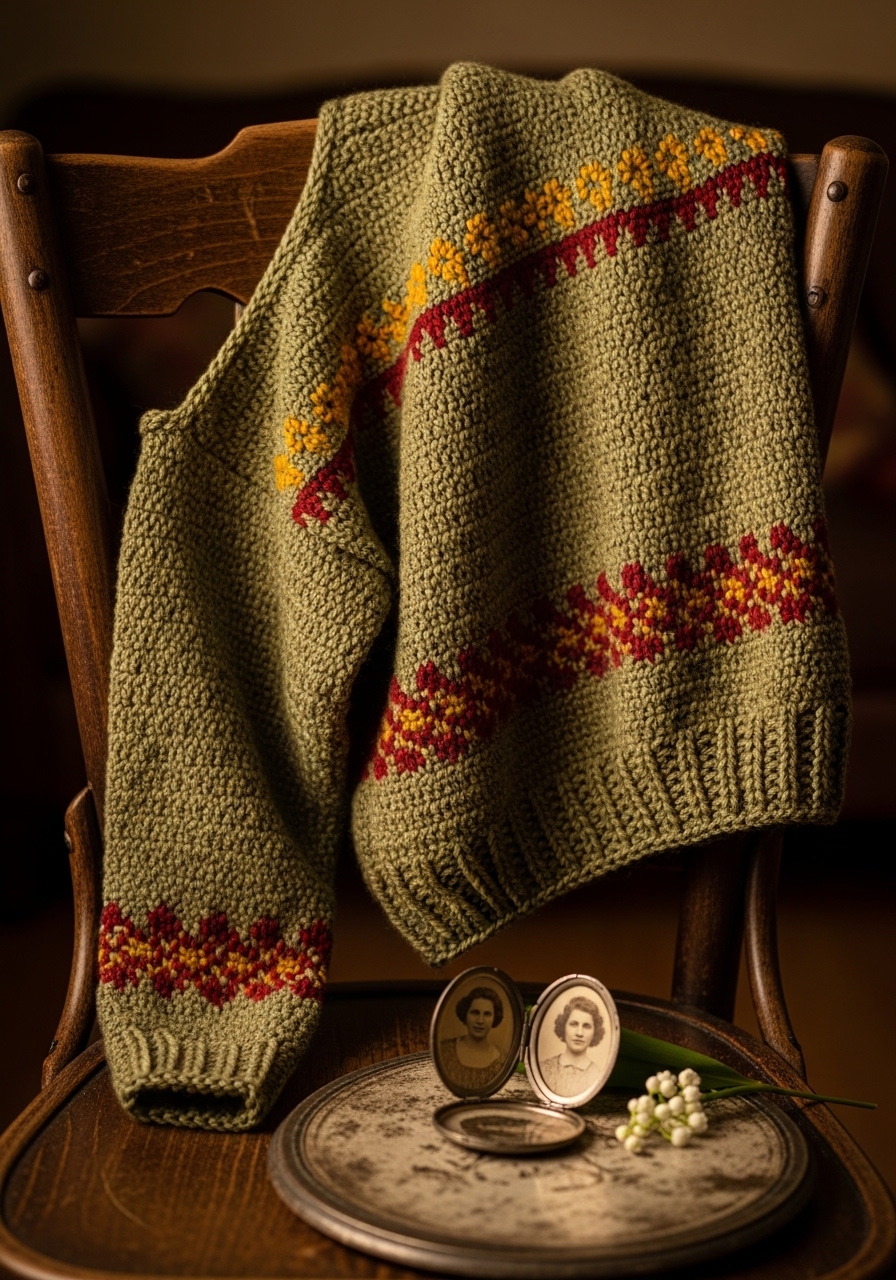
For my birthday that year, my mom gave me a crocheted sweater.
It wasn’t fashionable. It wasn’t branded. The yarn was soft but plain, the stitching slightly uneven, as if some rows had been redone late at night. I smiled, thanked her, and folded it neatly into my dresser.
I never wore it.
At that age, I was painfully aware of appearances. My dad bought me name-brand clothes. That sweater didn’t belong in my world—or so I thought. It stayed tucked away, forgotten in the back of a drawer.
Years passed.
I grew up, moved out, built a life of my own. My relationship with my mother remained distant—not angry, just quiet. Holiday calls. Polite updates. Carefully avoiding the things that hurt too much to touch.
One afternoon, while clearing out my old room, I found the sweater again. It smelled faintly of time and storage. I held it for a moment, then decided to donate it. My neighbor mentioned she’d been feeling cold lately, so I offered it to her instead.
She thanked me and took it home.
Less than an hour later, my phone rang.
Her voice was unsteady.
“Please come over,” she said. “Right now. And bring the sweater.”
Confused, I rushed next door.
She was holding it with both hands, pointing urgently at one of the pockets.
“Check inside,” she said.
I reached in—and felt paper.
I pulled out a small, folded envelope. Inside was a letter… and several crisp bills, slightly yellowed with age.
The letter was from my mother.
She wrote that after the divorce, she had almost nothing. No savings. No money for gifts. But she wanted to give me something meaningful—something meant for my future.
So she hid the money inside the sweater.
Not enough to change my life.
But enough to show her intention.
She wrote that she hoped one day, when I was older, I’d find it. That I’d understand the sweater was never about fashion—it was about love, patience, and sacrifice.
The last line shattered me:
“Even when I don’t have much, I will always try to protect you.”
I couldn’t speak. All those years, I had judged the gift by its appearance. I had overlooked the hands that made it. I had missed the quiet love woven into every stitch.
That night, I called my mother.
For the first time in years, I cried. I told her what I’d found. There was a long pause—then a soft laugh mixed with tears.
“I wondered if you ever would,” she said.
I still have the sweater.
I don’t wear it often, but I keep it where I can see it. It reminds me that love doesn’t always arrive wrapped in something shiny. Sometimes it comes quietly, patiently, waiting for you to be ready.
And sometimes, the most valuable things we receive are the ones we almost gave away.