By the time I reached my late fifties, I believed my life’s biggest chapters were already written. Then, on a freezing winter morning, a newborn was abandoned on my front step — and everything I thought I knew about fate, motherhood, and family was rewritten.
I’m 79 now. My husband, Harold, is 81. And I became a mother for the first time at 56, the night someone left a baby to die in the cold.
Twenty-three years later, another knock on my door shattered the peace we had built — when a stranger arrived holding a box and said, “You need to see what your son has been hiding from you.”
That sentence still sits heavy in my chest.
When Harold and I were younger, children felt like a luxury we couldn’t afford. We lived paycheck to paycheck, surviving on canned soup and cheap coffee, promising each other, “Later. When life settles down.”
Then I got sick.
What started as a manageable medical issue turned into years of hospital visits and treatments. One quiet afternoon, a doctor sat us down and told me gently that pregnancy would never be possible for me.
I remember staring at the floor. Harold squeezed my hand. We walked to the car and sat there in silence.
We never collapsed in grief. We simply adjusted.
We bought a modest home in a quiet town. We worked, paid bills, and took slow drives on weekends. People assumed we’d chosen a child-free life. Letting them believe that was easier than explaining the truth.
I turned 56 during one of the coldest winters I can remember.
One early morning, I woke to a sound that didn’t belong. At first, I thought it was the wind — until I realized it was crying. Thin. Weak. A baby.
I ran to the front door and opened it to a blast of icy air.
A basket sat on the doormat.
Inside was a baby boy, his skin red from the cold, wrapped in a blanket so thin it barely counted as protection.
I didn’t hesitate. I grabbed the basket and shouted for Harold to call 911.
The house filled with flashing lights and urgent voices. Paramedics checked him, asked questions, searched for any sign of who had left him behind. There was no note. No witnesses. No explanation.
They took him away — but I couldn’t forget his eyes. Wide. Alert. Alive.
That should have been the end of it. Just a strange, tragic story.
But I couldn’t let it go.
The social worker gave me a number “in case I wanted updates.” I called that afternoon. Then the next day. And the next.
No relatives came forward.
Eventually, she told me he would be placed into foster care.
I looked at Harold across our kitchen table.
“We could take him,” I said.
He reminded me of our age. I reminded him the baby needed someone.
“What I don’t want,” I said, “is for him to grow up believing nobody chose him.”
Harold’s eyes filled with tears. That was our answer.
We adopted him. We named him Julian.
People whispered. Neighbors assumed he was our grandson. We corrected them every time.
“He’s our son.”
Raising a baby at nearly sixty wasn’t easy. My back hurt constantly. Harold fell asleep mid-feeding more than once. But every time Julian wrapped his tiny fingers around mine, I knew we’d made the right choice.
We told him the truth from the start.
“You were left at our door,” I’d say. “But we chose you. Always.”
Julian grew into a kind, thoughtful young man — the type teachers adored and friends trusted. He defended smaller kids and called us every week once he moved out. We were content.
Then, when Julian was 23, there was another knock.
A woman stood outside holding a box. She introduced herself as Marianne — Julian’s attorney.
My heart dropped.
She explained calmly that Julian was safe. Then she said something I wasn’t prepared for.
“You need to see what your son has been hiding from you.”
Inside the box were documents and a photograph of a wealthy couple standing in front of an estate-sized home.
Julian’s biological parents.
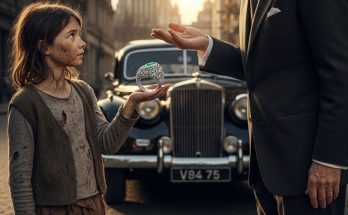
They had abandoned him after doctors warned of possible health risks at birth. Afraid of imperfection, they left him outside in winter and erased him from their lives.
Years later, they died in a car accident.
And in their will, they left everything to the child they once discarded.
Julian knew. He’d known for years.
He never told us because he didn’t want their guilt, their money, or their legacy invading our home.
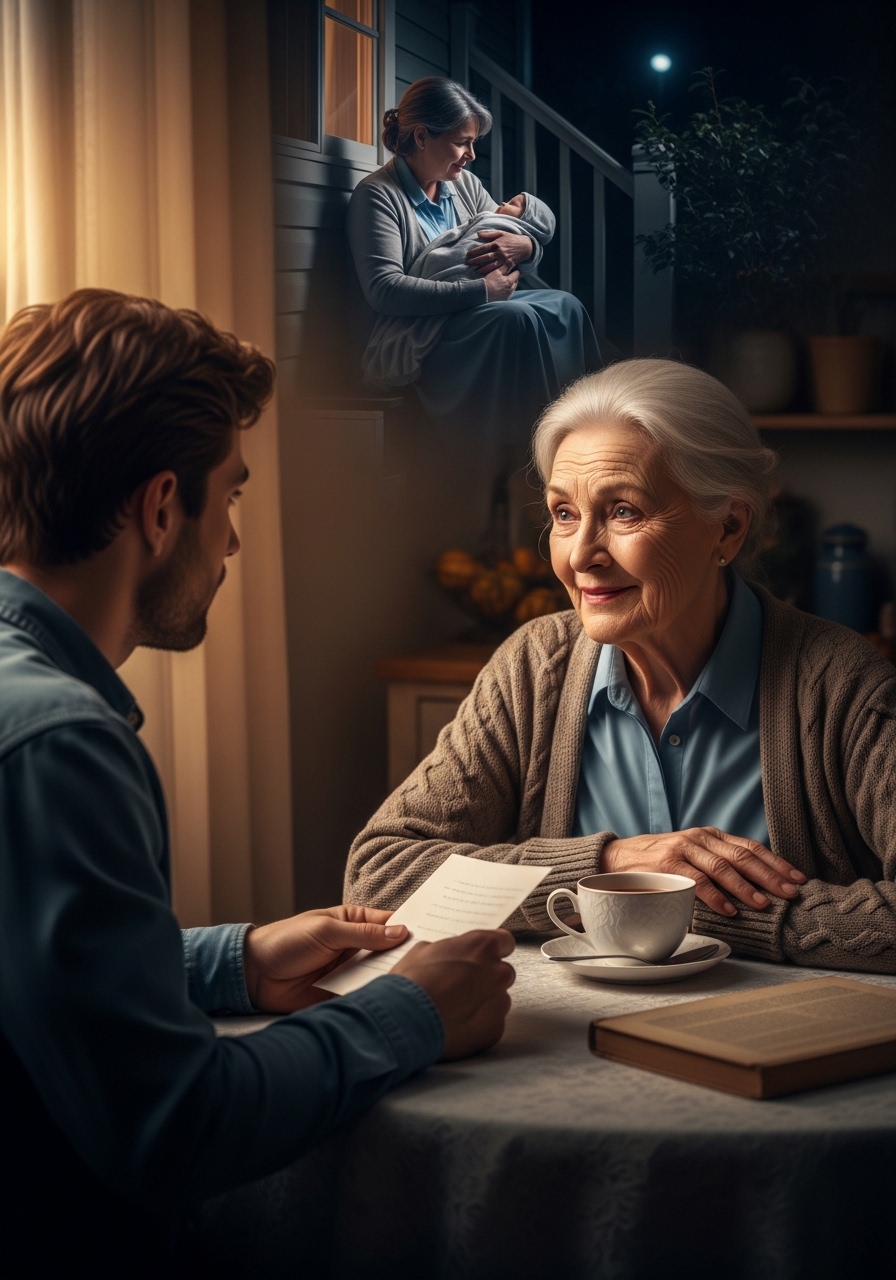
When he came over that night, he finally told us everything.
“I didn’t want you to think I’d choose them over you,” he said quietly.
I took his hand and told him the truth.
“You don’t protect us by carrying pain alone.”
Julian admitted the inheritance was enormous — life-changing. But accepting it felt like claiming people who never claimed him.
“They put me outside,” he said. “You pulled me in.”
In the end, he chose to walk away from their name. He planned to give what he could to charity — anonymously — and close the chapter for good.
“I already won,” he said softly. “I got parents who wanted me.”
As he hugged us goodbye, he smiled and said,
“Family isn’t about DNA. It’s about who opens the door when you’re freezing.”
I once believed I failed at motherhood because my body couldn’t give me a child.
But I became a mother the moment I opened that door — and refused to leave him in the cold.
And twenty-three years later, my son chose us right back.