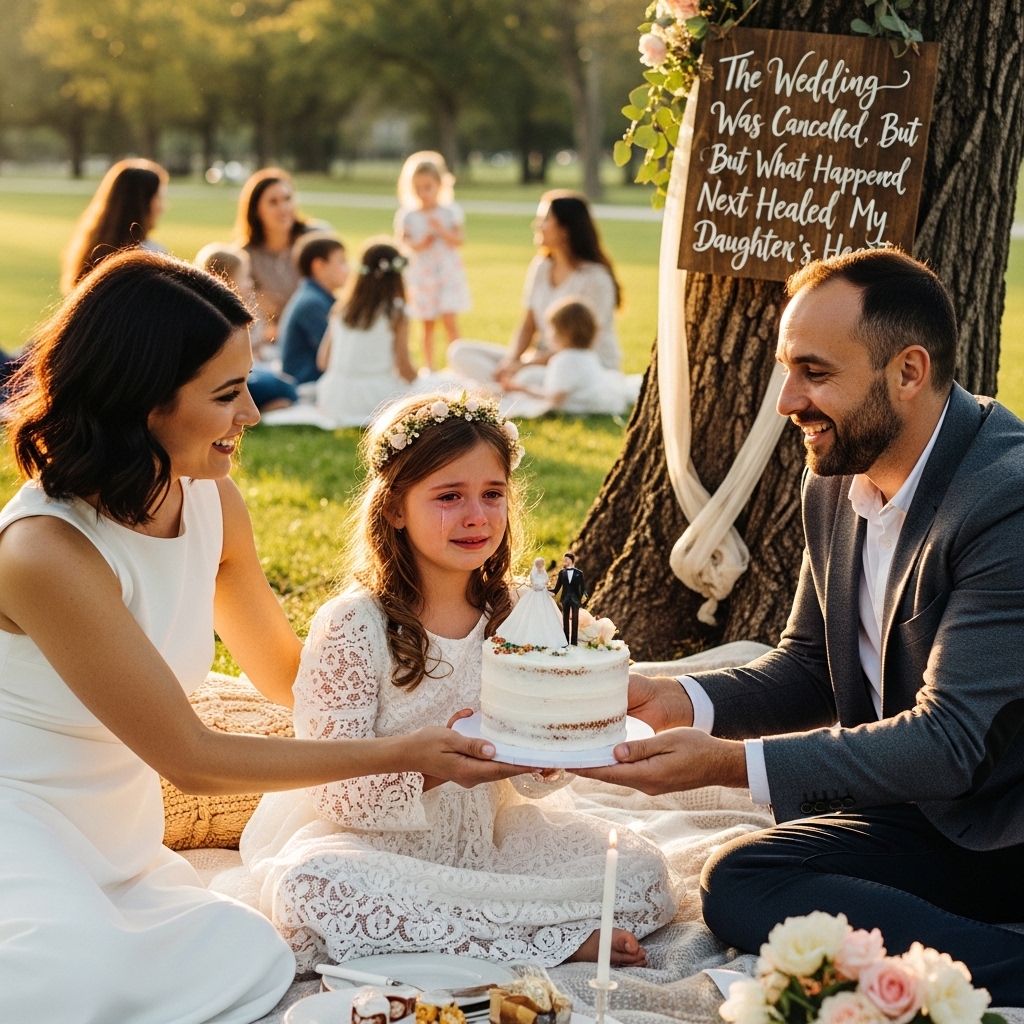
I raised Emma on my own from the time she was six years old.
Her mother left one quiet winter morning. No argument. No warning. Just a note on the kitchen counter saying she needed more than this life. There were no explanations — only a little girl standing in the doorway, clutching her stuffed rabbit, asking if Mommy would be home for dinner.
She never was.
From that day forward, it was just the two of us.
I worked double shifts. I learned how to braid hair from online videos. I sat through school plays half-asleep, clapping louder than anyone else. Emma became my entire world. Every scraped knee, every report card, every heartbreak — she came to me first. And I promised myself I would never leave her the way her mother had.
So when she turned twenty and told me she was getting married, my heart sank.
Not because I didn’t believe in love — but because I didn’t trust him.
Her fiancé always felt unfinished. Big ideas. No clear plans. Endless talk about “someday.” I tried to raise my concerns gently. Emma listened, but love has a way of muting warning bells. We argued. Doors slammed. Tears were shed. But she was my daughter, and I supported her anyway.
When she asked for help paying for the wedding, I went to the bank and took out a $45,000 loan.
I told myself it was worth it. One day. One moment. One chance for her to feel like the happiest woman in the world.
The wedding day arrived bright and flawless. The venue shimmered. Nearly two hundred guests filled the room. Flowers everywhere. Soft music drifting through the air. Emma stood in her dress, glowing — nervous, hopeful, beautiful.
I stepped outside for a moment to catch my breath.
That’s when I heard screaming.
Not joyful screams. Not laughter.
Real fear.
I ran.
Emma was on the floor of the bridal suite, her gown twisted beneath her, her face drained of color, her hands gripping her chest as though the air had turned against her. She could barely breathe.
For one terrifying second, I thought I was losing her.
Someone shoved a phone into my hand. Her maid of honor, pale and shaking, whispered, “He called. Just now.”
Her fiancé wasn’t coming.
He said he wasn’t ready. Said he was sorry. Said the timing wasn’t right.
Then he hung up.
Emma collapsed into my arms, sobbing so violently her whole body shook. Every dream she’d built — every future she’d imagined — shattered in a single moment. I held her the way I had when she was small, whispering, “I’ve got you. I’m here,” while my own heart quietly broke.
I expected the guests to leave.
I expected whispers. Judgment. Awkward exits.
But no one moved.
Not one person walked out.
Instead, her friends gathered around her. Someone brought water. Someone wrapped a blanket around her shoulders. People sat on the floor beside her, crying with her. A few guests quietly began collecting money — cash, checks, whatever they had — refusing to let the day become a loss.
Then someone said softly, “We’re still here.”
Another voice followed, stronger this time: “This day doesn’t belong to him.”
Music started again — not wedding music, but Emma’s favorite songs. People clapped. Someone raised a glass and said, “To Emma. To strength. To love.”
What was meant to be a wedding transformed into something else entirely.
A celebration of resilience.
A reminder that love doesn’t disappear just because one person walks away.
Eventually, Emma stood. Still in her dress. Still shaking — but no longer broken. She looked around the room at two hundred people who chose her instead of the exit.
She smiled through tears.
That night, watching my daughter dance, surrounded by love and laughter, I understood something I hadn’t before.
I didn’t lose $45,000 that day.
I gained proof that my daughter would never be alone.
And for a father who once promised a little girl in a doorway that he’d always be there — that was worth everything.