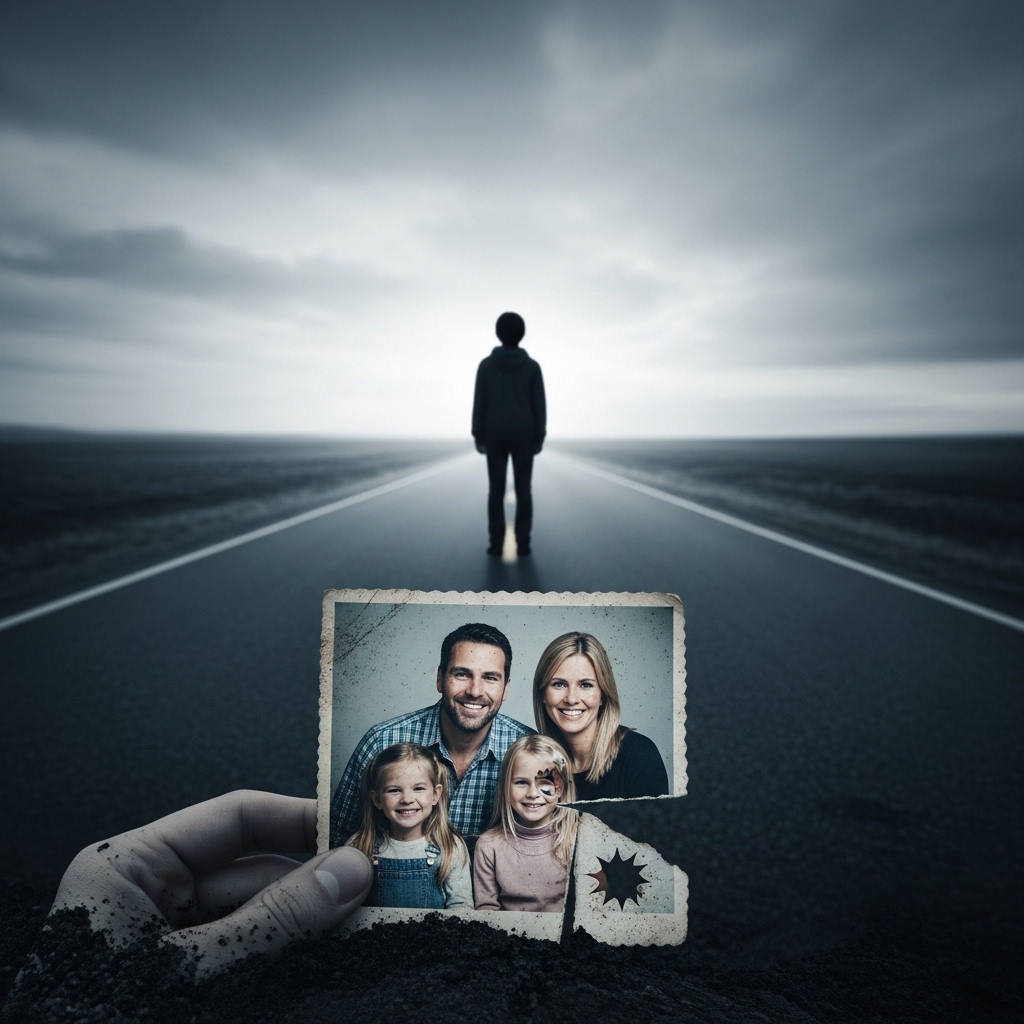
I was seven years old when my parents left me.
Seven.
My sister was nine—already graceful, already devoted to ballet. That’s what they told me, anyway. That her talent was rare. That her future demanded everything they had. And that everything included leaving me behind.
I still remember the cold air on my skin as their car disappeared into the dusk. I stood on the porch of a couple I’d met once, clutching a threadbare teddy bear and a promise that someday I’d understand. That this sacrifice was for my sister’s dream.
Understand being abandoned?
I didn’t then. A part of me never would.
My sister looked back once, fear written all over her face, before my mother gently but firmly turned her forward. Then they were gone.
The couple who took me in didn’t rush to fill the space my parents left. They simply stayed. They fed me. Listened when I woke up screaming. They taught me how to tie my shoes, ride a bike, bake cookies without burning them. They celebrated every report card, every scraped knee, every tiny success.
Slowly, I learned what love actually was.
It wasn’t fragile. It didn’t disappear when life got hard. It was steady. Reliable. Safe.
They became my parents in every way that mattered.
The years passed gently. The ache never fully disappeared, but it faded into something manageable. I built a life—friends, school, plans for the future—secure in the knowledge that someone would always show up for me.
My biological parents became a closed chapter. My sister, a quiet ghost. Sometimes I wondered if her sacrifice had been worth it. If her dream had come true.
Twelve years later, the phone rang.
I was nineteen. It was my mother.
They were back.
Anger flared instantly, hot and sharp. How dared they? But underneath it was something else—curiosity, and a need for answers I’d buried for years. I agreed to meet them, in public, with my real parents beside me.
They looked smaller. Older. Worn down. They spoke in careful voices about debt, elite ballet schools, and impossible choices. About how supporting my sister had nearly destroyed them.
“We had no other option,” my father said. “We wanted to give her the life she deserved.”
Something felt wrong.
They barely spoke about my sister. Just a vague assurance that she was “doing well.” No details. No pride. No warmth.
So I started digging.
The internet filled in what they wouldn’t.
There were no ballet programs. No awards. No performances.
What I did find was a small-town news article from years after I was left behind.
My sister’s name appeared once.
Not as a dancer—but in a missing persons report.
She had run away at fifteen. From them.
I confronted my parents. Their stories collapsed instantly. Panic replaced rehearsed regret.
Finally, the truth came out.
The ballet dream had been a lie.
They hadn’t been sacrificing everything for my sister’s future. They were running—from bad investments, from a failed pyramid scheme, from angry people demanding answers. Leaving me behind wasn’t about love or opportunity. It was about escape.
My sister had been dragged along, living in instability and fear until she ran from them too.
They returned to me because they had nothing left.
No money. No home. No daughter.
Just the child they once abandoned—now stable, independent, and useful.
My sister never got her dream. She never got safety. She disappeared into the world, another casualty of their choices.
The pain of being abandoned had always felt unbearable.
But this?
This was worse.
I wasn’t left behind for a dream. I was left behind for a lie. And my sister—my protector, my ghost—paid the price alongside me, without anyone there to catch her.
There was no lesson that made it make sense.
Only betrayal.