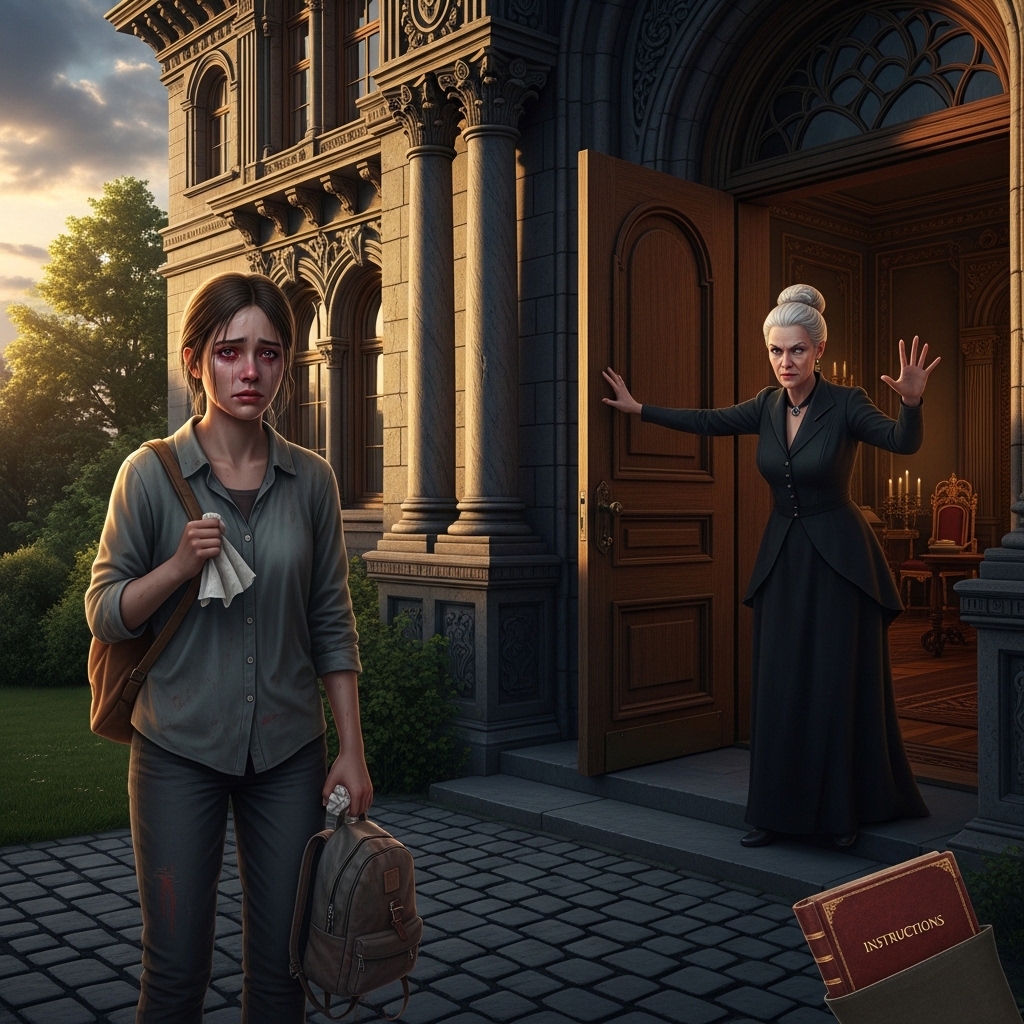
My father hadn’t even been gone forty-eight hours when Cheryl changed.
The house I grew up in—the one with the crooked stair railing Dad refused to fix because “it gives the place character”—suddenly felt hostile. Cold. Temporary.
She stood at the front door with her arms crossed, my suitcase already sitting on the porch.
“You should go stay somewhere else for a while,” she said briskly, eyes darting past me as if afraid grief might be contagious. “I need space. This house is… too painful right now.”
I stared at her, still numb from the funeral, still hearing my father’s voice in my head.
“This is my home,” I said quietly.
She tilted her head, lips tight. “It was your home. Things are different now.”
She didn’t raise her voice. She didn’t have to. She had already decided.
I left with my guitar, a backpack, and the strange, hollow feeling that comes when someone erases you while pretending it’s reasonable.
Two days later, I came back.
Not to beg.
Not to argue.
I just wanted my father’s watch—the one he wore every day for thirty years.
The door opened before I could knock.
Cheryl’s expression flickered between irritation and something close to panic.
“What are you doing here?” she snapped.
“What’s going on?” I asked, tightening my grip on the guitar case.
Before she could answer, footsteps sounded behind her.
A tall man in a tailored suit stepped into view, his posture rigid, his eyes sharp and assessing. He adjusted his glasses and looked directly at me.
“Miss Morison?” he asked. “I’m Arthur Sterling, senior partner at your father’s law firm. We’ve been trying to reach you since yesterday. It appears your stepmother… misplaced your contact information.”
Cheryl laughed too quickly and grabbed my arm, her fingers cold and trembling.
“Oh, Arthur, don’t be dramatic,” she chirped. “She went camping to clear her head. Poor thing. We’re very close, aren’t we, sweetheart?”
Her nails dug into my skin.
I pulled my arm away.
“I wasn’t camping,” I said evenly. “She kicked me out. Told me I wasn’t family anymore.”
The color drained from Cheryl’s face.
Sterling nodded once, grimly, and opened the leather folder in his hands.
“That,” he said, “is precisely what your father feared.”
He turned toward Cheryl, his voice calm but lethal.
“As outlined in the Protection Clause of your late husband’s will: Should my daughter be removed from the family home or denied access to her inheritance by my spouse, the spouse’s share of the estate is immediately revoked and transferred in full to my daughter.”
Silence slammed into the porch.
Cheryl’s knees buckled.
“No—no, this isn’t fair,” she cried. “I was grieving! It was a misunderstanding!”
“The clause is explicit,” Sterling replied, snapping the folder shut. He gestured toward the black SUVs parked at the curb. “The house, vehicles, and all financial accounts now belong solely to Miss Morison.”
He glanced at his watch.
“You have thirty minutes to pack a bag and vacate the premises. If you refuse, law enforcement will assist.”
Cheryl started screaming.
I didn’t stay to hear it.
I walked past her, past the panic and the lies, and stepped back into my father’s house. I set my guitar down in the hallway where I always had.
For the first time since he died, my chest loosened.
Dad had known.
Dad had planned.
And even though he was gone, he had still protected me.
I was home—and this time, no one could take it away.