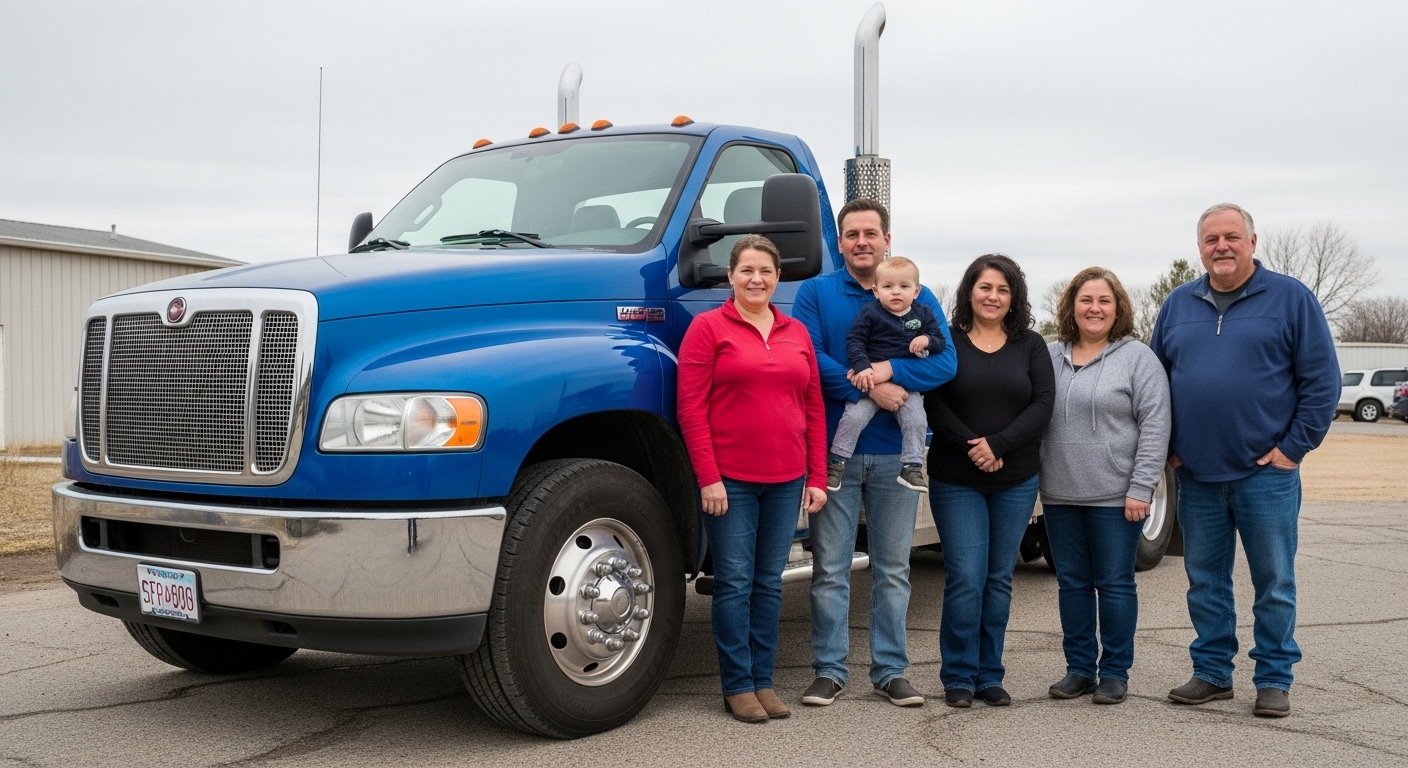
After I refused to co-sign my brother’s $55,000 truck loan, my entire family gave me the silent treatment for eight months. No calls, no texts, no birthdays.
Then my dad’s transmission died.
He called and said, “I need $4,000 by Friday.”
I said, “Sorry, I don’t talk to strangers.”
By the time my dad called, my hands still smelled like smoke and pepper, like the shift had soaked into my skin. It was a Thursday night in Austin, July heat turning the back alley into a dryer.
We’d just finished a two-hundred-cover dinner rush at the rib joint where I’m head chef—Copper Spur Smokehouse. My line cooks were scraping flattops, the dish pit was roaring, somebody was blasting old George Strait off a phone, and I was leaning against the walk-in trying to remember if I’d eaten anything that wasn’t a tasting spoon.
The air in the kitchen was that familiar mix of rendered fat, char, and sanitizer, and my whole body felt like it was still moving even though the tickets were done. I kept wiping my palms on my apron like I could erase the day.
My six-year-old son, Noah, was in the empty corner booth just outside the kitchen. He had his headphones on, dinosaur hoodie zipped up, counting the rib bones on his kid’s plate like it was a math test.
Every few seconds, he’d glance at me through the pass. That quick check kids do after a long day, making sure you’re still there and still you.
My phone buzzed in my apron pocket, the vibration sharp against my ribs. Dad—still sitting on the last missed call from months ago—lit up again like nothing had happened.
I swallowed. My mouth went dry so fast it felt like I’d just eaten flour.
I answered anyway.
“Yeah, Liam.” His voice was tight, loud over some car noise. “You busy?”
I looked at the stack of tickets I’d already closed, at Noah lining up peas on his fork with the seriousness of a scientist.
“Just closed the kitchen,” I said. “What’s up, Dad?”
I didn’t bother with small talk. Eight months of silence doesn’t earn you small talk.
“My transmission’s gone,” he said. “I need four grand by Friday.”
I stared at the prep table. There was a single rib sitting on a tray somebody had forgotten, sauce drying on the edges like a bruise.
“For a thousand what?” I asked, even though I’d heard him.
“Dollars,” he snapped. “You know how much that costs? I had it towed to Martinez. He said he’ll start when I put cash down.”
I kept my voice even, the way I keep it even when a new cook burns a brisket and wants to cry. “I don’t have four grand lying around.”
He scoffed so hard I had to hold the phone away from my ear.
“Don’t start. You’re the big chef now. You posted about your bonus, new apartment, new knife set. You telling me you can’t help your own father, but you can buy some fancy Japanese metal?”
In the booth, Noah had stopped counting peas. He’d taken off one ear cup so he could hear, because kids hear tension the way dogs hear thunder.
His shoulders were up by his ears, his small body braced like he was expecting something to drop.
I walked through the back door into the alley so he wouldn’t hear everything. Grease trap, dumpster, cigarette butts, the sour bite of old beer, and the constant hum of the highway.
The night air didn’t cool anything. It just changed the flavor of the heat.
“Dad,” I said, “my bonus went to my emergency fund and Noah’s braces.”
“I am your emergency,” he shot back, like it was obvious, like it was law. “You owe me after what you did to your brother, after you left him hanging at that dealership.”
There it was. We’d made it less than a minute before he dragged the truck back out like a weapon.
“Not co-signing a $55,000 note is not leaving him hanging,” I said. “That’s called being an adult.”
He hissed out a laugh.
“You turned your back on family, Liam. We didn’t say a word. We let you cool off. But when I need something, you step up. That’s how this works.”
I actually laughed once, sharp and ugly. “You let me cool off. You all ignored me and my kid for eight months.”
“Oh, don’t be dramatic,” he said. “People get busy. You skipped Noah’s birthday.”
“Mom blocked me on Facebook,” I said. “Nate took me out of the group chat.”
“That’s because you embarrassed us,” he said immediately. “You’re the one who made it ugly at the dealership. Nobody told you no. We just needed you to get your head on straight.”
I could feel my heart pounding in my neck like a drumline. My brain started doing that weird counting thing it does when I’m close to losing it.
Two dumpsters, three milk crates, one busted neon beer sign.
Dad’s voice dropped into that reasonable tone he uses right before he hits you with something cruel.
“Look, Liam. You made your point with the truck. Fine. But this is different. I need that car to get to work. You want your old man losing his job over $4,000?”
“No,” I said, because the honest answer was: I don’t want anyone losing their job. I just don’t want to be the one they shake upside down until money falls out.
“Then wire it,” he said. “Same account as before. I’ll text you the routing number. Martinez said if I don’t have it by Friday, he’s giving my bay to somebody else.”
The back door swung open.
Noah peeked out, hugging his backpack straps. He didn’t say anything. He just watched my face like he was reading weather.
I thought about my savings account with $8,213.47 sitting in it, money I’d built dollar by dollar like stacking bricks. I thought about the Camaro Nate had totaled eight years ago that still sat like a scar on my credit report, a reminder that “family” can be expensive.
I thought about eight months of silence. No Christmas. No “How’s my grandson?” Nothing.
My hand actually shook around the phone. I switched it to the other side like that would steady me.
“Liam,” Dad barked. “You hearing me? I need four grand by Friday.”
I looked straight at my kid, at the way he stood half behind the door like he wanted to disappear into that dinosaur hoodie. He’d basically grown up inside my parents’ house before they iced us out, and he still wore their tension like a backpack.
“I heard you,” I said.
“So?” he demanded. “You going to do the right thing, or are you going to be selfish again?”
Something in my chest went very, very still. Not rage, not even hurt—just the clean, quiet click of a door finally locking.
I put the phone on speaker for exactly one second.
“Come here, bud,” I said to Noah.
He came over, eyes wide. I didn’t make him say anything.
I just wanted him to hear my voice when I said it, steady and calm, so the memory wouldn’t be fear.
I took the phone off speaker, put it back to my ear.
“Dad,” I said quietly, “I’m not sending you four grand.”
Silence.
Then his voice went quiet, controlled, and cold.
“After everything I’ve done for you.”
“Also,” I said, cutting him off, “I don’t talk to strangers.”
“What?”
“You all stopped being family the day you decided my credit score and my kid were negotiable,” I said. “So no, Dad. I’m not your emergency fund. I’m a stranger.”
I didn’t yell. I didn’t plead.
He inhaled sharply.
“You’ll regret this,” he said. “You always crawl back, Liam. And when you do—”
I hit end.
I didn’t scream. I slid my phone into my pocket, wrapped my arm around Noah’s shoulders, and said, “Come on, man. Let’s go home.”
He leaned into me like he’d been holding his breath, and for a second I hated my family for putting that weight on a kid. Then I hated myself for letting it go on as long as it did.
I’m thirty-four, head chef at an upscale rib joint in Austin, Texas. Divorced, one kid, one spine I apparently grew at thirty-two, and some change.
Growing up, my family’s favorite story about me was how responsible I was. I got a job at fifteen washing dishes in a diner so I could buy my own Xbox.
By eighteen, I was the one who remembered everyone’s appointments, payment due dates, who needed to be picked up where. I was the human calendar, the backup plan, the one who “handled it.”
My younger brother, Nate, was the dreamer, which in our house meant everyone else covered for him while he tried things he never finished.
My parents, Tom and Denise, own a tiny house in San Antonio they like to call the homestead, even though it’s just a three-bed, two-bath with bad tile and a garage they pretend is a blessing.
They’ve got no retirement plan beyond: the house is paid off, and our boys will help.
The pattern started small, the way rot does. You don’t smell it at first.
When I was nineteen, I moved back home from community college to save money before culinary school. Nate had just started at UTSA.
He talked me into signing on his apartment lease just to get approved.
“Bro, it’s not a big deal,” he’d said, waving a pen at me. “Mom and Dad are helping with rent. You’re just the name.”
Dad clapped me on the shoulder.
“Family helps family, Liam. Your brother’s got a lot of potential. Don’t make this difficult.”
I signed.
Three months later, Nate dropped half his classes, stopped going altogether, and moved in with a girl. The rent didn’t drop. The late fees didn’t drop.
Guess whose credit got hit with an eviction that year.
My parents’ language around it was polished, practiced, like they’d been rehearsing their excuses since before I was born.
“We’re working it out. It’s just a rough patch. You’re good with money, Liam. You’ll bounce back.”
Translation: We sacrificed you. Be grateful about it.
The second incident was the Camaro.
I was twenty-six, line cook in Houston, on a twelve-dollar-an-hour grind. Nate called me with his next big thing.
“Dude, listen,” he said, talking fast. “I’m starting a detailing business. I just need a reliable car to get to clients. There’s this 2013 Camaro at the lot down the road. It’s only twenty-three grand. My credit’s trash, but if you co-sign—”
I laughed.
“Hard pass.”
Then Dad called. Then Mom. Then Nate again on speaker in their kitchen.
Mom put a plate of brisket in front of me like she’d made it a business meeting, like meat and guilt were the same dish.
“Think of it as an investment,” she said. “Once his business takes off, he’ll refinance and get your name off. We’re all in this together.”
Dad added, “And if anything goes wrong, we’ll help cover it. You won’t be left holding the bag.”
I stared at Nate. He wouldn’t look me in the eye.
I’d just been approved for my first real credit card. Six-hundred-dollar limit, but it felt like an Oscar.
I wanted my score clean so I could someday open my own kitchen, my own place with my name on the sign, but they said the magic words.
“Don’t be dramatic, Liam. Don’t make things weird. Be flexible.”
So I signed.
Two years later, Nate had three missed payments and a total-loss claim after wrapping the Camaro around a light pole.
The insurance didn’t cover the full balance. The bank came for me.
My credit score tanked.
I had collectors calling me during service, leaving voicemails while I was calling Expo, while I was trying to plate food with shaking hands and pretend I wasn’t drowning.
It took me five years to dig out.
My parents’ language then?
“It was just bad luck. Family has to absorb hits sometimes. You’re so good at making things work, Liam. We’re proud of you.”
Proud, like I was a tool that still functioned after being dropped.
The third incident was when Noah was born.
My ex, Jenna, and I got married way too fast at twenty-three. We were separated by twenty-nine.
Final papers signed two weeks before Noah’s second birthday.
I took primary custody when Jenna moved to Colorado to figure herself out.
Money was tight, time was tighter, and exhaustion felt like a second job.
I was working doubles, dropping Noah at my parents’ house between shifts. We ended up moving into their converted garage in San Antonio for a little while so I could save for my own place closer to Austin.
That little while turned into almost three years.
Three years of my mom saying, “This house will be yours someday,” whenever she wanted me to mow the lawn or fix the leaky sink.
Three years of my dad saying, “Remember whose roof you’re under,” whenever he wanted Noah out of the living room.
They charged me $700 a month to teach responsibility, even though I was doing all the cooking and half the repairs.
When I asked where that money was going, Dad said, “Into the house. Into your future. That’s the family plan.”
Meanwhile, every time Nate overdrew his account, Mom pulled from a savings fund to bail him out.
When I realized it was the same account my rent was going into, my stomach dropped.
When I confronted her, she smiled that soft, reasonable smile.
“Don’t start a fight, Liam. This is how family works. We help each other. You’ll get it back when things are smoother.”
There was always that word—smooth.
It meant: we don’t want conflict. Sit down. Swallow it. Smile.
Noah started to learn the rules before kindergarten.
At four, he stopped asking if Grandpa could come to his preschool Dads and Donuts day, because every time he did, Dad said, “We’ll see how you behave, champ,” and then forgot.
At five, he started eating dinner really neatly at my parents’ table. Hands in his lap, napkin carefully folded, voice just above a whisper.
He’d glance up if he dropped a pea, like he was waiting for someone to yell.
One night, he knocked over his milk.
It spilled toward Dad’s plate. Nobody got wet, but the glass tipped.
Dad slammed his fork down.
“You’ve got to control your kid, Liam.”
Noah went dead quiet, eyes big, hands in his lap.
“It’s okay, buddy,” I said, grabbing a towel. “It was an accident.”
My mom’s voice slid in soft and sharp.
“He’s old enough to know better.”
I told myself it was temporary. All of it—the garage, the weird comments, the lopsided help, the way love always came with a price tag.
I thought once I moved out, once I was steady in Austin with a head-chef salary and a small apartment with actual walls, things would reset.
They didn’t.
The truck mess started eight months before that transmission phone call.
It was a Saturday in October.
I’d driven down to San Antonio with Noah because my mom had texted, “Family dinner. Be here by 6:00. Don’t be difficult.”
When I pulled up, Nate’s dream truck was already in the driveway.
Late-model Chevy Silverado. Lifted tires that looked like they could climb a building. Dealer tags still on.
I parked on the street.
Noah pressed his face to the window.
“Whoa,” he breathed. “Is that Uncle Nate’s?”
“It shouldn’t be,” I muttered.
Inside, Mom had the good dishes out, which meant somebody wanted something.
Dad was in his recliner. Nate paced with his phone like he was waiting for a trophy.
We got through salad before it started.
“So,” Nate said lightly, “I’m upgrading the truck.”
I looked out the window.
“It already looks upgraded.”
“That’s just the demo,” he said. “They approved me conditional on a co-signer. It’s $55,000, but my payments will only be like $800 a month. I’ll make that easy once I get this hauling business going.”
Mom jumped in, eyes bright.
“It’s such an opportunity, Liam. He’s going to spray the logo on the side. Nate’s hauling and landscaping. He showed us the mockup.”
Dad added, “We’ve all talked about it. All he needs is your signature. You know, the manager said your income would push it right through. He said you’ve got one of the best profiles he’s seen.”
That was the first time I realized they’d already given the dealership my financials.
My chest tightened.
“How does he know my income?” I asked.
Dad waved a hand.
“He just ran a soft check. Your family. Don’t be paranoid.”
I set my fork down.
“No.”
Three sets of eyes snapped to me.
Nate laughed like I’d told a joke.
“Come on, man. Don’t start. You know I’m good for it. I’ve grown up. I’ve got a plan this time.”
I nodded slowly.
“I’m sure you believe that. I’m not co-signing anything for you.”
Mom’s smile went flat.
“Liam, your brother is trying. Don’t punish him for the past.”
“The past being that Camaro that ruined my credit until last year,” I said.
Dad’s voice got that heavy, disappointed tone.
“We covered a lot of that. You act like you carried everything alone.”
I pulled my phone out.
“Remember when the collection agency threatened to garnish my wages?” I asked. “Remember when they called the restaurant and asked for Liam on the line?”
Noah was at the kids’ table with his tablet, but he glanced back when he heard my name in that tone.
Mom sighed.
“This is exactly what we didn’t want,” she said. “You making a scene?”
“We’re just asking you to be part of the solution.”
“Send me the buyer’s order,” I said. “Interest rate, total price, term. I want all of it in writing.”
Nate rolled his eyes.
“Dude, do you have it?”
He hesitated.
“It’s in the truck, so go get it.”
Dad’s jaw flexed.
“You don’t trust us?”
“I don’t sign $55,000 on vibes,” I said.
Nate slammed his chair back.
“This is unbelievable.”
Dad put his fork down slowly.
“You know what? Forget it,” he said. “If you’re going to act like this over one piece of paper, maybe you’re not the family man we thought you were.”
There it was.
The reasonable cruelty.
Mom dabbed her mouth.
“We just thought,” she said mildly, “that after all we’ve done for you and Noah, you’d want to give back a little.”
“By letting you attach my name to another loan you can’t afford?” I asked.
“By helping your brother start a business,” she snapped.
Nate leaned over the table.
“You know what, man? Keep your perfect credit. When Dad’s gone and this house comes to us, just remember who fought for him and who didn’t.”
I went cold.
There it was—the lever. The house.
That vague inheritance they waved around every time they wanted something.
“No,” I said again. “Send me the paperwork if you want me to look at it, but I’m not co-signing, and I’m not discussing it again.”
Mom’s face shut down.
Dad picked up his plate and took it to the sink without a word.
Nate stomped outside to his demo truck.
We drove back to Austin that night in silence.
Noah fell asleep with his head against the car seat, clutching the little stuffed Longhorn my mom had given him in happier years.
The next morning, I woke up to a string of messages.
Mom: “You really hurt your brother. I hope you’re happy.”
Mom: “Family helps each other. You’ll understand when you’re older.”
Mom: “We’re taking a break from this negativity.”
Then Nate: “We’re done, dude. Don’t bother coming around until you figure out what matters.”
Then nothing.
Days turned into weeks.
My parents’ group chat went silent. Photos of BBQs and birthdays popped up on my cousin’s Instagram with my family in the background, smiling.
A new Silverado parked behind them.
No invitations.
No “Hey, stranger.”
In December, I texted Mom.
“Noah’s school recital is Thursday at 6:00. If you want to come, he’s been practicing ‘Jingle Bells’ for you.”
Read.
No response.
On Noah’s sixth birthday in March, I put my phone on the table and watched it all day between orders.
No call.
No happy birthday text.
That night Noah asked, “Did Grandma forget what day it is?”
My throat burned.
“No, buddy,” I said. “She remembers.”
He looked at his cake, at the six candles melting down faster than he could eat.
“I’ll blow extra hard,” he said. “Maybe it’ll push the wishes to San Antonio.”
He didn’t know my parents had unfollowed me on Facebook a week earlier.
He didn’t see Mom’s comment on Nate’s photo.
“So proud of you and your new truck. You deserve it.”
We limped through holidays like that.
No Santa visit with Grandpa.
No Thanksgiving at the homestead.
When I texted in November—What time should we come?—Dad replied with the first thing he’d sent me in weeks.
“We’re keeping it small this year. Allison’s family is coming. It’s just simpler without drama.”
Simpler. Smooth.
All those words that meant: you and your kid make us uncomfortable.
I started taking screenshots of everything.
Text threads with read receipts and no replies.
Social posts where my son wasn’t in the frame.
My bank app with every deposit, every dollar that was mine, not theirs.
When the dealership called in January just to confirm you were still the co-signer on the Silverado loan, my stomach did a full drop.
“I never signed,” I said.
The woman on the phone sounded confused.
“I have a contract here with your name and signature on it.”
“Email it,” I said. “Right now.”
She did.
I opened the PDF on my break, standing over a tray of resting ribs.
My name, my social, my address—and a signature that looked close to mine, but not quite.
I stared at it until the edges of my vision fuzzed.
I didn’t call them.
Not yet.
Not my parents.
Not Nate.
I called the bank’s fraud line and asked what it would take to dispute.
“Police report,” the guy said. “Documentation. Anything that shows you didn’t authorize this.”
I thought about my father’s voice at that dinner table.
“We all talked about it.”
That was the moment something in me shifted from hope to clarity.
That’s when I stopped arguing and started documenting.
The police station on Riverside looks like every other small-city station.
Gray walls, plastic chairs, a bulletin board with flyers for neighborhood watch meetings nobody goes to.
I took a Tuesday morning off service, told my GM I had family stuff.
He looked at my face once and just nodded.
Noah was at school.
My phone was full of screenshots. The forged truck contract sat printed in a cheap manila folder at the front desk, edges already bending from how many times I’d opened it to make sure I wasn’t hallucinating.
The officer glanced up.
“Help you?”
“Yeah,” I said. “I need to file an identity theft report.”
His eyebrows went up.
“Okay. What happened?”
I slid the folder over.
“My brother and my parents used my information to co-sign a $55,000 truck loan after I told them no.”
He opened it, flipped through, looked from the signature to my driver’s license.
After a second, he exhaled.
“They did this to their own son.”
The way he said it hurt more than I expected, like he was surprised but not that surprised.
We sat in a little interview room.
He turned on a recorder.
I told him everything.
The Camaro.
The dinner.
The silent treatment.
The dealership call.
I kept my voice steady.
I stuck to dates and amounts.
I gave him the exact text that started it.
“We’re taking a break from this negativity.”
When I was done, he slid a form across the table.
“Sign here. This will generate a case number. You’ll want that for the bank and the credit bureaus.”
I signed my actual name next to the fake one they’d used like it was a fun little costume.
My hands were cold.
I could feel sweat between my shoulder blades.
He handed me a printout.
Case number 26-4813.
He said, “If anyone gives you grief about this, give them that.”
There it was—an official sentence, a number that meant I wasn’t just being dramatic.
Outside in my truck, I pulled my phone out and opened the family group chat that had been a ghost town for eight months.
I attached three images.
The forged contract with my name.
A screenshot of my text to Mom.
“I am not co-signing that loan.”
The police report case number.
Then I typed one sentence.
“For legal reasons, all future communication needs to be by email. Do not use my name or information for any financial product again.”
I hit send.
I followed it with an email to all three of them.
Same attachments.
Subject line: unauthorized use of my identity. Case #26-4813.
No yelling.
No monologue.
Just facts.
Three hours later, my phone blew up.
Mom: “Liam, what did you do?”
Dad: “You called the cops on your own family.”
Nate: “Bro, you’re out of line. You’re ruining my life over a signature.”
I didn’t answer.
That night, someone pounded on my apartment door so hard a picture rattled.
Noah jumped on the couch.
I checked the peephole.
Dad.
Red-faced.
Breathing like he’d sprinted up the stairs.
He shouted, “Open this door, Liam!”
I took a breath and stepped back.
I didn’t open it.
“Neighbors are sleeping, bud,” I said to Noah. I headed to the TV and turned the volume up one notch.
Dad kept pounding.
“We gave you everything. We kept a roof over your head.”
I picked up my phone and started recording, just in case.
“Go home, Dad,” I called through the door. “Stop banging or I’m calling the cops again.”
He went quiet for half a second.
Then he laughed.
Ugly.
“You think a little report scares me?” he yelled. “You think you’re better than us now? You’re nothing without this family. Nothing.”
Noah walked over and slid his hand into mine.
His fingers were shaking.
I squeezed back.
“I’ve got you,” I murmured.
Dad eventually stomped away.
His truck—the older one, the one with the dying transmission—coughed to life in the parking lot and disappeared.
The next morning, I changed the lock.
I took my parents and Nate off Noah’s school pickup list.
I removed them as emergency contacts.
I called my bank, froze my credit, and added a note to my file: family identity theft incident. Require in-person ID for new accounts.
I blocked their numbers.
All of them.
The only unblocked line I left was my email.
Paper trail only.
That was the irreversible part.
No more: Maybe they’ll change.
No more: It’s just a rough patch.
Dad’s transmission finally died two weeks later.
When the call came through the restaurant line and the hostess mouthed, “It’s your dad. Should I transfer?” I wiped my hands on a towel and said, “No thanks. I don’t talk to strangers.”
People think going no contact is like slamming a door.
It’s not.
It’s putting down a pan you’ve held too long.
Your hands still ache after.
Three months after the police report, life was quiet. Biggest drama was whether we were 86’ing short ribs before nine.
Noah and I had our own two-bedroom universe, small but ours, with a couch that didn’t smell like other people’s resentment.
Mornings, I made him scrambled eggs with too much cheese.
He critiqued my plating.
“This looks like the kids’ menu,” he said. “You should add chives.”
Then we walked to school.
Him hopping over every crack like the floor was lava.
At first, he still asked.
“Did Grandpa get in trouble with the police? Does Grandma still like me? Did I do something?”
Every time I said, “You did nothing wrong. Adults made bad choices. My job is to keep you safe.”
Eventually, he believed me because our life just kept going.
My crew at Copper Spur became our family.
No passive-aggressive comments.
No money strings.
Just cookouts, kids and sprinklers, people who actually showed up.
One Sunday, we stayed home building Lego towers.
Noah looked up.
“It’s nice here,” he said. “Because nobody’s mad at me about their stuff.”
The fallout hit them.
Nate emailed that the dealership was freaking out.
Dad was pissed.
I was ruining his future.
I wrote back.
“I told you no. You did it anyway. Actions have consequences.”
Mom tried guilt.
“Think about Noah. He needs his grandparents. How would you feel if your child grew up without family?”
I answered, “He has family. Me and the people who treat him like a person, not collateral. You chose a truck over your grandson.”
Months later, Dad showed up at Copper Spur, wanting me to drop the case and call the bank.
I told him the forgery and eight months of silence came between us.
The case number just wrote it down.
He said I was choosing strangers over blood.
I thought about Noah, my crew, our quiet apartment.
“Access to me is not a family right,” I said. “It’s something you earn. You haven’t, so you don’t have it.”
Later, Noah drew our family for school.
Him.
Me in a chef coat.
Three stick-figure coworkers around a grill.
No grandparents.
“We had to draw who we eat with the most,” he said. “Maybe I’ll add more people later. Only the nice ones.”
That night, a text came.
“Dad’s in the hospital. You should call Nate.”
I stirred the chili Noah and I were making.
“Everything okay?” he asked.
“Yeah,” I said. “We’re okay.”
I didn’t call.
I’m not cruel.
I just know where my responsibility ends.
My circle is smaller now, and my peace is bigger.
You can love people without letting them use you as collateral.
Family doesn’t buy automatic access to your money, your credit, or your kid.”}]}