In the quiet Ohio town of Brookridge, life moved at its own gentle pace. But on a ordinary Thursday afternoon, something extraordinary happened right outside Harper’s Diner.
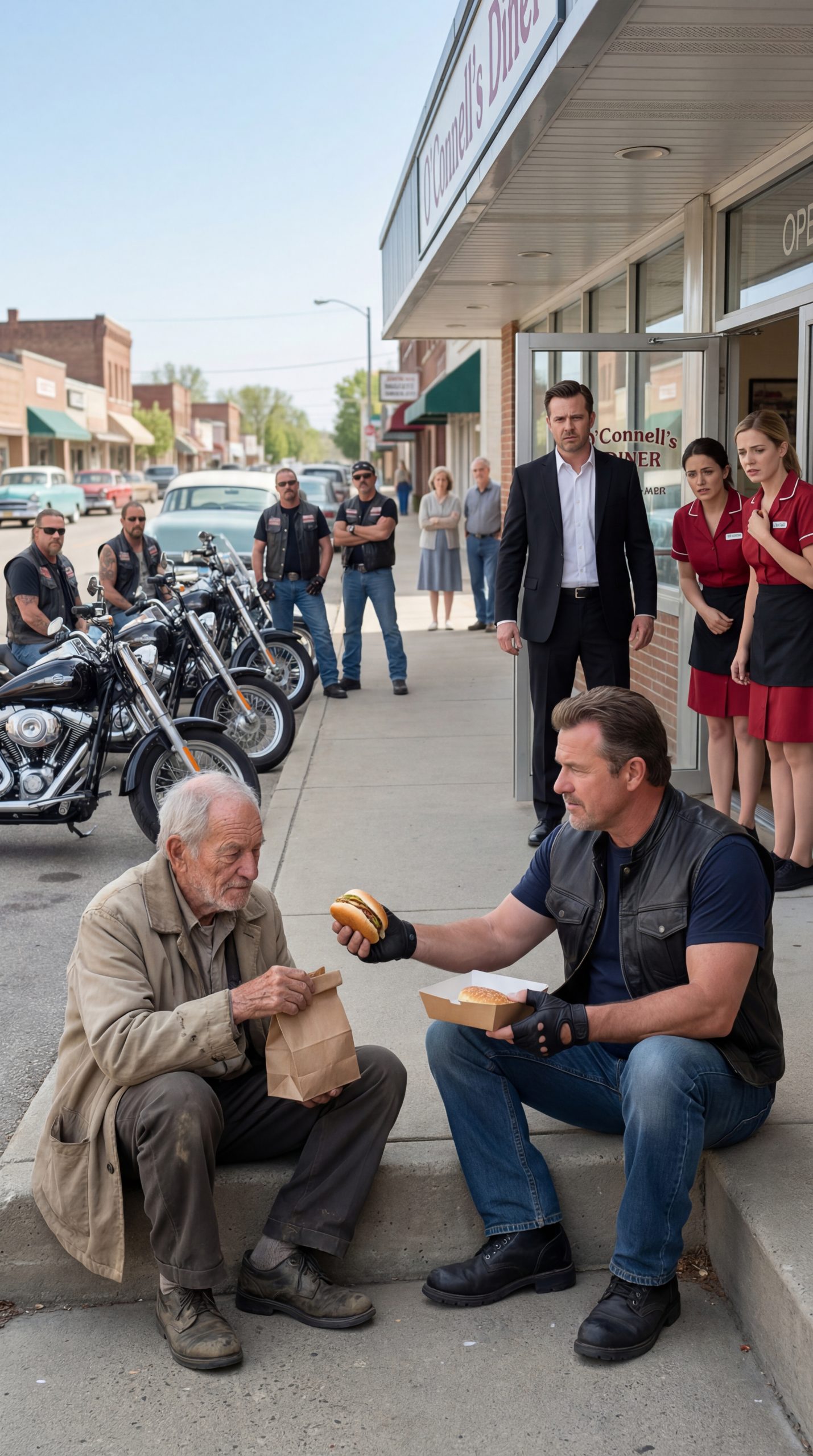
Seventy-eight-year-old Leonard Pierce sat on the edge of the sidewalk curb, trying his best to disappear. His worn coat hung loosely on his thin frame, and a faded knit cap covered his gray hair. In his lap, he held a small folded paper bag containing half a sandwich he had saved from behind a grocery store. He wasn’t begging. He wasn’t bothering anyone. He simply sat there, eyes lowered, making himself as small as possible.
A few people noticed him. Some frowned and walked around. Others muttered under their breath. A teenager even took a quick photo before heading inside.
Leonard had learned long ago that if you became small enough, the world would eventually stop seeing you altogether.
That fragile peace didn’t last.
The diner manager, Karen Whitlock, stepped outside with her arms crossed. “You can’t sit here,” she said firmly. “You’re blocking the entrance. Customers don’t feel comfortable.”
Leonard looked up slowly. “I’m not bothering anyone,” he replied quietly.
“That’s not the point,” Karen said. “You need to move.”
He nodded without argument and shifted a few inches. A voice from the street shouted, “Find somewhere else!” Leonard flinched but stayed silent, gripping his paper bag tighter.
Then a low, steady rumble filled the street.
A motorcycle pulled up and stopped near the curb. The rider shut off the engine, removed his helmet, and revealed a broad-shouldered man in his fifties with a short gray beard and calm eyes. His leather vest showed years of wear. His name was Dalton Reeves.
He didn’t say a word to the growing crowd. He simply walked over to Leonard and crouched down beside him.
“Is that all you’ve had to eat today?” Dalton asked gently.
Leonard hesitated, then nodded. “Yes, sir.”
Dalton reached into his saddlebag and pulled out a fresh, steaming takeout container. He placed it on the curb between them, then sat down right there on the concrete next to Leonard. Without a word, he broke the meal in half and offered part of it to the older man.
The street fell silent. Karen stood frozen. Passersby stared.
“You can’t just sit there,” Karen finally said.
Dalton looked up calmly. “I’m having lunch.”
A police car soon arrived. Officer Ryan Hale approached and asked Dalton to move along.
“I’m having lunch with my friend,” Dalton replied evenly.
The officer looked between them. “Do you know this man?”
“No, sir,” Leonard answered softly.
The situation hung in the air until another rumble approached. Then another. Soon, several motorcycles lined the curb. Riders dismounted quietly and stood behind Dalton — steady, present, and calm. They didn’t make threats. They simply stood there in quiet support.
Officer Hale read the room. Dalton handed him a receipt. “I already paid for a table by the window inside.”
The officer glanced through the glass at the empty, reserved table. No laws were being broken — only comfort was being challenged.
Karen hesitated, then relented. “If he’s with you… he can come inside.”
Dalton extended his hand to Leonard. After a long pause, Leonard took it. Together, they walked into the diner and sat at the table by the window. Sunlight fell across the wood as the waitress brought them coffee.
They ate quietly. Leonard eventually spoke. “I used to work construction for thirty years.”
Dalton nodded with respect. “That’s real work.”
When the meal ended, Dalton paid the bill and placed a small card on the table with a phone number. “They’re looking for someone to watch equipment at a site outside town. It’s not heavy work.”
Leonard’s eyes filled with emotion. “Why are you doing this?”
Dalton stood and looked at him. “Because no one should be treated like they don’t belong.”
Then he and the riders left as quietly as they had come.
Inside the diner, everything felt different. The teenager who had taken the photo looked away. Karen stood quietly behind the counter. Leonard sat a little straighter, holding the card in hands that still trembled — but not from shame.
A Quiet Truth That Lingers
Sometimes dignity doesn’t arrive with loud words or grand gestures. It arrives when someone simply chooses to sit beside you, share a meal, and remind you that you still matter.
True kindness isn’t loud. It doesn’t need applause. It sits on cold concrete, offers half a meal, and stays long enough for a person to remember they are seen.
In a world quick to look away, the most powerful thing we can do is stop, notice, and choose to care. One small act of respect can interrupt years of invisibility and quietly restore someone’s sense of worth.
Because no one — no matter how small they try to make themselves — should ever feel like they don’t belong.