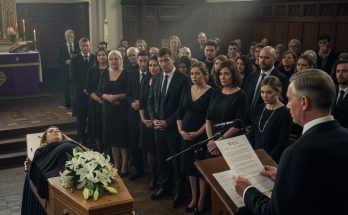
When we bought the old farmhouse on the edge of town, the realtor mentioned the previous owner had passed quietly in his sleep. No family drama, no drama at all—just a solitary man and his aging golden retriever who’d vanished after the funeral. We didn’t think much of it. The house needed work, the yard was overgrown, but the price was right and the quiet felt like a gift after city life.
A week after we moved in, the dog appeared.
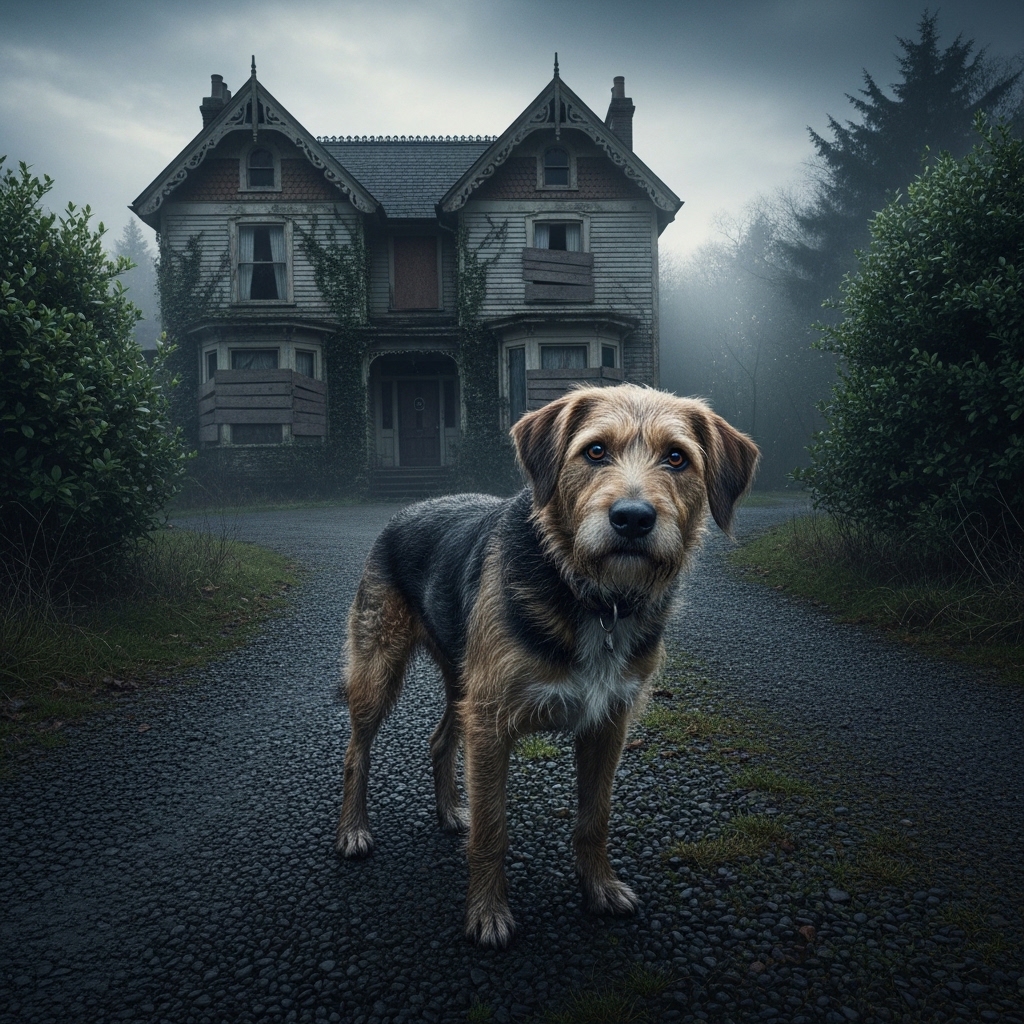
He showed up at dusk the first evening—gray-muzzled, ribs showing under dull gold fur, limping slightly on his left hind leg. He sat at the bottom of the porch steps, staring up at us with calm, knowing eyes, then lay down like he’d been waiting years for someone to come home.
We called him Christopher Jr. (the name was scratched into an old collar tag half-buried in the garden). We put out water and kibble. He ate slowly, tail thumping once in thanks, then disappeared into the trees at the back of the property. The next day he returned. And the day after. Every evening at the same hour, like clockwork. He’d sit on the porch, watch us through the screen door, then vanish again when the stars came out.
After two weeks my husband said, “He’s not just visiting. He’s waiting for something.”
We exchanged hesitant glances, but my husband grabbed his jacket. “Let’s see where he wants to go.”
As soon as we stepped off the porch, Christopher Jr. gave a low, appreciative bark and started toward the dense tree line at the property’s edge. For an old dog, he moved with sudden purpose—limping but determined.
We followed through overgrown brush for about ten minutes until we reached a small, hidden clearing. In the center stood a massive ancient oak, roots sprawling like giant fingers across the earth. The dog stopped at the base of the trunk, let out a soft whimper, and began pawing weakly at the dirt between two thick roots.
My husband knelt. “Let me help you, buddy.” He found a sturdy branch and dug into the loosened soil. A few inches down the wood struck something hard—hollow clink.
It was a rusted metal lockbox, heavy and cold.
We pulled it free, brushed away dirt. The lock was old and brittle; one solid hit with a rock snapped it open. Inside, wrapped in thick plastic: a stack of handwritten letters, faded photographs, and a worn leather journal.
The top envelope read simply: My Dearest Daughter, Emily.
We understood instantly—this was private, sacred. We carried the box back to the house, coaxed Christopher Jr. inside with a blanket on the living-room floor, and tracked down the contact for the previous owner’s daughter, the one who’d sold us the place.
Emily arrived that afternoon looking drained and wary. We sat her at the kitchen table, set the box in front of her, and explained how the dog had led us straight to it.
Tears welled immediately. “I thought he ran away,” she whispered, stroking Christopher Jr.’s head as he rested it in her lap. “When Dad died, I tried to take him to my city apartment. He bolted the first night. I searched for weeks.”
She opened the box with shaking hands. As she read, sobs broke free.
Later she told us everything. She and her father had been estranged for years. She believed he’d always preferred his solitude to her company. After his death she’d sold the house fast, desperate to close that painful chapter.
But the letters and journal told another story.
He’d been quietly fighting early-onset dementia for a long time. He’d pushed her away deliberately—to shield her from watching him fade, from the confusion, the anger, the stranger he feared he’d become. The pages were filled with apologies, memories of her childhood, deep expressions of love he’d never found the courage to say aloud.
And buried with the words: legal documents for a substantial trust fund he’d built in secret over decades—money she never knew existed, meant to secure her future when he could no longer provide.
In his moments of clarity he’d buried the box beneath the oak—his favorite thinking spot—and trusted his loyal dog to keep the secret until the right people arrived.
Emily stayed for hours, sharing stories of her dad while petting the old golden. When she finally stood to leave, she looked at Christopher Jr., then at us, eyes softening.
“He loves this land. He belongs here with his tree…and I think he chose you,” she said, wiping her cheeks. “Would you mind if he stayed?”
We didn’t hesitate. We adopted Christopher Jr. officially that day.
He lived his final two years with us—sleeping in sun patches on the porch, following us on slow walks to the oak, deeply loved. When he passed peacefully one quiet morning, we buried him beneath the tree he’d guarded so faithfully.
The house is ours now, but in every way that matters, it still belongs to the man who loved it first—and to the dog who never stopped waiting for someone kind enough to follow him home.