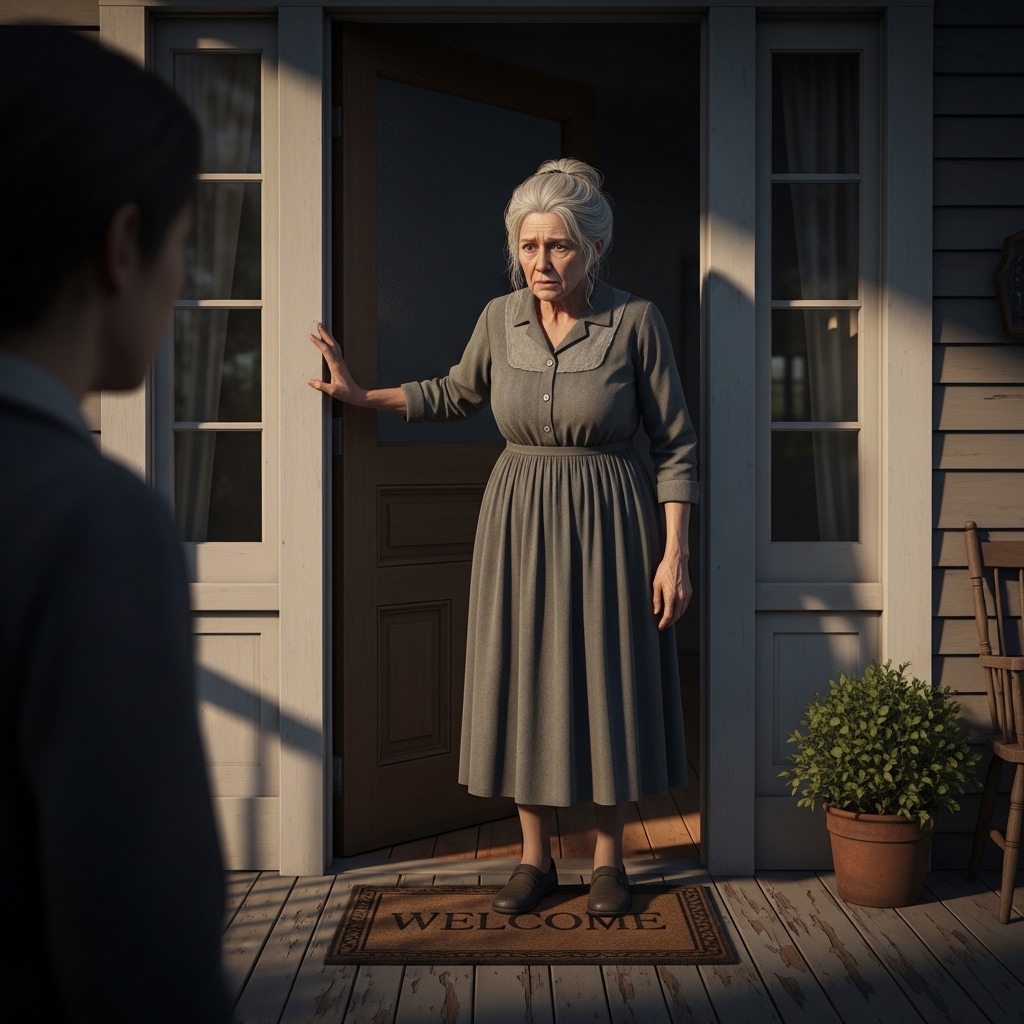
It was an unusually cold early autumn night. Wind whipped leaves down our quiet street, and darkness had already settled by the time I finished the dishes.
Then came the knock—soft, hesitant, like someone terrified of imposing.
Daniel glanced at the clock. “Who’s out there this late?”
I dried my hands and followed him to the door. He cracked it open, revealing a small, fragile elderly woman on the porch. Thin gray coat, silver hair trembling in the breeze, hands clutching the railing for support.
“Excuse me,” she said quietly. “I’m so sorry to bother you. My grandson… he asked me to leave tonight. Could I trouble you for something warm to eat?”
Silence stretched.
Daniel pulled the door wider—just enough—and said coldly, “This isn’t a shelter for useless old burdens.”
He slammed it shut.
The echo rang through the house.
I stood stunned, heart hammering. Through the side window, I watched her still on the porch, shoulders shaking as she wiped tears with her sleeve. So small. So utterly humiliated.
“What is wrong with you?” I hissed.
Daniel shrugged, heading back to the living room. “She’s not our problem.”
I couldn’t process it. I grabbed my purse and ran outside.
“Wait!”
She’d stepped off the porch, slowly making her way down the driveway. When she turned, tears carved tracks down her wrinkled cheeks.
“I’m sorry,” she said instantly. “I didn’t mean to cause trouble.”
“No—please don’t apologize.” I caught my breath. Up close, she looked even more worn: red-rimmed eyes holding gentle warmth despite everything.
“What’s your name?”
“Rosa.”
I took her cold, trembling hands in mine. “No one deserves to be treated like that.”
She tried to smile; her lips quivered. “I’m used to managing.”
I pulled an emergency hundred from my purse and pressed it into her palm. “Please. Get warm food. A place to sit. Rest.”
Her eyes widened. “Oh… I couldn’t—”
“You can,” I insisted.
She stared at the bill like it carried more than money—then squeezed my hand. “Thank you,” she whispered.
She murmured something too soft to catch, hugged me gently, and walked into the darkness until the streetlights lost her.
Inside, Daniel waited, furious. “You gave her money?”
“Yes.”
“That’s ridiculous. People like her just take advantage.”
We argued for an hour. Finally, I hit the core: “Imagine if that was your mother at someone’s door. Would you want them to slam it in her face?”
He shrugged. “It’s not my problem.”
Cold. Detached.
That night, I saw my husband clearly for the first time—not strong, not principled. Just unwilling to care.
The real shock arrived a month later.
The neighborhood lit up with gossip. A local newspaper headline went viral in group chats, social media, front lawns: “Former Hospital Nurse Abandoned by Grandson—Community Rallies Around Woman Who Cared for Hundreds.”
The photo stopped my breath.
Rosa.
The article unfolded her life: forty years as a nurse at our local hospital. Not ordinary shifts—she stayed late, sat with lonely patients, comforted grieving mothers who’d lost babies, supported women discarded by families after birthing disabled children. To countless people, Rosa became their only family.
One story stood out.
Years back, a young woman delivered a stillborn baby. Her wealthy husband fled the grief within weeks, leaving her shattered.
Rosa stayed—day after day. Listened. Encouraged. Helped her rebuild.
That woman eventually started a small business. It grew. Thrived. She raised three kids alone and built a successful company.
By chance, she’d been in a restaurant beside the bakery where Rosa used my $100 for food.
She recognized Rosa instantly. Rushed over. Took her home. Vowed she’d never be alone again.
Reporters asked how they met. She shared everything—including the grandson who’d thrown Rosa out.
Overnight, he became the neighborhood villain. People cut him off. Businesses refused service. Total outcast.
At breakfast, Daniel read the article. Color drained from his face.
For a second, I hoped for shame.
Then he spoke quietly: “What if someone remembers she came here?”
Not regret.
Fear.
Fear someone might recall his exact words at our door.
In that moment, I truly saw him: not a partner, just a man terrified of consequences.
Rosa never knew her knock that night changed more than one life.
It exposed the truth in mine.
What do you think—would you have opened the door wider, or walked away like Daniel? Share below, and pass it on if this hit you. Stories like this remind us: kindness often circles back in ways we never expect, and cruelty rarely stays hidden.
If this moved you, check out more on the site—like tales of quiet heroes and unexpected justice. Real heart still trends hardest.