Three months after a car crash stole my sight, my world stayed black. My parents moved us to a secluded villa for “recovery.” This morning, everything changed: I blinked, blurriness cleared, and light flooded back. Sight—real, sharp, terrifying.
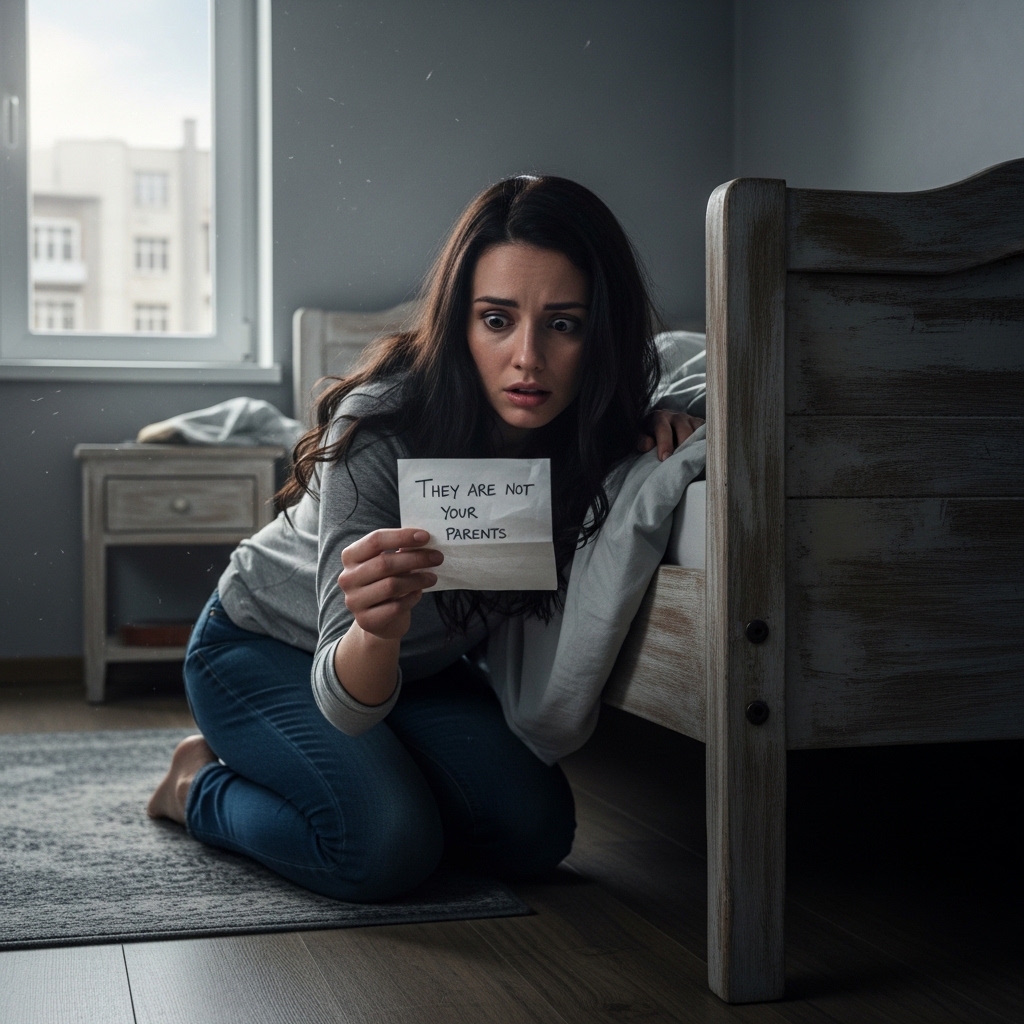
I nearly ran to share the miracle when a crumpled tissue caught my eye under the bed. My cleanliness habit made me reach for it. Unfolding it revealed frantic scrawl: “Don’t tell them you can see.”
My pulse slammed. “Them” meant my parents. But who wrote it? Only Mom, Dad, and my husband Noah had entered my room.
A knock. “Ella? Soup’s ready.”
Mom’s gentle voice. I tossed the tissue in the bin as the door opened.
A woman entered with a bowl, smiling too wide, lips crimson. She wasn’t my mom.
Soft features, kind eyes, faint scar by her left brow, emerald ring—gone. This woman looked sharp, calculating. But the voice matched perfectly.
“Ella, what’s wrong?” She stepped closer, concern syrupy.
The note burned in my mind. I forced unfocused eyes, groped the blanket. “Dizzy,” I whispered.
A tiny pause—suspicion flickering—then smooth recovery. “That happens. Careful, it’s hot.”
Up close: flawless skin where the scar should be, no ring, wrong sharp perfume. She watched me sip like a scientist.
“Your father will check later. Rest, sweetheart.”
Sweetheart. Mom said “Ellie” for tenderness.
She left; the lock clicked.
I stood, room spinning, and truly looked for the first time in months.
At first glance: my room. Deeper: fake. Blurry wedding photo print instead of original. Books right color, wrong titles. Empty lotion bottle. No grandmother’s silver bracelet in the drawer.
A replica built for a blind woman.
I retrieved the tissue. Backlit: faint addition. “Trust Noah.”
Tears stung. Trap? Or lifeline?
Footsteps. I hid it under the mattress.
Door opened. Man in Dad’s gray sweater.
Close enough for darkness—height, build, glasses. But hair dyed too uniform; no limp from Dad’s old knee injury.
“Morning, pumpkin.”
Dad called me “peanut” since childhood.
“Morning, Dad,” I managed, voice trembling.
He touched my shoulder—heavy, foreign. “Ate?”
“A little.”
“Good girl.” He eyed the soup, shared a glance with the fake mom outside.
They left.
Noon: Noah entered, tray in hand, exhausted—longer beard, red eyes. His face softened genuinely when he saw me.
“Hey.”
I kept gaze low. “Hey.”
He sat, took my hand. Thumb tapped: once, twice, three times. Our old code: I love you.
Then traced letters in my palm: P-R-E-T-E-N-D.
I squeezed once: understood.
Aloud: “Meds.”
He dropped pills; I palmed them. Leaning to fix my blanket, he breathed: “Don’t swallow.”
He left promising to return.
Evening discoveries: camera in air vent. Fake mom flashlight-checked my eyes each visit. Pills kept me drowsy.
I played blind.
8:00 p.m., hallway whispers: “Tomorrow. We finish it.”
Fake mom: “She’ll sign if Noah keeps her calm.”
Sign what?
1:47 a.m.: door opened.
Even breaths. Noah’s hand on my wrist—three taps.
He pressed a dimmed phone into my palm, pointed to vent, typed:
They kidnapped your real parents post-crash. Work for Viktor Hale—Dad fired him years ago. Need company accounts, offshore access. Using your voice/signatures. Final authorization tomorrow. Couldn’t call police—they threatened your parents.
I stared, shaking.
He typed: Parents alive. Video today—basement here. One chance.
How?
He: Planted note. Guessed sight returned from your reaction. Service tunnel off kitchen. One night guard. Get proof/location out—police raid.
I nodded, tears falling.
He gave dark hoodie, helped me stand. Legs weak, but fury fueled.
Hallway: polished stone, sterile luxury. No real family photos—staged fakes. Security panels, corner cameras.
Study: Noah pulled stolen laptop/keycard from fake dad.
Camera grid. One feed: real parents—tied in concrete basement, pale, alive. Mom’s scar. Dad’s limp.
I bit my fist silent.
Noah recorded, sent to “Ramos”—crash detective he’d trusted piecemeal for weeks.
Footsteps.
Fake dad blocked doorway, gun drawn. No parent act.
“Blind girl sees.”
Noah shielded me. “Let her go.”
“You were useful, Noah. Don’t get brave.”
Fake mom appeared, syringe ready. “Told you she looked off this morning.”
I grabbed desk’s bronze horse statue, hurled it.
Hit her wrist—syringe flew. She screamed.
Noah tackled gunman; they crashed into shelves.
I dashed to wall panel Noah showed—hit red button.
Shutters dropped halfway.
Gun fired—glass shattered overhead.
Alarms—ours.
“Federal agents! Drop weapons!”
Chaos: boots, shouts, fake mom wailing, Noah down, flashlights slicing dark.
Shoulders grabbed: “Ella—Detective Ramos. You’re safe.”
Then real Mom—blanket-wrapped, bruised, emerald ring, reaching. “Ellie.”
I collapsed into her.
Dad limped in, sobbing apologies.
Dawn: ambulance backseat, Noah’s hand locked in mine. Villa faded in blue light as officers hauled evidence.
Three months blind taught listening.
That night taught recognition: wrongness beneath familiar voices, trust in a warning touch, stillness to survive—then speed when the moment strikes.
People later asked what terrified most: fake faces, copied voices, locked doors, gun.
Truth: how closely comfort can mimic love when you can’t see.
And the best part? The instant I finally could.
What do you think—would you have stayed silent like Ella, or risked everything sooner? Drop your thoughts, and share if this gave you chills. These twisty survival stories keep going viral for a reason.
If this hooked you, explore more on the site—like tales of hidden betrayals and impossible escapes. The truth always finds its way out.