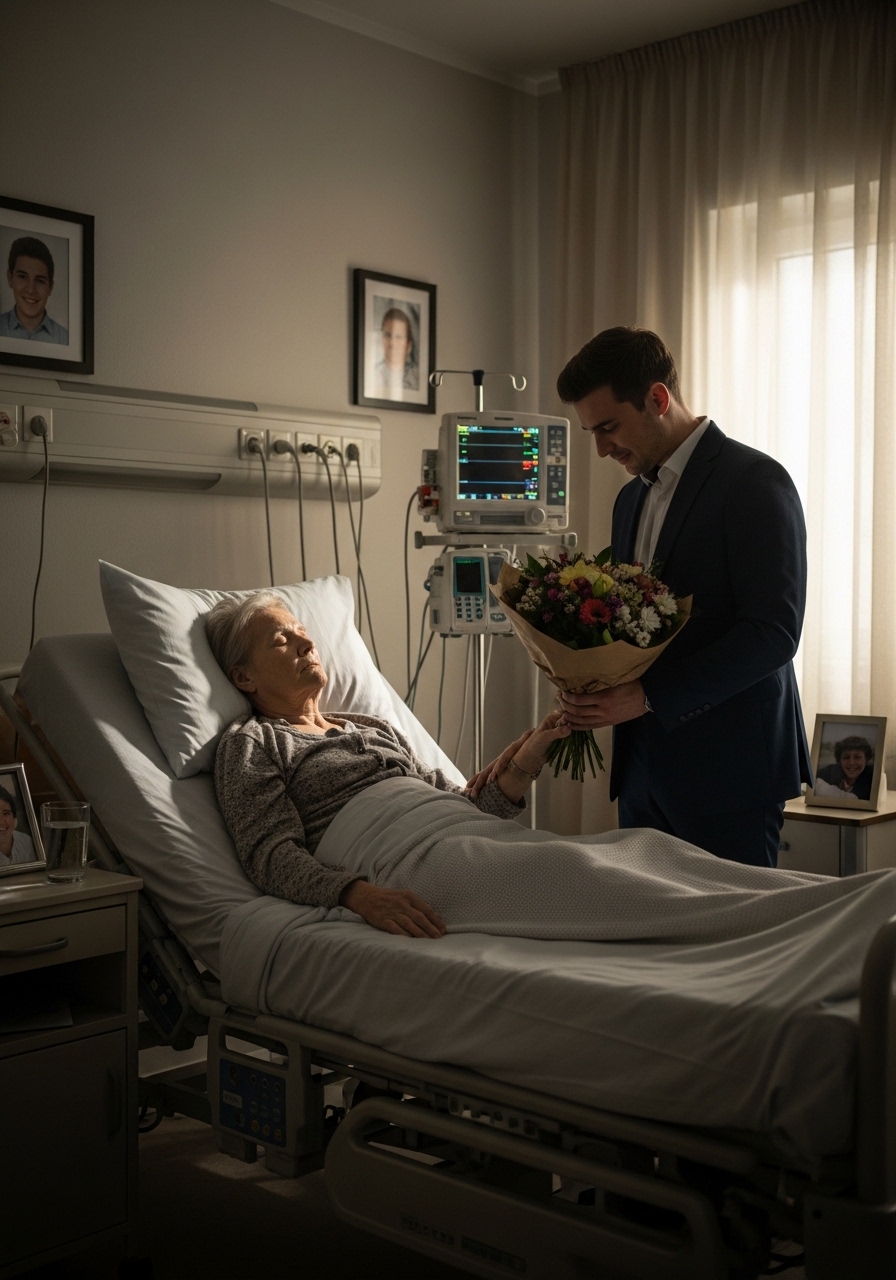
The hospice room was quiet except for the soft beeping of the monitor beside my bed.
Afternoon sunlight slipped through the window and stretched slowly across the floor. I watched it creep toward the wall, the way I had watched it do every day for the past week.
Cancer changes the way you think about time.
You start noticing small things—light, silence, footsteps echoing down the hallway.
But long before cancer entered my life, I had already experienced the kind of loss that breaks a person in ways no doctor can treat.
My son died when he was sixteen.
His name was Ethan.
Even now, six years later, simply thinking his name makes my chest ache.
Ethan was the kind of kid who noticed things other people overlooked. If a neighbor’s mailbox leaned crooked, he’d fix it. If a classmate struggled with homework, he stayed after school to help.
He carried a quiet kindness that made people trust him immediately.
For years, I had been saving for his future. Every spare dollar went into a college fund—tax refunds, overtime pay, even birthday money from relatives that Ethan insisted I deposit instead of spending.
By the time he turned sixteen, the account had grown to eighty thousand dollars.
I used to imagine helping him pack for college. I pictured his dorm room, textbooks stacked on a desk, late-night phone calls about classes and new friends.
But life doesn’t always follow the plans we make.
One rainy night, everything changed.
An accident took Ethan before he even had the chance to graduate high school.
After the funeral, I moved through life like a ghost. I still went to work because staying home felt unbearable. Every room in the house reminded me of him.
At the accounting firm where I worked, coworkers tried to be kind. But most didn’t know what to say.
Conversations stopped when I entered the room.
Then one afternoon, my coworker Sarah knocked softly on my office door.
Her eyes were red, and her hands trembled.
“Margaret,” she said quietly, “can I talk to you?”
I nodded.
She sat down and took a long breath.
“My son Daniel… he’s fourteen,” she began. “His heart is failing.”
I remembered Daniel from the photos on her desk—a skinny boy with messy hair and a bright smile.
Sarah explained that doctors had placed him on a transplant list. But even if a heart became available, the surgery and recovery would cost far more than she could ever afford.
“I’ve tried everything,” she whispered. “Insurance, grants, fundraising… but it’s still not enough.”
After she left, I sat alone in my office for a long time.
On my desk stood a photo of Ethan holding the science trophy he’d won the year before he died.
He looked so proud.
That night, I opened the bank account holding his college fund.
My hand hovered over the transfer button for a moment.
Then I moved the entire eighty thousand dollars.
I never told Sarah where the money came from.
I simply told her that Daniel deserved a chance.
But when my husband discovered what I had done, everything fell apart.
“You gave away Ethan’s future?” he shouted.
I tried to explain.
“Ethan doesn’t need it anymore,” I said quietly. “But Daniel does.”
My husband stared at me like I had destroyed something sacred.
“You betrayed our child,” he said coldly.
Grief had already been tearing our marriage apart. My decision finished what grief had started.
Within months, he left.
I packed my belongings, moved to another town, and cut ties with nearly everyone from my old life.
Starting over felt easier than living with the anger—and the memories.
Years passed.
I built a quiet life.
Then the cancer came.
Now I lay in a hospice room, waiting for whatever came next.
Most days passed in silence, broken only by nurses adjusting medications or checking my chart.
So when the door opened one afternoon, I assumed it was another nurse.
Instead, a young man stepped inside.
He looked to be in his early twenties—tall, nervous, as if he wasn’t sure he belonged there.
I studied his face, trying to place him.
Then he spoke.
“Mrs. Patterson?”
His voice trembled.
“I’m Daniel. Your old coworker Sarah’s son.”
My heart nearly stopped.
Daniel.
The boy whose life I had helped save.
He stepped closer, tears already in his eyes.
“You saved my life when I was fourteen,” he said softly.
I pushed myself up against the pillows, stunned.
“I didn’t even know if the transplant worked,” I whispered.
He pulled a chair beside my bed and sat down.
“It did,” he said with a gentle smile.
He hesitated before continuing.
“After the transplant, my mom tried to find you so she could repay the money. But when she contacted your husband, he told her you had moved away and cut off all contact.”
That sounded exactly like something my ex-husband would do.
Daniel reached into his jacket and pulled out a thick envelope.
“We hired a private investigator last year,” he explained. “It took eight months to find you.”
He carefully placed the envelope on my blanket.
“Eighty thousand dollars,” he said. “My mom’s been saving for years.”
His voice broke.
“She passed away last year. But before she died, she made me promise I’d find you.”
My hands trembled as I opened the envelope.
Inside was a cashier’s check.
$80,000.
But there was something else inside.
A photograph.
I lifted it slowly.
Daniel stood in a white medical coat with a stethoscope around his neck, smiling proudly.
I looked up at him, stunned.
“I’m in my second year of medical school,” he said softly. “I’m specializing in cardiology.”
He wiped his eyes.
“I’m going to save kids like me,” he continued. “Because someone once believed I deserved a chance.”
For the first time in years, a deep peace settled in my chest.
For so long, I had wondered if I made the right decision.
Now I finally knew.
Ethan’s future hadn’t disappeared.
It had simply taken another path.