Four months ago, my son Daniel died in a car accident. He was thirty-five.
One moment he was alive—driving home from work, probably listening to the same old rock playlist he’d loved since college. The next moment, he was gone.
No warning. No goodbye.
He left behind his wife Megan, who was thirty-one, and their two little boys—Lucas, five, and Evan, three.
For the past six years, all of them had been living under my roof.
My house used to be quiet and orderly. I liked routines. I liked knowing exactly where everything belonged. But when Daniel and his family moved in, that calm slowly gave way to something else—crayon drawings taped to the refrigerator, toy trucks scattered across the hallway, and the endless noise of children running, laughing, crying.
At first I told myself it was temporary.
But temporary has a way of stretching.
Let me explain how it all began.
When Megan became pregnant with Lucas, she and Daniel were living in a tiny one-bedroom apartment across town. Daniel was finishing his master’s degree in engineering while working part-time. Megan worked long shifts at a roadside café, and pregnancy was exhausting her.
Money was tight. Rent kept going up.
One evening Daniel sat across from me at my kitchen table. He looked tired—more tired than I had ever seen him.
“Mom… we might lose the apartment,” he said quietly.
I remember looking at my son—my only child—and feeling that familiar instinct every parent knows. The need to protect.
So I told them they could stay with me.
“This is temporary,” I said firmly. “Just until you get back on your feet.”
At the time, I truly believed it.
But months became years.
Lucas was born, filling the house with new noise and sleepless nights. Then, three years later, Evan arrived.
Daniel eventually finished school and landed a solid engineering job. I assumed that would be the moment they started planning their own home.
But the conversation never came.
They grew comfortable. Life settled into a rhythm that revolved around my house.
Bills came and went, and more often than not I paid them. Megan stopped working after Lucas was born. Daniel worked long hours, yet moving out was rarely mentioned.
Somewhere along the way, my home stopped being a temporary solution and quietly became their permanent one.
And if I’m being honest, there was another truth I rarely said out loud.
I never fully warmed to Megan.
She was polite, yes. She helped around the house when asked. But we came from completely different worlds.
I had built my life through discipline and careful planning. Megan’s childhood had been much less stable. She grew up in a trailer park outside the city and often spoke about the chaos she experienced growing up.
Daniel loved her deeply. That much was clear.
Sometimes I wondered if love had made him overlook things.
Still, I kept those thoughts to myself. Mothers learn when silence is wiser than honesty.
Then the accident happened.
The phone rang just after midnight.
A police officer’s calm voice told me there had been a collision on the highway.
Everything after that felt unreal.
The funeral passed in a blur of dark clothing, quiet voices, and people squeezing my hand while saying words I barely heard.
I stood beside Megan while she cried so hard she could barely breathe.
Afterward, life didn’t return to normal. It simply became… emptier.
Weeks passed.
Megan moved through the house like a ghost, often wearing Daniel’s old sweater. Sometimes she sat for hours staring at nothing.
The boys asked constantly where their father was.
I tried to hold things together. I cooked meals, drove Lucas to kindergarten, and helped Evan brush his teeth before bed.
But grief changes people.
One morning, nearly two months after the funeral, I walked into the kitchen and found Megan asleep at the table, her head resting on her arms.
Beside her, Evan quietly rolled a toy car across the wooden surface.
Something inside me cracked.
It wasn’t anger exactly—more like exhaustion.
I suddenly felt as if the entire house rested on my shoulders.
That evening I gently asked Megan if she had started thinking about plans. About returning to work. About eventually finding a place of her own.
She looked at me like I had pulled the ground out from under her.
“I thought we were staying here,” she whispered.
Her voice was so small that for a moment I almost took the words back.
But I didn’t.
“I can’t do this forever,” I said.
She didn’t argue. She simply nodded and went upstairs.
A few days later she approached me again. Her eyes were red, but she seemed calmer.
“I’ll figure something out,” she said quietly.
Then she hesitated.
“But the boys… they need stability right now.”
That was when I made a suggestion that, looking back now, changed everything.
I told her how close Evan and I had become. How I used to rock him for hours when he was a baby while Megan tried to sleep. How he always ran to me shouting “Nana!”
I suggested—gently, I thought—that maybe Evan could stay with me for a while until things settled.
The moment the words left my mouth, Megan’s expression changed.
Shock turned to anger so quickly it startled me.
“You think I’d leave my child behind?” she said, her voice rising.
“That’s not what I meant,” I tried to explain quickly. “I just thought—”
But she was no longer listening.
Within an hour she had packed two suitcases.
Lucas clutched his stuffed dinosaur while Evan cried, confused by the sudden rush of movement.
Before leaving, Megan placed a folded piece of paper on the kitchen counter.
I didn’t open it until after they were gone.
The note contained only one sentence.
“We’re all grieving the same person.”
They left that night.
I haven’t seen them since.
The house is quiet again now.
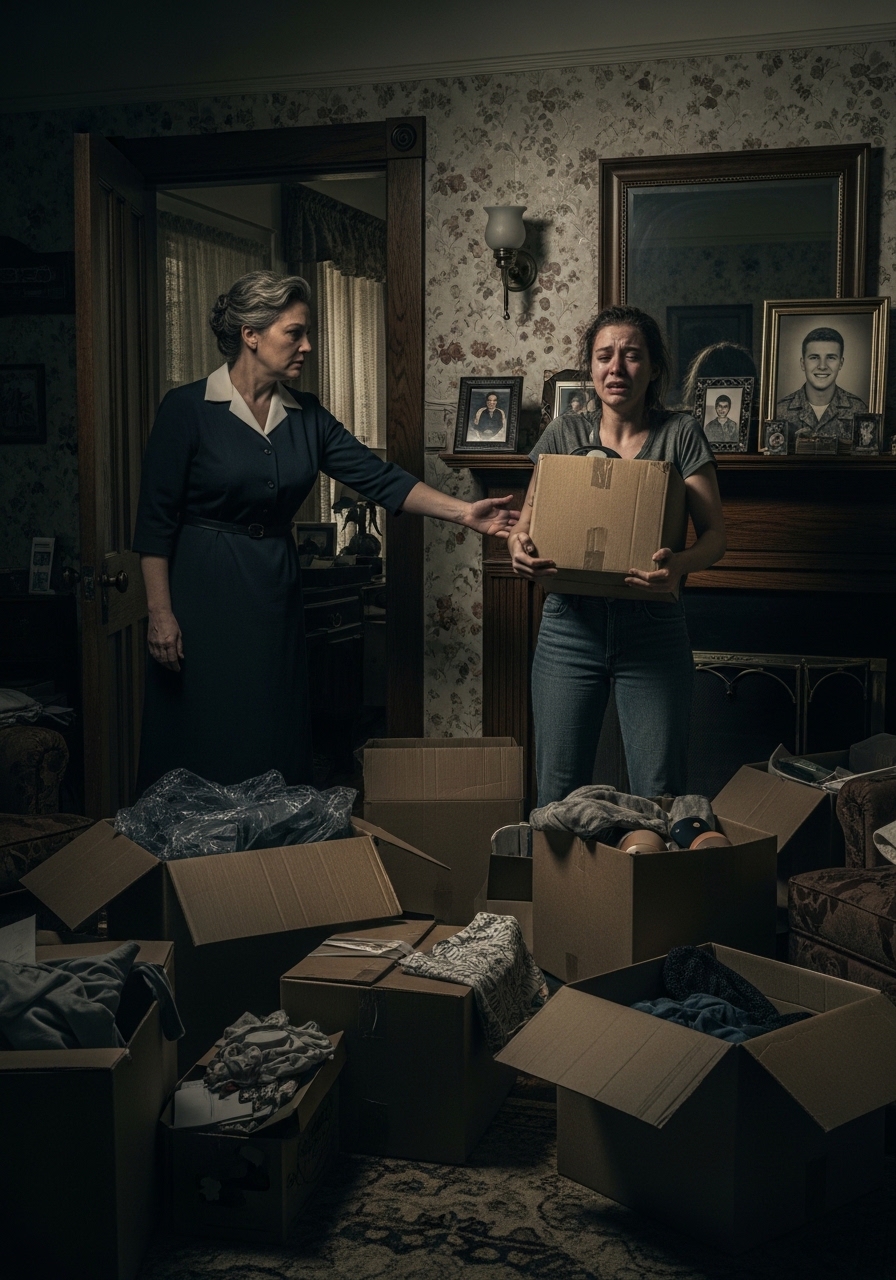
Daniel’s photograph sits on the mantel, and every evening I light a candle beside it.
The silence should feel peaceful.
But sometimes, late at night, I swear I can still hear small footsteps running down the hallway.