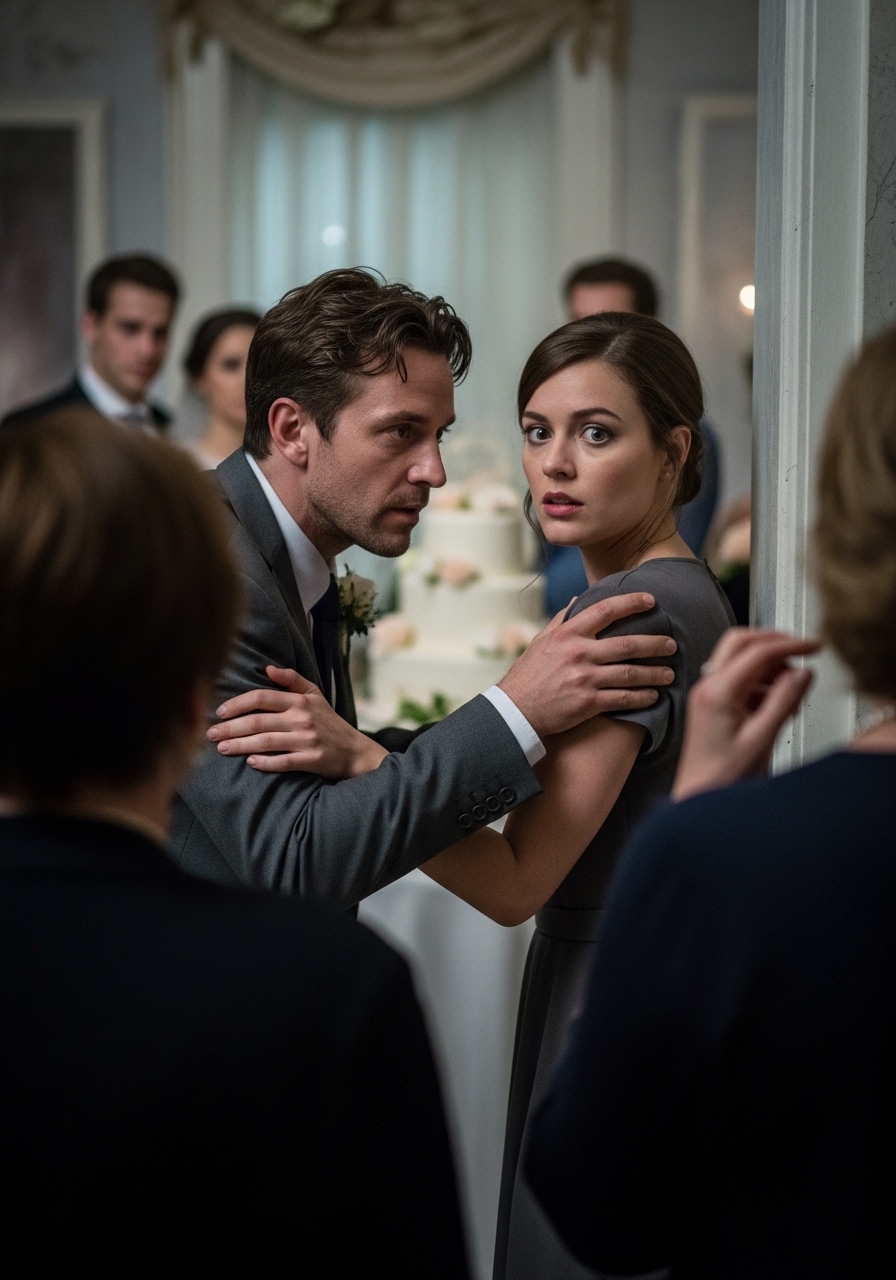
Eight days after my mother died, my father married her sister.
While guests clinked champagne glasses and smiled for photos, I stood behind the shed in our backyard listening to a sentence that split everything open. It started as a whisper. It ended with a truth they thought I would never uncover.
You think you know what rock bottom is.
You think it’s the knock at the door — a police officer standing stiffly in your hallway, asking if you’re Tessa. You think it’s the sound your father makes, something between a sob and a howl, like a man breaking in half.
You think it’s the moment your knees hit the floor before your mind can process the words.
You think that’s the lowest point.
It isn’t.
Rock bottom is standing in your own backyard eight days later, watching your father in a boutonniere, holding hands with your aunt.
I was thirty when my mother, Laura, died in a car accident. One moment she was running errands. The next, a uniformed officer stood on our porch with his hat in his hands, speaking words that didn’t belong in our house.
The days after blurred together — casseroles, sympathy cards, wilting flowers. And my Aunt Corrine crying louder than anyone.
“We’ll get through this,” she kept saying, squeezing my hands. “I promise, Tessa.”
Apparently, she meant with my father.
Corrine was my mom’s sister. At the funeral, she clung to me in the kitchen and promised strength and healing. But three days after we buried my mother, her nails were freshly done — glossy pink, perfect.
“I chipped one hugging people,” she said when she caught me staring.
Grief dulled everything — sound, color, time. Everything except her.
Eight days after my mother died, she married my father.
No explanation. No pause. Just rows of white chairs in the backyard and a towering wedding cake placed where my mother planted tulips every spring. I watched from the window as Corrine instructed someone to pull them out.
“They’ll ruin the photos,” she said casually.
“Those were Mom’s,” I told her.
“She loved little projects,” Corrine replied sweetly. “But she made this house complicated. We’re simplifying.”
Guests arrived confused but polite. Some hugged me and whispered that at least my father wouldn’t be alone.
An hour before the ceremony, Corrine cornered me and flashed her ring.
“You should be grateful,” she said. “Your dad needs someone.”
“My mom’s been gone less than two weeks.”
“This is healing.”
“It looks rushed,” I answered.
My father walked in just then.
“Not today, Tessa,” he said sharply when I asked why he couldn’t wait.
That’s when it clicked — this wasn’t grief.
It was a choice.
I walked away before I said something unforgivable. I ended up crouched by the side gate, fighting nausea while glasses clinked behind me.
That’s when Mason found me.
Corrine’s son. Quiet. Observant.
“Tessa,” he said gently. “Can we talk?”
He led me behind the shed.
“The ring she’s wearing,” he said, voice unsteady, “she showed it to me last Christmas.”
My stomach dropped.
“She said your dad picked it out. I saw the box.”
Last Christmas.
While my mother was alive.
Mason sent me the order number from the jeweler — Ridgeway Jewelers. Inside the box had been a handwritten note: For our real beginning.
I didn’t cry.
I drove straight to the store.
The clerk located the receipt in minutes.
December 18th.
That same week, my mother had been baking cookies and wrapping gifts.
I took photos of the receipt and went back to the reception.
Someone handed me a champagne glass and asked if I’d like to say a few words.
So I did.
“Eight days ago,” I began, “I buried my mother.”
The yard fell silent.
“And today, her sister is wearing a ring my father bought while my mother was still alive.”
Gasps rippled across the chairs. A fork clattered to the ground.
My father stepped forward, face tight but composed.
“You’re grieving. You don’t know what you’re saying.”
“I know exactly what I’m saying,” I replied. “This didn’t start because of grief. It’s been going on.”
Corrine’s smile faltered.
“You’re embarrassing us,” she whispered.
“No,” I said. “I’m telling the truth.”
She tried to frame me as overwhelmed by loss. I didn’t argue. I set the glass down and walked away.
By morning, the church gossip chain had done the rest. Even the softest voices from Bible study murmured publicly: That poor girl deserved time.
Two days later, my father confronted me.
“You humiliated us.”
“I exposed what you hid,” I answered. “You could have respected her. You could have waited.”
He insisted they’d been separated.
“Then you should have treated her better,” I said quietly. “Mom was the best part of you.”
He had nothing to say.
In the backyard, Corrine had ripped out my mother’s tulips and left them in a pile. I dug through the dirt and saved the living bulbs.
I planted them at my mother’s grave.
Mason stood beside me.
“I didn’t want you finding out years from now,” he said softly.
“They thought they’d get away with it,” I replied.
“They didn’t.”
There was no dramatic reconciliation. No apology speech. Just soil under my nails and tulips pressed into fresh earth.
I didn’t get my mother back.
But I didn’t let them bury the truth with her.
In spring, the tulips would bloom again.
I wasn’t staying in that house. I wasn’t pretending.
They could keep their wedding photos and their ring.
I kept my mother’s dresses. Her recipes. Her laughter in my memory.
And for the first time since the knock at the door, I didn’t feel consumed by anger.
I felt done.
Finished.
Free.
