When my grandmother’s will was read, I lost my home in a single sentence.
She left the house on Juniper Lane to Margaret — the neighbor.
And to me?
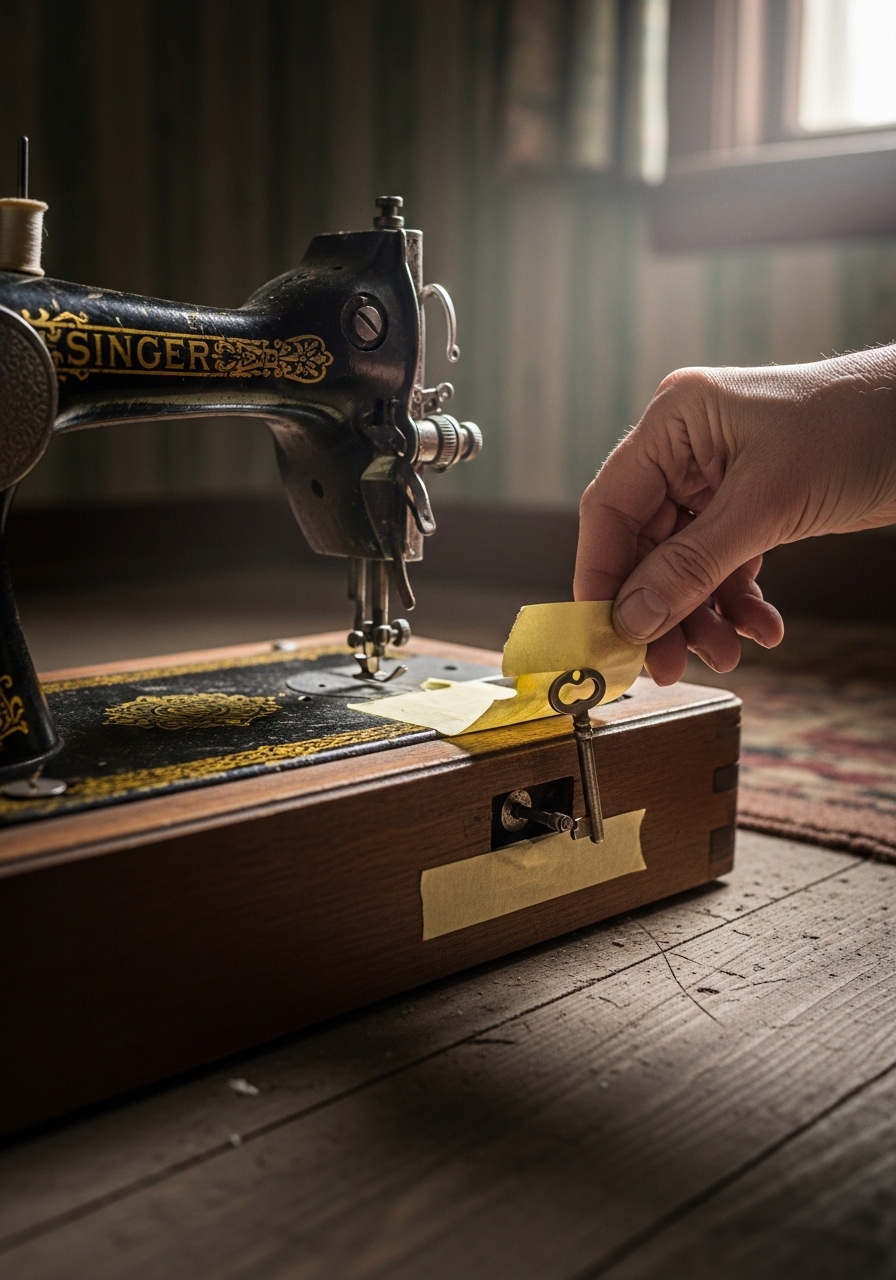
Her old sewing machine.
I found out three days after we buried her. By then the casseroles had stopped arriving, the lilies were browning at the edges, and the yellow house that raised me already felt like it belonged to the past.
The will reading wasn’t in the church basement where we’d said goodbye. It was in a quiet law office on Main Street, under framed degrees and fluorescent lights that made everything feel colder than it should have.
Margaret arrived early.
Navy suit. Leather folder. Composed smile.
She looked less like someone grieving and more like someone closing a deal.
“You holding up, Taylor?” she asked softly.
“As well as anyone can.”
She patted my arm. “Rose was very particular about her affairs. No loose ends. This will be quick — clean.”
Clean.
The lawyer cleared his throat and began.
“The property located on Juniper Lane is to be transferred to Margaret under the terms of a previously executed care agreement. The details remain enforceable.”
The air shifted.
“Transferred to who?” I asked, though I had heard him.
“To Margaret.”
She placed her hand over her chest as if she’d been entrusted with something sacred.
“Rose wanted me secure,” she added gently.
Secure.
“But that was my home,” I said. “She raised me there.”
Margaret’s voice stayed calm. “Sometimes the one who shows up daily matters more than the one who drops in on weekends.”
I felt every eye turn toward me.
“I came every weekend. I brought groceries. I handled her bills. What else was I supposed to do?”
The lawyer continued, neutral and steady.
“To her granddaughter, Taylor, Rose leaves her sewing machine.”
A murmur rippled through the room.
“That machine?” someone whispered. “I thought she’d donate it.”
I let out a breath that almost sounded like a laugh.
“That’s all?”
“That’s what was written,” the lawyer said.
Margaret leaned closer. “Maybe she knew who deserved the house.”
“You don’t get to say that,” I replied. “You don’t know what we went through.”
“Honey,” she said quietly, “you don’t know what I know.”
I walked out before my voice betrayed me.
***
The house was silent when I unlocked it.
Sunlight cut across the living room floor. I ran my fingers over the doorway where Grandma had marked my height every year.
“You could have told me,” I whispered.
The sewing machine sat near the window, polished and waiting.
That machine fed us when money was tight. She stitched my school clothes. She stayed up past midnight to finish my prom dress so I wouldn’t feel less than anyone else.
It wasn’t just a machine.
It was survival.
I knelt in front of it.
“Just us again,” I murmured.
When I lifted it to pack it, something brushed my fingers underneath.
Taped to the bottom was a small brass key.
And a folded note in her handwriting.
My heart pounded as I unfolded it.
My darling girl,
If you’re reading this, the time has come. I know you have questions.
Do not challenge Margaret about the house until you visit the address below.
Bring a clear heart, not anger.
You deserve the whole truth.
I loved you in this life and I’ll love you until the next.
Grandma Rose.
An address was written beneath.
“You couldn’t just tell me?” I muttered. “You had to make it a treasure hunt?”
Still, I grabbed my purse.
If she wanted me somewhere, I was going.
***
The address led to a small white house at the edge of the next town. Chipped paint. Sagging porch. Wind chime tapping in the breeze.
“Clear heart,” I reminded myself.
The key turned smoothly.
Inside, the air smelled faintly of lavender and medicine.
“Hello?”
A silver-haired woman stepped into view.
“You must be Rose’s granddaughter,” she said calmly.
“I’m Taylor. And you are?”
“Helen. I helped her in her final months.”
“Helped her how?”
“I was her caregiver. And I assisted with paperwork. Made sure no one pushed her into decisions she didn’t want.”
My jaw tightened. “Are you saying someone tried?”
“I’m saying she was careful,” Helen replied evenly. “She signed the agreement two winters ago when her arthritis worsened.”
“Then why leave the house to Margaret?”
“She didn’t have the cash to compensate her,” Helen said. “The house was leverage.”
Leverage.
Helen handed me a thick folder.
“She made me promise to tell you she never chose Margaret over you,” Helen said quietly. “She was afraid you’d think that.”
My throat burned.
Inside were legal documents — a formal contract.
Margaret would receive the house only if she provided documented care, covered specific expenses, and fulfilled detailed obligations.
If she failed?
The property reverted to me.
“It was conditional,” Helen said. “Margaret only keeps it if she kept her promises.”
“So this was business.”
“It was protection,” Helen corrected. “Your grandmother needed help. Margaret needed motivation. But Rose didn’t trust assumptions.”
There was another letter inside.
My dear Taylor,
Margaret wanted stability. I required assistance. We made a conditional agreement.
If she honored it, the house would be hers. If not, it would return to you.
I didn’t want you sacrificing your life out of obligation.
Margaret isn’t a villain. She stepped up when I needed her.
Grandma Rose.
I exhaled slowly.
“She talked about you constantly,” Helen said. “You were her world.”
“Then let’s see what Margaret actually did,” I replied.
***
Margaret stood in her yard when I returned, chatting with neighbors.
“We need to talk,” I said.
Her smile tightened when she saw the folder.
“This isn’t appropriate.”
“It is. Did you tell people the house was conditional?”
Silence fell across the lawn.
“She signed a care agreement,” I continued calmly. “If you met the documented requirements, the house was yours. If not, it reverts to me.”
Margaret swallowed.
“I visited her. I drove her places.”
“Did you document expenses?”
She hesitated.
“Did you tell anyone it was conditional?”
Another neighbor stepped back.
“I didn’t complete all of it,” Margaret admitted finally. “When Helen came, she handled most of it. I don’t deserve the house.”
No shouting. No drama. Just the truth, laid bare.
“I’ll have the lawyer review the documentation,” I said.
***
Two days later, the call came.
Margaret had failed to meet the agreement’s requirements.
The house legally reverted to me.
After I hung up, I sat in front of the sewing machine.
“It was never about choosing,” I said softly.
I opened the cabinet and threaded the needle.
When I was little, I once pricked my finger and burst into tears.
“Nothing is ruined, my girl,” Grandma had laughed. “We just stitch it again.”
The machine hummed beneath my hands as I lowered the needle.
Some things aren’t lost.
They’re simply waiting to be mended.