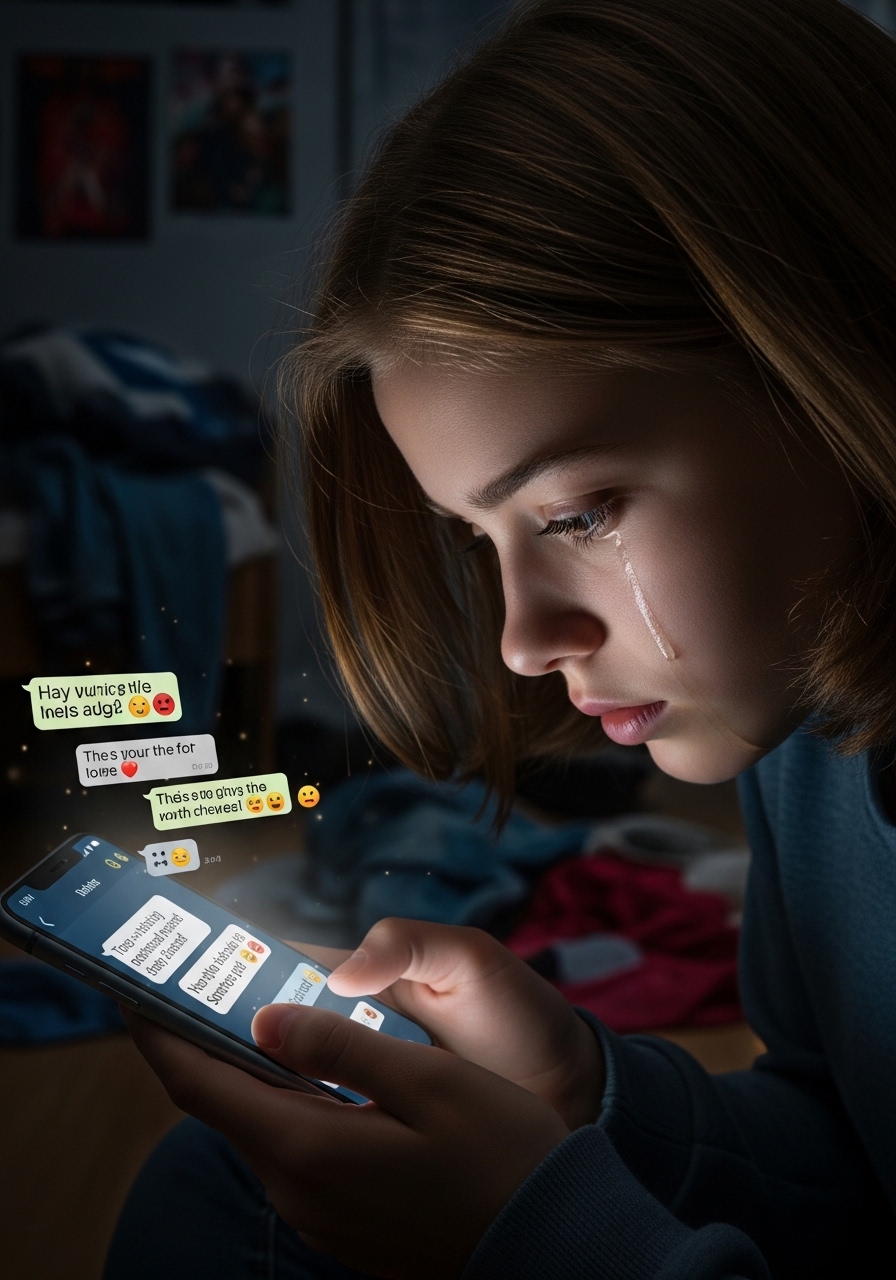
I told myself it was just teenage moodiness.
The silence.
The same gray hoodie every day.
The way Mia moved through the house like she was trying not to take up space.
“She’s 15,” my sister Jenna said. “They get weird about clothes.”
I wanted to believe that.
But I was wrong.
The Summer Everything Broke
Six months ago, I moved into my sister’s cramped suburban Ohio house after my brother-in-law Tom had a massive stroke.
One minute he was flipping burgers. The next, he was on the kitchen floor, face drooping, barely breathing.
He survived. But survival isn’t the same as recovery.
At 43, Tom could barely move his left side.
Jenna needed real help — not casseroles and sympathy. So I broke my lease, packed two suitcases, and moved in.
Our days became survival routines.
6 a.m. medications. Feeding tube prep. Physical therapy in the living room. Jenna slept after double shifts at the hospital. Ironically, nursing strangers was easier than nursing her husband.
She needed the overtime. We needed the money.
And Mia?
Mia floated through it like a ghost.
Same black jeans. Same gray hoodie. Every day.
Granola bar. Backpack. Silence.
The Cry I Wasn’t Supposed to Hear
One Thursday night, I heard soft crying from the bathroom.
Mia sat on the edge of the tub, face buried in her hands.
“You okay?” I asked gently.
“I’m fine,” she said too quickly.
Her eyes were bloodshot. Her hands trembled.
“Bad day?”
“School’s school,” she shrugged. “I need to help Dad.”
She brushed past me.
Something inside me knew this wasn’t normal teenage sadness.
It was something heavier.
The Phone
The next afternoon, while she helped Tom with stretches, I did something that could’ve ruined our relationship forever.
I went into her room.
It was spotless. Too spotless. Bed tucked tight. Books stacked precisely.
Her phone was charging under the bed.
It was unlocked.
I opened TikTok.
And my stomach dropped.
The first video was of Mia walking down her school hallway. Zoomed in. Mocking caption:
“POV: one outfit, zero effort 💀”
The comments were vicious.
“Does she own a washing machine?”
“Homeless chic isn’t a vibe.”
“Start a GoFundMe for soap.”
There were more. So many more.
Then I found the group chat.
“Mia’s Closet” — 17 members.
Dozens of zoomed photos of her frayed hems. Her scuffed sneakers. A tiny stain on her sleeve.
“Day 47 of the same fit.”
“Should we buy her detergent?”
And then the worst part.
A fake fundraiser page titled:
“Buy Mia Soap.”
With a photoshopped image of her looking dirty.
The ringleader?
Sophie.
Her best friend since third grade.
The Shoebox
I kept searching.
Under her bed was a shoebox.
Inside were crumpled dollar bills, carefully smoothed and clipped together.
Each labeled in Mia’s neat handwriting:
“Dad’s medication — February.”
“Mom’s gas money.”
“Groceries.”
Over $200.
At the bottom was an envelope:
“New clothes (someday).”
$43.
That’s what she had saved for herself.
Beneath that, a spiral notebook filled with numbers.
Physical therapy costs. Insurance gaps. Car repairs. Grocery overages.
Entries written at 2 a.m.
“Need to help more.”
My 15-year-old niece was tracking medical debt while being publicly humiliated for wearing the same hoodie.
And she hadn’t told us because she didn’t want to add to our stress.
I sat on her bedroom floor and cried.
I Didn’t Confront Her
I didn’t tell Jenna.
I didn’t storm into the school.
Instead, I did something different.
I created an anonymous TikTok account.
And I started filming.
Not cruelty.
Truth.
Mia reading to her father from his favorite thriller.
Mia crushing pills into applesauce at dawn.
Mia doing homework at 11 p.m. after tutoring kids to earn $20.
15-second clips.
Real life.
The first video got 300 views.
Then 1,000.
Then 10,000.
Within a week, one hit 100,000.
Comments flooded in:
“This is real strength.”
“Who is she? She’s incredible.”
“Teen caregivers don’t get enough recognition.”
The hashtags started:
#InvisibleHero
#TeenCaregiver
#RealStrength
Then I posted the final video.
Split screen.
Left: Mia caring for her father.
Right: blurred screenshots of the bullying.
Sophie’s username left clear.
Caption:
“While you mocked her outfit, she was raising her family. What’s YOUR excuse?”
I hit post.
By morning: 20 million views.
The Internet Responded
Within 48 hours, Sophie’s cruelty was everywhere.
Her accounts flooded with backlash.
Parents demanded action.
The school launched an investigation.
A boutique owner from Cleveland showed up with $500 and bags of clothes.
A disability lawyer contacted us about benefits Tom qualified for but never received.
Messages poured in — thousands.
Support. Encouragement. Apologies.
And then I had to tell Mia.
The Conversation
I found her crying in her room.
“You posted videos of me?” she whispered.
“I gave you the army you deserved,” I said.
“But everyone knows.”
“Yes,” I said gently. “They know you’re strong.”
She scrolled through thousands of supportive messages.
Students apologizing. Strangers offering help. People calling her an inspiration.
Then she broke down in my arms.
For the first time in months, she wasn’t carrying it alone.
Three Months Later
Mia wrote an essay about invisible caregivers.
It won a state competition.
$5,000 scholarship.
Published nationally.
At the ceremony, she wore a beautiful blue dress.
And her old black sneakers.
“These shoes carried me through hell,” she said. “I’ll never be ashamed of them.”
Tom, in his wheelchair, managed to say, “Proud of you both.”
That night, Mia framed her essay beside printed screenshots of the supportive comments.
Underneath, she wrote:
“They tried to shame me. The world defended me. I won.”
What Still Haunts Me
Those scuffed sneakers became a symbol online.
But sometimes, late at night, I wonder:
If I hadn’t invaded her privacy that day…
Would she still be suffering silently?
Or would she have eventually asked for help herself?
I turned social media into a weapon.
But maybe what I really did was remind her she wasn’t invisible.
And sometimes, when someone you love is drowning quietly…
You don’t ask permission.
You build them an army.