I believed I knew everything about the little girl I raised as my own.
But on the night of her wedding, a stranger stepped out of the crowd and said words that shook the ground beneath my feet.
My name is Caleb. I’m 55 years old, and more than three decades ago, my life collapsed in a single night.
There was a car accident. A phone call. A calm, practiced voice on the other end of the line telling me that my wife, Mary, and our six-year-old daughter, Emma, were gone.
I remember standing in my kitchen, gripping the receiver, staring at nothing. The house felt hollow—like sound itself had been sucked out of it.
For years after that, I didn’t really live. I existed. I went to work, came home, ate frozen meals without tasting them, and slept in a bed that felt far too big. Friends tried. My sister called every Sunday. But grief doesn’t listen to kindness.
The house stayed empty.
I kept Emma’s drawings on the fridge long after they yellowed. I couldn’t bring myself to throw them away. Being a father felt like something I’d already failed at once—something I wasn’t allowed to try again.
Or so I thought.
***
One rainy afternoon, years later, I found myself sitting in my car outside an orphanage.
I told myself I was just curious. I wasn’t replacing anyone. I wasn’t even sure why I was there.
Inside, the air smelled of bleach and crayons. Laughter echoed down one hallway while a child cried behind a closed door.
A caseworker named Deirdre showed me around. She was kind but honest. No sugarcoating.
Then we passed a window overlooking a small play area, and I saw her.
A little girl sitting quietly in a wheelchair. Hair pulled into a neat ponytail. A notebook resting on her lap while the other children ran past her.
“That’s Lily,” Deirdre said softly. “She’s five.”
I asked about the wheelchair.
“Car accident,” she explained. “Her father died. Spinal cord injury—partial. Therapy may help, but it’s a long road.”
“And her mother?”
“She signed over her rights. Said she couldn’t handle the grief or the medical needs.”
Lily looked up then, her eyes meeting mine. She didn’t smile or look away. She just watched—like someone waiting to see if another door would close.
Something in me broke open.
No one wanted to adopt her. Deirdre told me that gently, like she was bracing me for impact.
I asked to start the process that same day.
***
The adoption took time—background checks, home visits, interviews. I visited Lily often. We talked about animals and books. She loved owls because, she said, “They see everything.”
When I finally brought her home, all she owned fit into a worn backpack: a stuffed owl and a notebook full of drawings.
The first few days, she barely spoke. She just watched me, as if waiting for the moment I’d disappear.
Then one night, as I folded laundry, she rolled into the room and said, “Dad, can I have some more juice?”
I dropped the towel.
From that moment on, we were a team.
Therapy became routine. I celebrated every milestone—the first time she stood without help, the first steps with braces. School wasn’t always easy, but Lily was resilient. She hated being pitied and refused to be fragile.
She grew into a brilliant, stubborn, kind young woman.
She loved science. Worked at a wildlife center one summer. Cried when they released an injured barn owl she’d helped care for.
At 25, she met Ethan. He adored her. She tested him, of course—but he passed.
When she told me they were engaged, I nearly choked on my breakfast.
***
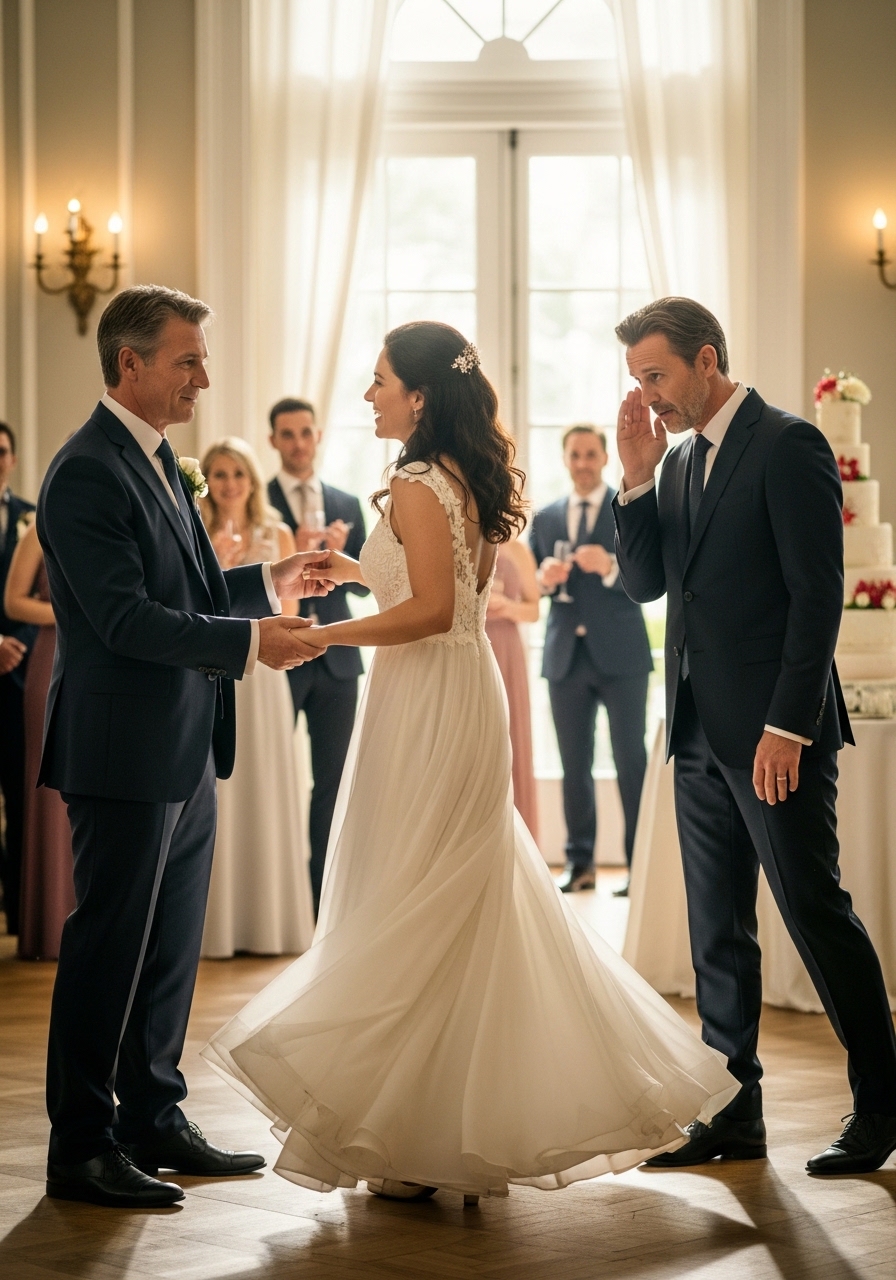
Her wedding was small and beautiful.
Lily wore a white satin dress that seemed made just for her. The room glowed with soft lights and white lilies. I watched her dance with Ethan, laughing freely, surrounded by people who had stayed in her life.
That’s when I noticed the woman near the exit.
She didn’t belong. Mid-40s. Hair pulled tight. Watching Lily like she was afraid to be seen.
She approached me quietly.
“You don’t know me,” she said. “But you need to hear this.”
We stepped aside.
“You have no idea what your daughter has been hiding,” she whispered. “I’m her biological mother.”
The room faded.
She told me Lily had found her two years earlier. That they’d talked. That Lily had asked questions. Then stopped replying.
“I deserve to be in her life,” the woman said. “I carried her for nine months.”
“And I carried her every day after,” I replied.
I told her this day was about who stayed. About who showed up when it was hard.
She didn’t argue. She just turned and left.
***
Later that night, Lily and I stood outside together.
“She came, didn’t she?” she asked.
I nodded.
“I didn’t tell you because I didn’t want you to think you weren’t enough,” she said softly.
I took her hand. “You never have to protect me from your truth. You’re my daughter because we chose each other.”
She smiled through tears. “Thank you for choosing me. Every day.”
As I watched her dance under the lights, something finally settled in my heart.
Family isn’t about blood.
It’s about who stays when everything falls apart—and chooses to stay again the next day.