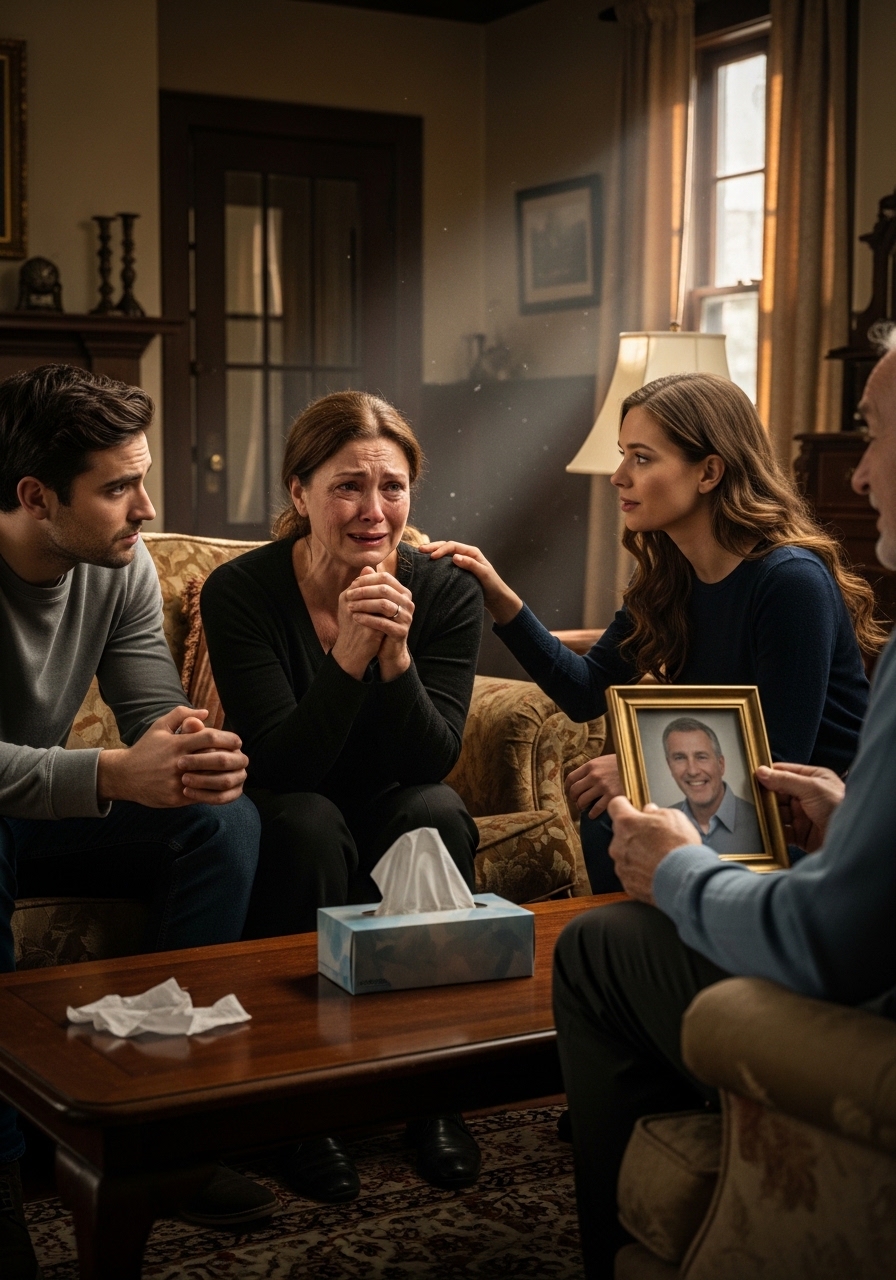
After my husband passed away, the home we had built together no longer felt safe.
Nothing about it had physically changed, yet the silence inside those walls felt wrong—heavy, unnatural, as if the house itself was grieving with me. For months before his death, our lives had revolved around hospital corridors, whispered diagnoses, and fragile hope. When it was finally over, the quiet that followed felt more unbearable than the fear we had lived with before.
Grief wasn’t the only weight pressing down on me. Practical worries quickly surfaced—medical bills, mortgage payments, and the terrifying realization that every responsibility now rested on my shoulders. My nineteen-year-old stepson, Leo, still lived with me. We were mourning the same man, yet carrying the loss in very different ways, both unsure how to move forward in a future neither of us had planned for.
One evening, worn down and emotionally exhausted, I asked Leo to sit with me and talk.
Carefully choosing my words, I explained how hard it had become to manage everything alone and gently asked whether he could contribute a small amount toward rent for a while. He smiled easily and brushed it off, joking that things would work out and that I worried too much.
In my fragile state, his attempt at reassurance landed like dismissal. Instead of comfort, I felt unseen. By morning, my grief had hardened into resentment, convincing me that he didn’t understand how serious our situation truly was. Acting out of pain rather than reason, I began packing his belongings, bracing myself to tell him he needed to move out.
While sorting through his room, I noticed a duffel bag tucked neatly under the bed—with my name written on it.
Confused, I opened it.
Inside was a savings passbook showing small but steady deposits made over many years. Beneath it lay a folded birthday card written in Leo’s careful handwriting. In it, he explained that he had been quietly saving money to help take care of me once his father was gone. His joking response the night before, he admitted, had been a clumsy attempt to hide his plan until he felt the time was right.
Tears blurred my vision as I read.
I realized how completely fear and grief had clouded my judgment—and how much thought, love, and responsibility he had quietly carried for my sake.
When Leo came home that evening, I didn’t wait for him to speak.
I met him at the door, apologized through trembling words, and thanked him. I told him how proud his father would have been of the man he was becoming. In that moment, we both understood how easily pain can distort communication—and how love often exists quietly, even when it isn’t expressed perfectly.
From then on, we chose openness over assumptions. We faced our worries together, supporting each other as we learned to live without the person we both missed so deeply.
The house still held grief—but it no longer felt empty.
It felt steady. Warmed by the understanding that family isn’t just about the past you shared, but about choosing to stand together when the future feels uncertain.