When my grandfather died, the grief came in waves. He wasn’t just family—he was my safe place. The man who made up bedtime stories, slipped me candy when no one was looking, and somehow always knew what to say when life felt too heavy for a kid.
So when the lawyer read his will, I sat there heartbroken but hopeful. I expected something small but meaningful—something that felt like him.
Instead, my siblings inherited millions.
They cried, hugged, and whispered excited plans. My name never came up. My chest tightened. Had Grandpa forgotten me?
Then the lawyer cleared his throat and handed me a small envelope.
Inside was a letter in Grandpa’s unmistakable handwriting:
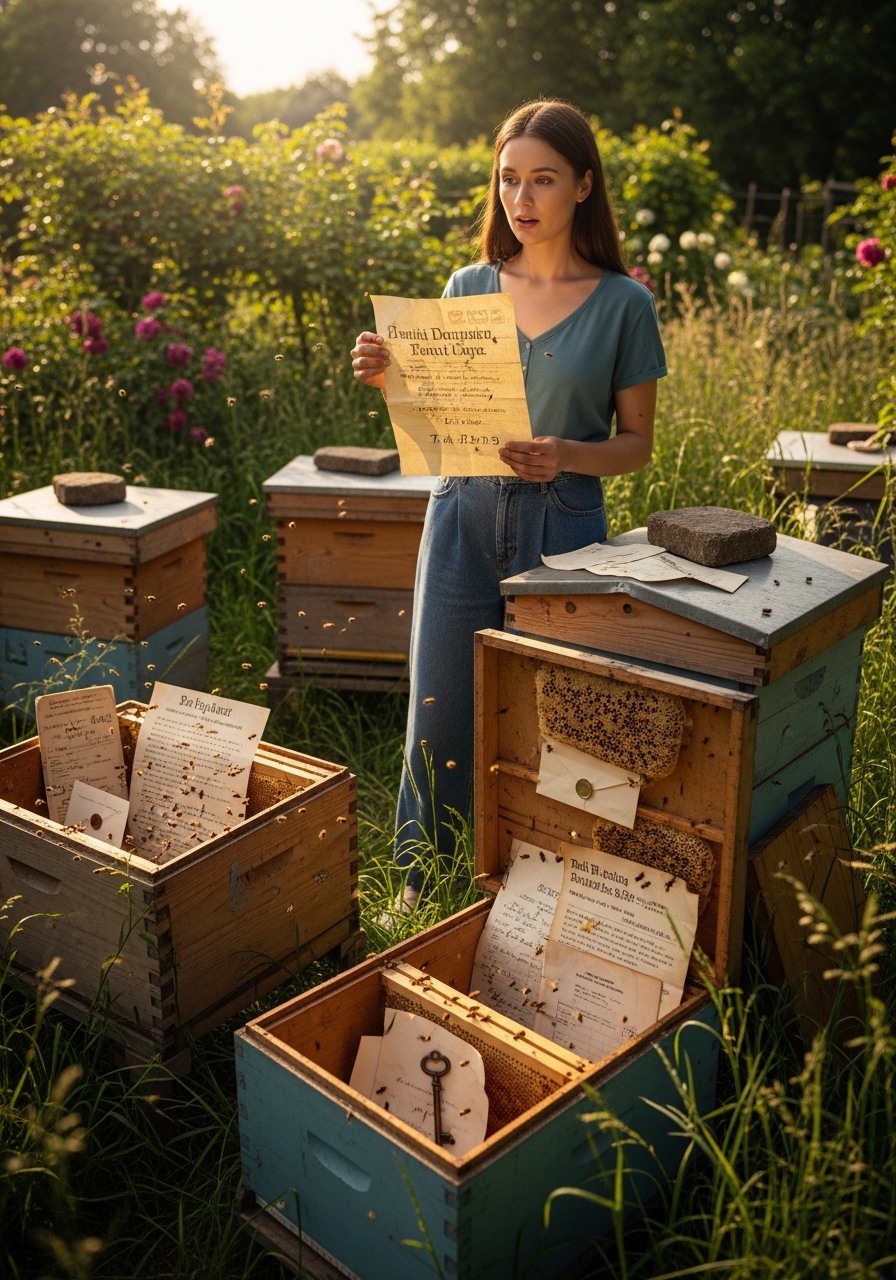
“Sweetheart, I’ve left you something far more important than money. Take care of my old apiary behind the woods. Once you do, you’ll understand why.”
The apiary.
That rundown patch of beehives no one wanted.
I felt cheated.
A few days later, Aunt Daphne reminded me of Grandpa’s request. “He believed you were strong. Independent. Those hives need someone who won’t give up on them.”
I was fourteen. I cared more about school dances and my crush than sticky gloves and buzzing insects. I snapped back, calling the apiary pointless.
She looked disappointed—and grounded me.
So, resentful and sulking, I pulled on protective gear and walked toward the hives. Fear mixed with curiosity as I worked. That’s when I noticed something strange: tucked inside one of the frames was a weathered plastic bag.
Inside it was a faded map, marked with symbols I recognized from Grandpa’s stories.
My irritation vanished.
I followed the map into the woods, remembering his tales about hidden places and forgotten cabins. Eventually, I found the old gamekeeper’s house he used to describe, sagging with age. Inside, beneath loose floorboards, was a carved metal box and a note:
“To my dear Robyn—this is for you, but only at the end of your journey.”
I wanted to open it immediately. But something stopped me.
The woods grew darker. I realized I was lost.
Panic crept in, but Grandpa’s voice echoed in my head: Stay calm. Don’t quit. I kept moving, searching for the bridge he once mentioned. Hunger and exhaustion hit hard. When I reached a river, thirst pulled me closer.
The current was stronger than I expected.
I slipped, went under, and fought for air. In desperation, I let my backpack go—but held onto Grandpa’s box. Somehow, I dragged myself onto the muddy bank, shaking but alive.
I couldn’t wait anymore.
I opened the box.
There was no gold. No jewels.
Just a jar of honey—and a photo of Grandpa and me, smiling in the sun.
I broke down.
That was the treasure.
Not money. Not inheritance. But the lesson he’d been trying to teach me all along: patience, effort, resilience—and earning what truly matters.
I built a crude shelter and survived the night. By morning, I pushed on, humming Grandpa’s favorite tune. When I collapsed in a clearing, a dog found me—then rescuers followed.
I woke up in a hospital bed with Aunt Daphne beside me. I apologized through tears. She smiled and squeezed my hand.
Then she handed me a box wrapped in Grandpa’s signature blue paper.
Inside was the Xbox I’d begged for years earlier.
“He wanted you to have it,” she said softly. “But only once you understood responsibility.”
I shook my head. “I don’t need it anymore.”
Now I’m 28, running a thriving apiary with two kids who love honey as much as Grandpa did. Every time I see their sticky smiles, I whisper, Thank you, Grandpa.
His real inheritance wasn’t money or things.
It was strength, purpose, and love—hidden in the hum of bees and the sweetness of honey.