I was ten years old when my mother told me I was going to stay with “some nice people for a while.”
She stuffed my clothes into a plastic bag, kissed my forehead once, and left me at the foster care office without looking back. Later, I learned the truth. She wanted a life without responsibility. Without me.
She never called. Never asked about school. Never tried to find me again.
I grew up learning how to survive without expecting love. I moved from foster home to foster home, learned to cook young, learned not to cry when adults broke promises. By the time I aged out of the system, I told myself I didn’t need her.
And somehow, I built a life anyway.
College. A steady job. A kind husband. A son who made the world brighter just by existing.
Seventeen years passed.
Then, when I was twenty-seven, my phone rang.
Her voice was thin and unfamiliar. She said she was very sick. That she’d left her second husband and was hiding from him. She had no money. No one else.
I don’t know why I said yes.
Maybe I wanted answers. Maybe I wanted closure. Maybe some part of that ten-year-old girl was still waiting.
I took her in. I paid for her medical care. I sat beside her bed at night and listened to her breathe. She never explained why she left me. And I never asked.
Two weeks later, she died.
Her last words were barely audible.
“Check my bag.”
At first, there was nothing — just worn clothes and an old wallet. Weeks went by. Then one night, I checked again and felt something stiff inside the lining. I tore it open.
Inside was a single key.
And an address.
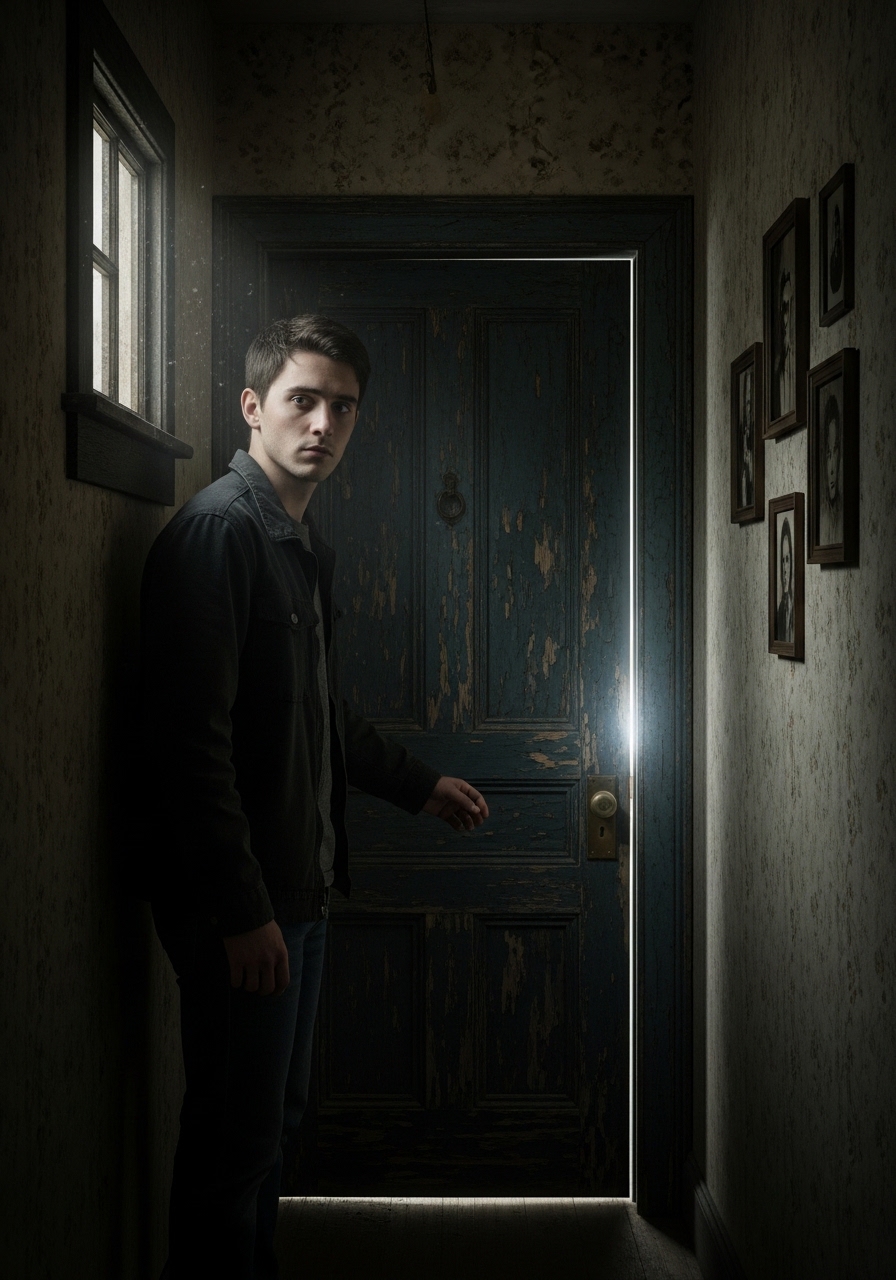
The address led to a poor street not far from my home. The apartment was tiny — one room, dim light, a narrow bed. As soon as I stepped inside, my blood ran cold.
The walls were covered in photographs of me.
Me as a child.
Me at graduation.
Me on my wedding day.
Me holding my son.
She had been watching my life from a distance all these years.
On the bed lay a handwritten letter.
“My darling daughter,” it began. “I never came to you because I truly believed you were better off without me. I was broke, uneducated, and made terrible choices. I stayed away because I thought love meant not ruining your life.”
She wrote that she stayed nearby. Quietly. Just close enough to see me grow.
She said she was proud of me.
She said she hoped that one day I might forgive her.
That small apartment had been her refuge — her secret life.
Now, it’s part of mine.
I wish she hadn’t been so afraid. I would have accepted her. Still, I’m grateful I took her in at the end. Those two weeks are the memories I’ll carry with me — soft, complicated, and real — always.