I was ten years old when my mother decided she didn’t want to be a mother anymore.
Not because she was dead.
Not because she was locked up.
Not because she had no choice.
She was just… tired.
That was the part that stayed with me the longest.
I remember sitting in a social worker’s office, clutching a coloring book I didn’t want. The crayons were dull and broken. The room smelled like disinfectant and cheap coffee.
My mom sat across from me, arms folded, staring past everyone like she was waiting for a bus.
The social worker asked gently, “Are you sure this is what you want, Linda?”
My mom didn’t pause.
“I can’t do this anymore. I want my life back.”
She looked at me for half a second.
No tears.
No apology.
No hesitation.
Just a tired, distant stare — like I was something heavy she’d carried for too long.
“Don’t make this harder than it has to be,” she said.
Then she signed the paper and walked out.
That was the last time she spoke to me as my mother.
I waited for her to come back.
She never did.
Foster Care Didn’t Hurt Me — It Taught Me I Was Replaceable
The system didn’t beat me.
It didn’t starve me.
It did something quieter — and worse.
It taught me I was disposable.
By thirteen, I’d lived in four different homes. Some were fine. Some were loud. Some felt like prisons disguised as houses.
In one home, I overheard the foster mom call me “the burden.”
In another, the fridge was locked at night.
Every time I got attached, I learned to detach faster.
Because in foster care, no one says goodbye.
You just disappear from each other’s lives.
Eventually, you stop asking why.
Aging Out Means Leaving With Nothing
At eighteen, I left the system with a trash bag of clothes and a folder of documents.
That was it.
No family waiting.
No celebration.
No safety net.
Just a caseworker shaking my hand like I was checking out of a motel.
I worked whatever jobs I could get — grocery store shifts, warehouse hours, overnight diner work.
I went to community college part-time.
I kept my head down.
I didn’t trust easily.
But I built a life.
Small apartment.
Steady paycheck.
Quiet routine.
It wasn’t impressive — but it was mine.
And for the first time, I wasn’t begging anyone to stay.
Then the Call Came
I was twenty-seven when my phone rang from an unknown number.
I almost ignored it.
Something made me answer.
A weak, breathless voice asked, “Is this… Maya?”
No one used that name anymore.
Not like that.
I knew before she said it.
It was my mother.
She sounded worn down, older than she should’ve been.
“I know you don’t want to hear from me,” she whispered. “But I’m sick.”
I didn’t respond.
She kept talking.
“I don’t have anyone else. I’m alone. I need help.”
After seventeen years of silence…
after erasing me completely…
Now she needed me.
And the worst part?
The first thing I felt wasn’t anger.
It was grief.
Because no matter how hard I tried to bury it —
part of me still wanted a mother.
I Let Her Move In
Two days later, she was at my door.
She looked nothing like the woman who abandoned me.
Thin gray hair.
Sunken face.
Hands that wouldn’t stop shaking.
She carried one old leather bag and a plastic grocery sack.
She didn’t hug me.
Didn’t apologize.
She just walked inside like she belonged there.
I gave her my bed.
I slept on the couch.
I cooked, drove, paid bills, filled prescriptions.
She watched TV all day and spoke only when she needed something.
She never asked about my childhood.
Never asked where I grew up.
Never asked if I cried myself to sleep wondering why I wasn’t enough.
And she never said the words I waited my whole life to hear:
“I’m sorry.”
Still — I took care of her.
Because I told myself maybe I could be better than she was.
Her Last Words
Three months later, her health collapsed.
Doctors used the word “terminal” like it meant nothing.
I sat beside her hospital bed, furious and exhausted.
One night, the room went quiet.
She turned her head toward me.
“Maya…”
I leaned closer.
“What?”
Her voice barely carried.
“Check my bag.”
That was it.
No goodbye.
No apology.
No love.
She died less than an hour later.
I Checked the Bag… and Found Nothing
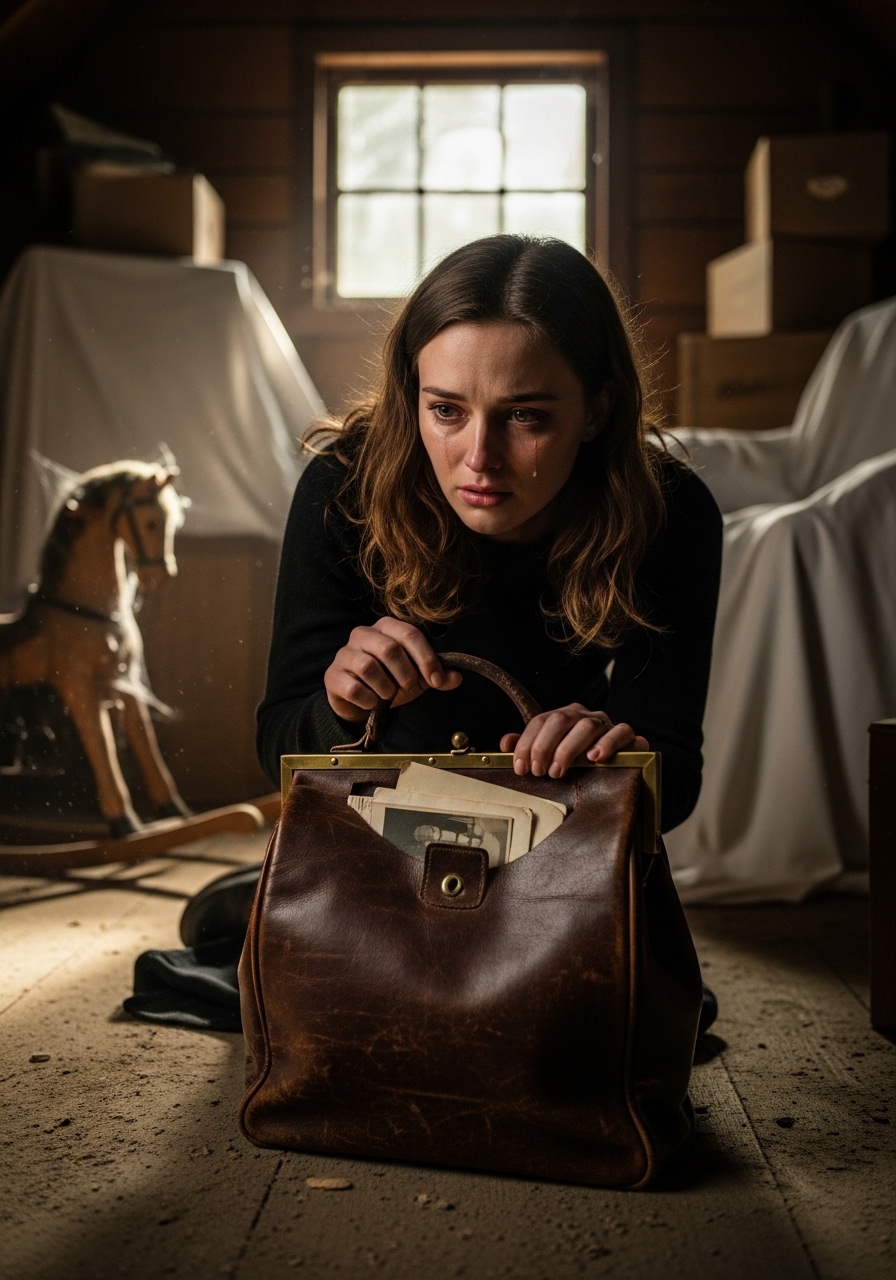
At home, I opened the bag on my kitchen floor.
I expected something.
A letter.
A confession.
Anything.
Inside was junk.
A hairbrush.
Old pill bottles.
Receipts.
A cracked charger.
Nothing else.
I laughed — not because it was funny, but because it was so her.
Even in death, she disappointed me one last time.
I shoved the bag into my closet.
Three Weeks Later, I Found the Truth
Something kept bothering me.
“Check my bag.”
I had already checked it.
While cleaning the closet weeks later, I picked it up — and noticed something strange.
The leather felt thicker along one seam.
Uneven.
Hand-stitched.
My heart started racing.
I cut the seam open.
Documents slid out.
Court papers.
Bank records.
Savings bonds.
My name was on all of them.
Then I saw the number.
$48,300
A savings account.
Opened when I was nine — the year before she left.
She’d been depositing money every month.
For years.
Even after she abandoned me.
At the very bottom, taped inside the lining, was an envelope.
“Maya.”
The Letter That Changed Everything
Her handwriting shook.
I don’t deserve forgiveness.
I gave you up because I was weak, addicted, and drowning.
I knew I would ruin you if you stayed.I saved money because it was the only way I could still be your mother without hurting you again.
You were never unwanted.
You were never a burden.I was.
I’m sorry.
— Mom
I cried for an hour.
Because for seventeen years, I believed I wasn’t worth keeping.
The truth was worse — and sadder.
She left because she knew she wasn’t safe.
And she paid for it quietly for the rest of her life.
What I Did Next
The money was real.
The teller smiled and said, “Someone really wanted you to have a future.”
I paid off my loans.
Then I enrolled in nursing school.
Now I sit with patients who are alone.
I listen.
I stay.
I remind them they matter.
Because I know what it feels like to be forgotten.
And I know what it feels like to be remembered too late.
The Final Truth
That bag carried the only apology she ever had the courage to give.
She wasn’t a good mother.
But at the very end…
she tried.
And sometimes, that’s the most human ending of all.
I was never the burden.
She was.